Ancient Chickpea Varieties and Their Use in Roman Legume Porridge
Roman cooks knew the chickpea as a hardy pulse, probably more valuable for storage than wheat and less demanding than many vegetables. They soaked and simmered it, then combined it with grains, oil, wine, fish sauce, or meat according to the dish and household. What survives in written sources is rarely a single “chickpea recipe”; ancient foodways are better understood as families of preparations built from legumes, cereals, and strongly flavored condiments.
Reconstructing a Roman bowl therefore means working with probabilities rather than claiming an exact menu. Botanical remains, agricultural writing, surviving recipes, and modern experiments each answer different questions. The evidence cannot always identify a named chickpea variety, but it can reveal how pulses were cultivated, cooked, seasoned, and integrated into the cuisine of the Roman world.
Reading the Evidence for Ancient Varieties
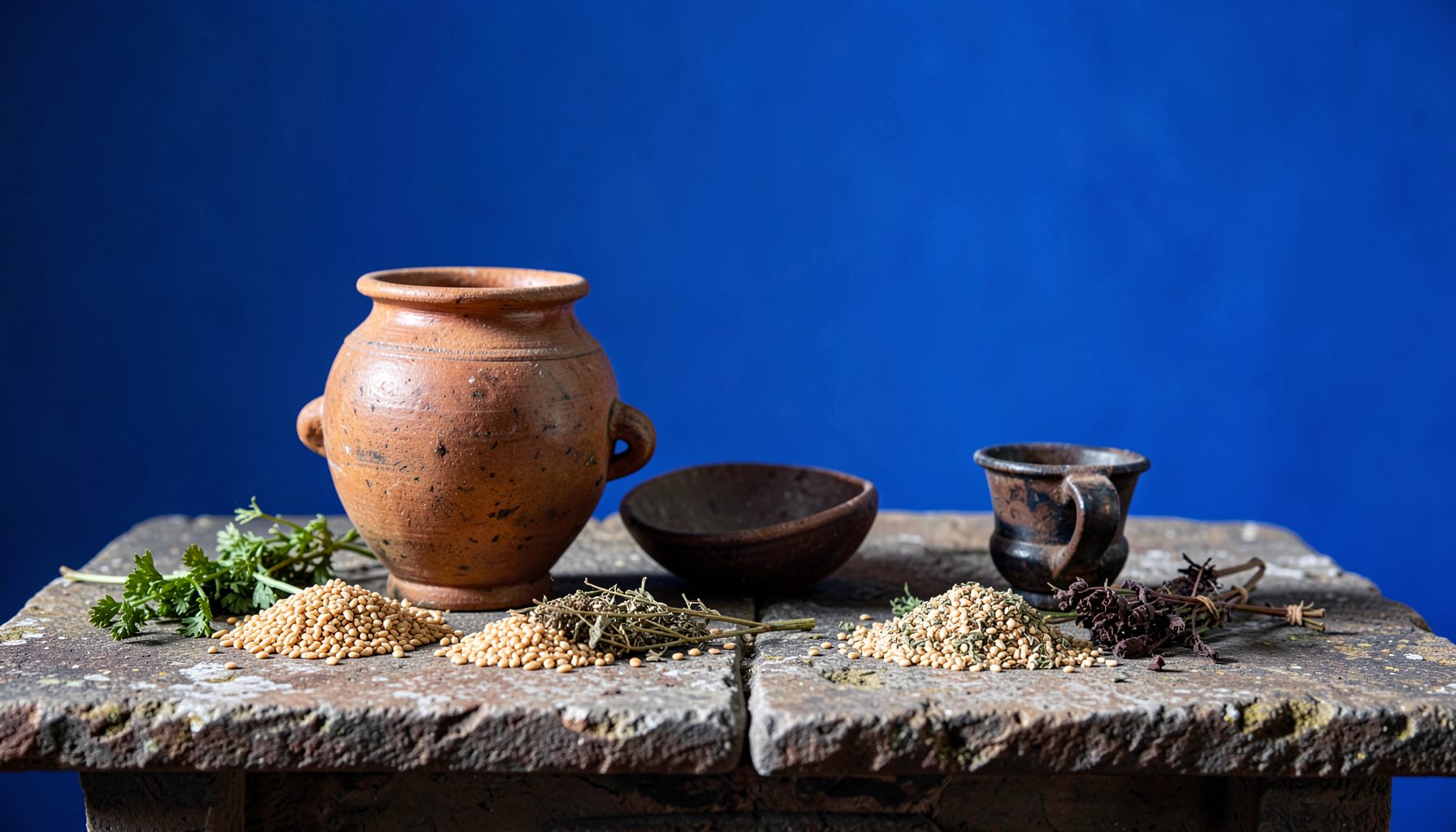
Ancient chickpea varieties are difficult to name with the precision available for modern cultivars. Roman writers used broad culinary categories, while archaeobotanists usually classify remains by seed size, coat color, hull structure, and signs of processing. A large pale seed and a smaller reddish one might have differed in the field, yet both may have entered the same pot after hulling.
Modern labels such as desi and kabuli should therefore be handled cautiously. Their contrasting seed sizes, colors, textures, and cooking times are useful, but they are not secure equivalents of varieties grown in Roman Italy or the provinces. A practical reconstruction can select whichever type approximates the archaeological evidence while acknowledging that modern names conceal much older and more diverse agricultural histories.
Charred seeds provide another complication. They may be cooking refuse, discarded crop, or the remains of a prepared food. Their condition can demonstrate that chickpeas were boiled or parched, but rarely reveals the whole recipe. A Roman-British culinary reconstruction illustrates a productive approach: combine archaeological and textual evidence with local ingredients, then record each experimental choice separately from the historical inference.
From the Fertile Crescent to Roman Farms
The chickpea belongs to the early agricultural foundations of the Fertile Crescent. By the seventh millennium BCE, it was being cultivated in parts of the Near East, alongside lentils, peas, and wheats. Its ability to tolerate relatively dry conditions helped it spread through Anatolia, the Levant, Cyprus, Egypt, and the Mediterranean before the rise of Rome.
Roman agricultural writers discuss chickpea cultivation, soils, sowing times, and the crop’s usefulness in feeding households and animals. The plant was grown across the empire, but regional conditions shaped its character. Egyptian, North African, Spanish, Gallic, and Levantine chickpeas could differ in size and maturity, and cooks might have valued some for rich porridge while treating others as fodder.
Oil formed another part of the Roman pulse meal. Modern Gambellara olive oil offers a recognizable example of the kind of fruity, aromatic oil that can stand beside a legume porridge. Historical cooks also had access to other plant fats and to animal fat, but olive oil provided a distinctive combination of richness and seasoning that helps reconstruct a savory Roman bowl.
What Roman Legume Porridge Could Have Been
The Latin term puls covered more than a modern cereal porridge. It could designate a simple preparation of pulse or grain, a thick mixed food, or a richly seasoned dish served with oil, condiments, cheese, eggs, or meat. Translating puls directly as “chickpea porridge” risks narrowing a flexible category into one supposedly canonical recipe.
Roman chickpea preparations probably ranged from soft, grain-extended porridges to denser mixtures in which pulses remained visibly intact. A household dish might combine chickpeas with barley, emmer, or millet. These additions improved volume and supplied a different balance of starch and protein, while also reflecting the grain-and-legume pattern familiar across the ancient Mediterranean.
Written recipes from the imperial period present the luxurious end of that spectrum. Apicius records elaborate foods involving pulses, meat, eggs, wine, and aromatic seasoning, but elite cookbook dishes cannot automatically represent ordinary rural or military meals. A humble version could have been seasoned modestly; a banquet version might add pork, poultry, cheese, and concentrated fish sauce.
Texture was another variable. Some puls would have been coarse and rustic, others smoother through prolonged cooking, grinding, or repeated simmering. The likely outcome was closer to a thick, savory stew than to today’s sweetened breakfast porridge. Roman flavoring also made the dish more refreshing than heavily spiced modern pulse bowls.
Seasoning a Savory Pulse Bowl
Garum was among the most characteristic Roman condiments, adding salt, fermented fish aroma, and umami to otherwise bland pulses. Its quantity would have been controlled, especially in a porridge already containing stock or meat. Acid from wine or vinegar could balance the oil, while herbs and aromatics supplied the aromatic notes missing from the chickpea itself.
Balancing these components matters more than reproducing a single list of ingredients. A modern exercise in wing sauce flavor methods demonstrates how sweetness, heat, salt, and acidity can support rather than overwhelm a central ingredient. The same principle applies to pulse seasoning: rich oil needs contrast, fish sauce needs dilution, and herbs need fat to release their aromas.
Regional evidence should guide those choices. Dried Mediterranean herbs, bitter greens, seeds, wine, and strongly fermented sauces could all belong in a Roman kitchen, although no single combination can represent the empire. The safest approach is to build a restrained base and add one distinctive element at a time, recording which flavor impressions arise from each addition.
Building an Experimental Roman Porridge
Soaking has a clear practical purpose. It reduces cooking time and begins softening the seed, although historical cooks may have soaked chickpeas for different periods than modern recipes recommend. Boiling them until tender would create the soft base required for porridge-like puls. Grinding or pounding part of the cooked mixture would make it smoother without eliminating the grains’ texture.
Seasoning should occur during the final stages so that its character remains distinct. For those preparing the fishier historical version, a home fermented garum method provides a direct route to the condiment itself. A lighter reconstruction can use a little anchovy, salted fish, or fish sauce, with salt adjusted carefully before any additional ingredients are added.
Experimental records should distinguish observation from interpretation. “The chickpea remained whole after thirty minutes” is an observation; “the cook would have served this at a Roman banquet” is an interpretation. Keeping those categories separate allows a reconstruction to remain useful without turning speculation into certainty.
| Point of comparison | Evidence from antiquity | Practical reconstruction | Main limitation |
|---|---|---|---|
| Chickpea type | Seed size, color, and hulling traits vary among archaeological samples | Choose the modern type that best matches preserved morphology | Roman varieties cannot be matched confidently to desi or kabuli |
| Dish identity | Puls can include pulses, grains, and elaborate accompaniments | Cook a thick chickpea-and-grain porridge | No single written recipe defines every household version |
| Texture | Pulse cookery could produce coarse or smooth preparations | Simmer thoroughly, then partially mash for a softer result | The original consistency may have depended on equipment and occasion |
| Seasoning | Garum, wine, oil, herbs, meat, cheese, and eggs appear in Roman foodways | Begin with oil and mild herbs, then add one bolder seasoning | Elite and regional evidence cannot be combined indiscriminately |
| Cooking evidence | Charred or processed remains show that pulses were prepared for food | Boil, simmer, season, and keep detailed notes | Refuse does not reveal every ingredient in the vessel |
Bring the Reconstruction to Your Kitchen
Start with dried chickpeas, a grain such as barley or millet, good olive oil, water or stock, and a restrained aromatic seasoning. Soak the chickpeas overnight, simmer them until tender, and add the grain at the stage that best fits your chosen texture. Pound part of the mixture against the side of the pot if you want a porridge closer to the smooth end of ancient puls.
For a Roman-inspired result, finish with a small quantity of garum or salted anchovy, a spoonful of wine, and herbs warmed briefly in the oil. Taste before adding salt. Serve the porridge as a substantial lunch or side, accompanied by bitter greens, cheese, or roasted meat rather than sweet fruit and honey.
Cook this reconstruction, record the proportions and cooking times, and adjust the next batch through comparison. Archaeological evidence becomes most useful when it meets repeatable experiments, allowing each serving of ancient legume porridge to refine the relationship between seed, texture, and flavor.