Ancient Greek Wedding Cakes: Sesame and Honey Confectionery
A wedding in ancient Greece was a family ceremony, a religious passage and a public celebration. Food marked each stage, from offerings to the gods through to the banquet shared by relatives and neighbours. Among the sweetest preparations associated with marriage was a compact confection made from sesame and honey, a simple combination with rich symbolic meaning.
The ingredients were familiar across the Greek world. Sesame seeds travelled through eastern Mediterranean trade networks, while honey was a prized sweetener used in cakes, sauces, drinks and religious offerings. Without refined sugar, a honeyed sesame cake could provide both concentrated energy and an impressive ceremonial gift.
The surviving evidence does not give us one universally fixed recipe called an “ancient Greek wedding cake”. Instead, literary references, vase imagery, archaeological finds and later Greek culinary traditions help reconstruct a family of cakes and sweetmeats. Their texture may have ranged from a crisp seed brittle to a soft, pressed cake enriched with nuts, dried fruit or cheese.
For modern cooks in Australia, this reconstruction is practical. Sesame seeds, local honey and aromatic spices are easy to find at a Melbourne market, a Sydney Greek grocer or an ordinary supermarket. The result is inexpensive, naturally sweet and sufficiently distinctive to anchor a dinner inspired by an ancient wedding feast.
Marriage, Ritual And Sweet Food
Ancient Greek marriage involved a series of rituals rather than a single exchange of vows. The bride moved from her father’s household to her husband’s, and both families participated in ceremonies involving processions, sacrifices, bathing, music and communal meals. Food made the transition visible, turning an arrangement between households into a shared social event.
Sweetness had a ritual role beyond pleasure. Honey was associated with abundance, fertility and the pleasing speech expected from a new marriage. Sesame, with its many small seeds, could suggest prosperity and continuity. These associations should not be treated as a single official doctrine, yet the ingredients suited a celebration concerned with descendants, household stability and good fortune.
Some wedding customs involved special cakes or breads distributed among guests. Ancient terminology is difficult because words for cakes could describe several preparations, and literary writers often assumed their audience already knew how a dish was made. A sesame-and-honey confection therefore belongs to a wider culinary setting rather than a precisely documented ceremonial formula.
The Ingredients Of A Honeyed Cake
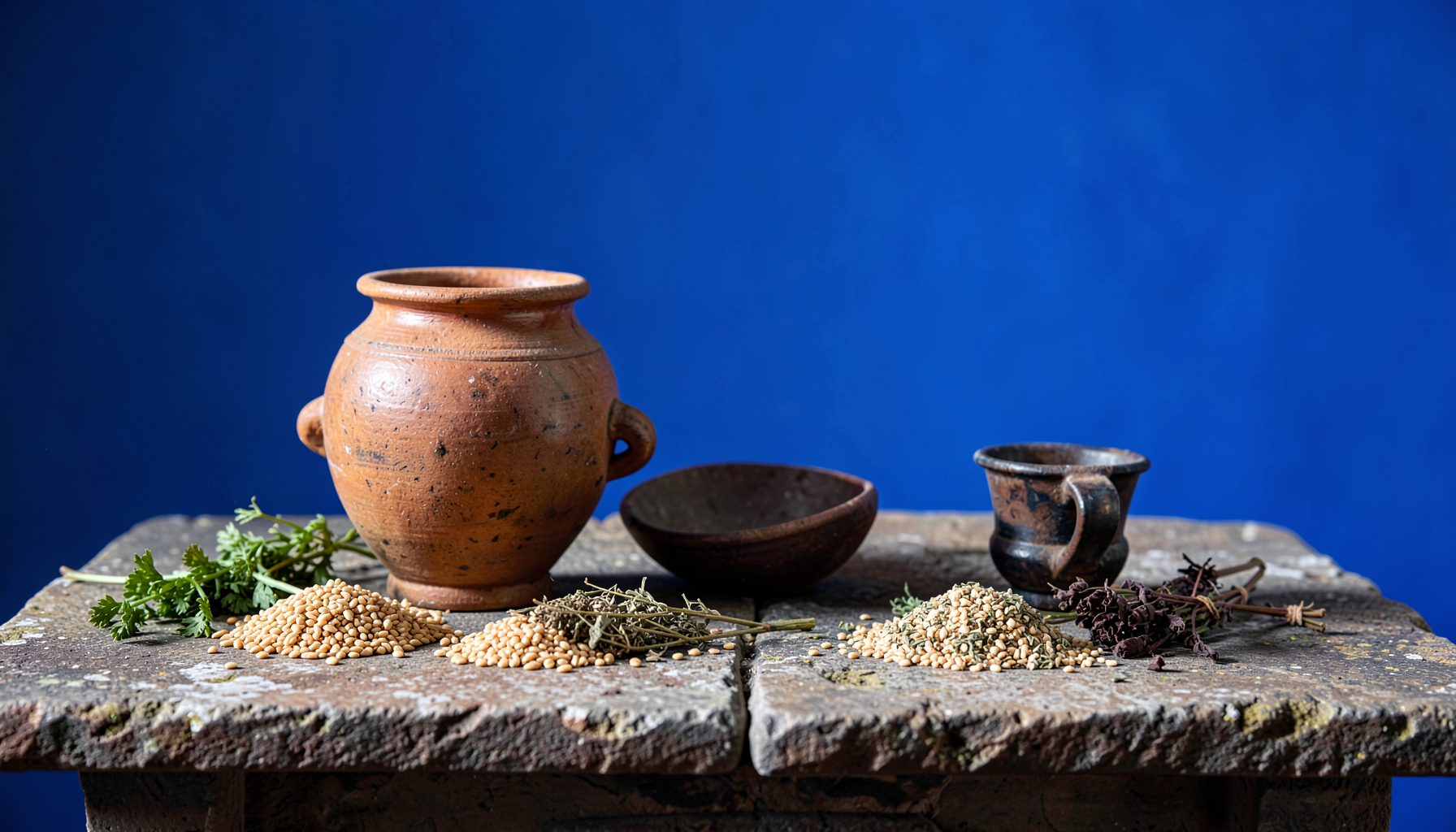
Sesame was cultivated and traded widely in the eastern Mediterranean. The seeds could be toasted, ground into a paste or mixed whole through a dough. Toasting intensifies their nutty flavour, but it also makes them quick to burn, so a low pan and frequent stirring are important when recreating the sweet.
Honey supplied sweetness, aroma and binding power. Greek honeys varied according to landscape and season, from delicate coastal flowers to strongly scented mountain varieties. An Australian equivalent might be a light ironbark honey, a fragrant yellow box honey or a darker native-flower honey. Each will change the character of the cake, so a mild honey is best for a first attempt.
A reconstruction can also include flour, crushed walnuts or almonds, and a little olive oil. These additions are plausible within ancient Greek baking practice, though they should be presented as culinary interpretation rather than proven ingredients in every wedding cake. A pinch of salt, ground coriander or cinnamon can balance the sweetness without overwhelming the sesame.
Reconstructing The Ancient Texture
The simplest method begins with a dry pan of sesame seeds. Toast them until fragrant and lightly golden, then combine them with warmed honey. The mixture can be pressed into an oiled dish and cut while still pliable. This produces something close to a soft sesame nougat or dense seed cake, with a texture between a flapjack and a firm confection.
A second version uses flour and olive oil to create a small baked cake. Mix toasted sesame with flour, crushed nuts and enough honey to form a sticky dough, then shape it into rounds or press it into a shallow tin. Bake gently until the edges colour. Excessive heat can make honey bitter and turn the sesame seeds hard.
The finished cake should not resemble a modern sponge. Ancient sweeteners did not produce the same light crumb, and leavening was limited or absent in many household preparations. A compact, chewy slice makes better historical and sensory sense, particularly when served in small pieces beside fruit, wine diluted with water or a spoonful of thick yoghurt.
From Household Pantry To Wedding Table
The ingredients reveal something about ancient domestic work. Sesame needed cleaning and roasting, honey needed straining or warming, and nuts had to be cracked and pounded. A ceremonial cake converted ordinary pantry products into a food that required time, cooperation and careful presentation. Several women in a household may have contributed to preparations for a marriage feast.
Presentation could be modest or elaborate. A cake might be shaped as a round, cut into diamonds or offered in small portions on pottery plates. Fresh herbs, figs, dates or pomegranate seeds would add colour to a table otherwise dominated by bread, roasted meat, cheese and wine.
This wider setting is important. A sweet sesame cake was unlikely to be the only special dish at a wedding. It belonged to a sequence of foods that expressed hospitality and the resources of two families. For a broader comparison with an ancient feast built around a large centrepiece, see this roasted goose reconstruction, which likewise shows how ingredients can carry social meaning beyond their flavour.
A Greek Cake In The Australian Kitchen
Australian conditions make the reconstruction pleasantly accessible, although the climate affects technique. In Brisbane or Darwin, honey-and-sesame mixtures may remain soft for longer in humid weather. In Melbourne or Canberra during winter, the same mixture may firm rapidly. Work quickly when pressing the cake, and line the dish with baking paper so it can be lifted cleanly.
The local market also offers useful points of comparison. Greek bakeries in Melbourne and Sydney often sell sesame-covered breads, honey sweets and nut pastries that preserve flavour combinations familiar across the eastern Mediterranean. These are modern foods, not untouched survivals, but tasting them can help cooks understand the appeal of toasted seeds, floral sweetness and crisp pastry.
Australian honey gives the recipe its own regional identity. Lemon myrtle, macadamia blossom or eucalyptus honeys are not ancient Greek ingredients, yet they can be used thoughtfully in a modern reconstruction. A restrained native honey allows the historical method to remain central while connecting the dish to contemporary Australian produce.
Serving The Confection With Historical Restraint
Serve the cake in small wedges or squares, since honey and sesame are intensely satisfying. Fresh grapes, figs, pears or dried dates provide contrast, while plain yoghurt cuts through the sweetness. A little crumbled feta may be offered separately, reflecting the ancient habit of combining sweet and savoury foods without turning the cake itself into a novelty dessert.
Wine should be handled in a historically informed way. Ancient Greek wine was commonly diluted with water, and spices or herbs could be added in some contexts. For a non-alcoholic table, chilled grape juice diluted with sparkling water creates a similar sense of a communal drink without imitating ancient wine too literally.
The cake also works well at the end of a modern dinner party. Place it on a ceramic platter with walnuts, figs and a small dish of honey. The visual effect is generous without being elaborate, and the compact portions encourage guests to discuss the ingredients, ritual associations and limits of the evidence.
What The Evidence Can And Cannot Tell Us
Ancient food history requires a distinction between documentation and reconstruction. A text may name sesame, honey or a cake but omit quantities. An archaeological seed find can prove that a plant was present without proving how it was used at a wedding. Art can suggest a banquet scene while leaving the identity of each dish uncertain.
That uncertainty does not make experimental cooking futile. It allows the cook to test texture, fuel use, preparation time and flavour combinations while clearly labelling what is secure and what is interpretive. The most responsible version of this cake is therefore neither a claim of perfect authenticity nor a modern invention disguised as fact.
Comparative cookery can sharpen the picture. Ancient communities across Europe and the Mediterranean repeatedly combined grain, seeds and honey in griddle cakes or ceremonial sweets. A useful parallel is this account of Beltane griddle cakes, which demonstrates how a simple honeyed preparation can sit within a larger seasonal and ritual food culture.
The sesame-and-honey wedding cake survives best as a carefully framed experience: a taste of ancient ingredients, social customs and culinary technique rather than a recovered object. Prepare it with a mild Australian honey, toast the seeds patiently and serve it among fruit, nuts and conversation. Explore the wider recipes and research on Archeoricette to bring more ancient foodways to the modern table.