Baking Bread With Emmer Wheat As The Romans Did
Long before refined white flour became the standard for everyday loaves, Roman bakers worked with grains that carried more flavor, texture, and history. Emmer wheat, known in Latin as far or farris, was one of the cereals that shaped ancient Mediterranean foodways. Its firm outer husk made processing laborious, yet it produced nourishing porridges, flatbreads, and leavened loaves.
Reconstructing an ancient loaf does not mean pretending that every Roman bakery followed one fixed recipe. Grain quality, milling equipment, local customs, household wealth, and the intended meal all affected the result. Archaeological remains, agricultural texts, literary references, and practical experimentation together offer a more reliable picture than a single supposedly authentic formula.
This approach reflects the work described on the about Archeoricette, where ancient foods are studied through sources and reconstructed in a modern kitchen. Emmer bread is especially rewarding because it connects domestic cooking with Roman agriculture, trade, religion, and social identity.
Emmer Wheat In Roman Food Culture
Emmer is an ancient hulled wheat, meaning that the husk remains tightly attached to the grain after threshing. This differs from modern bread wheat, which is usually easier to thresh and mill. Romans valued emmer as far, and the word appears in contexts associated with both ordinary nourishment and important ritual traditions.
The grain had deep cultural significance. The Roman marriage ceremony called confarreatio took its name from a cake made with far. The offering was not simply food but a symbolic object connecting fertility, household continuity, and religious practice. Emmer therefore belonged to both the everyday kitchen and the ceremonial world.
In rural communities, emmer could be boiled into a thick porridge resembling puls, mixed with legumes, or ground for bread. Urban consumers might encounter loaves made from several grains, depending on price and availability. Wheat flour was graded and sold according to quality, while darker, less finely sifted meals retained more of the bran and germ.
From Hulled Grain To Flour
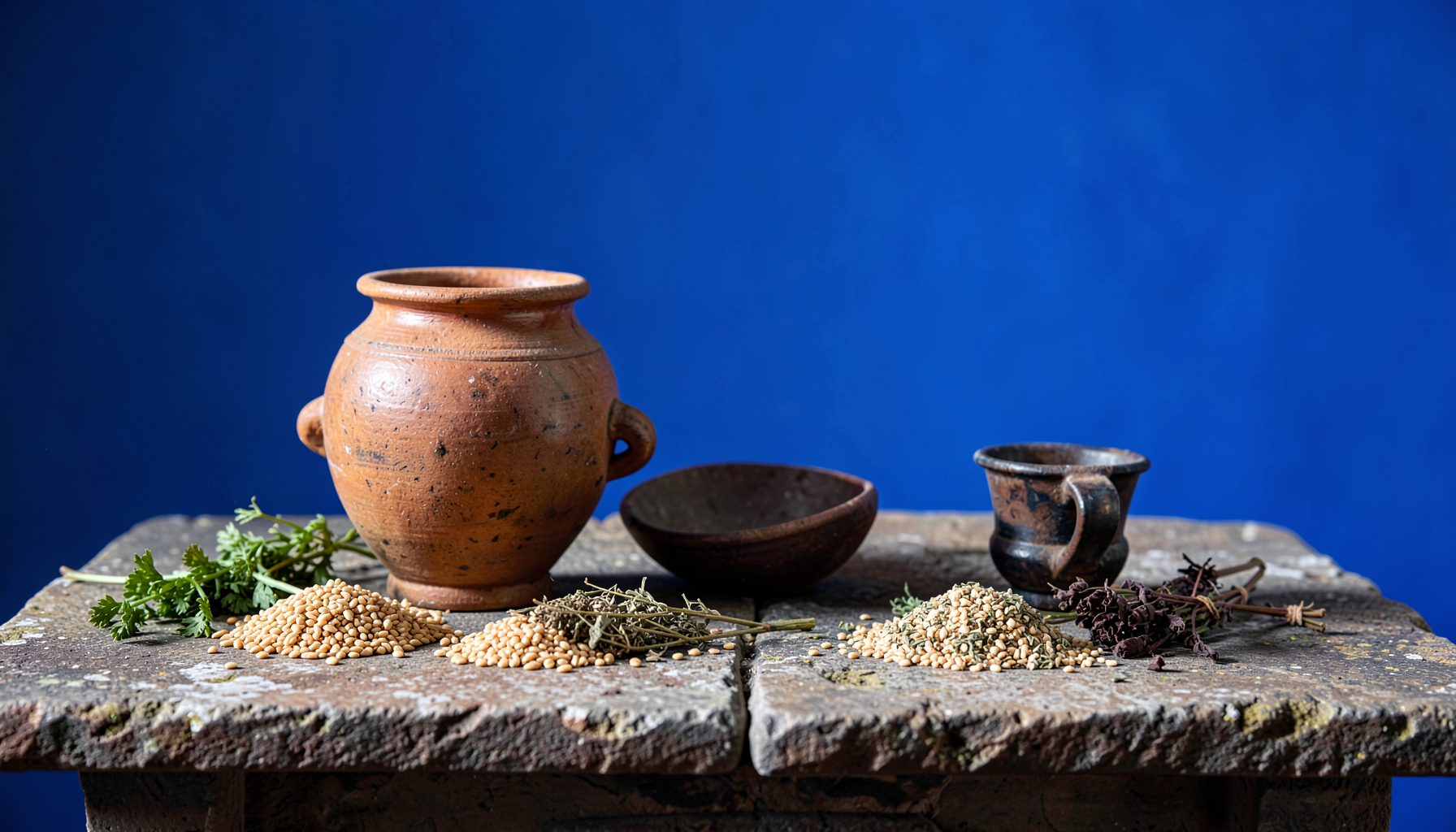
The first challenge is preparing the grain. Traditional emmer must be dehulled before it can be milled, a process that ancient households performed with pounding, rubbing, winnowing, and grinding. Archaeological querns and larger rotary mills show how cereal processing moved from domestic labor toward specialized production.
A modern cook can purchase pearled emmer, whole emmer berries, or emmer flour. These products are not identical. Pearled grain has already lost much of its husk and may cook quickly, while whole berries require more preparation. Flour labeled “whole emmer” generally offers the most convenient route to a rustic Roman-style loaf, although it represents a modern milling process.
The flour’s behavior matters. Emmer contains gluten, but its gluten network is usually more fragile than that of strong bread wheat. Dough may feel soft and extensible at first, then become sticky or lose strength if aggressively kneaded. A short mixing period, moderate hydration, and gentle handling produce a better crumb than prolonged mechanical kneading.
Building A Roman-Style Loaf
A practical reconstruction can begin with emmer flour, water, a small amount of salt, and a leavening agent. Roman bakers used sourdough and other forms of fermentation, while some doughs may have been raised with yeast-rich residues from brewing or winemaking. The exact choice depends on whether the goal is a naturally leavened loaf or a manageable modern experiment.
For a naturally leavened version, combine 500 grams of whole or sifted emmer flour with approximately 350 grams of water and 100 grams of active sourdough starter. Add 8 to 10 grams of salt after the flour has absorbed the water. The dough should be hydrated enough to avoid a dense interior but firm enough to shape without spreading widely.
Mix until no dry flour remains, rest for 20 to 30 minutes, then fold the dough several times at intervals. Allow it to ferment until visibly expanded, which may take four to eight hours depending on the starter and room temperature. Shape it into a round loaf, place it seam-side up in a floured basket or cloth-lined bowl, and give it a final rise before baking.
A covered pot or baking stone helps reproduce the intense heat of a communal oven. Bake at approximately 230°C for 20 minutes with steam or a lid, then reduce the temperature to 200°C and continue until the crust is deeply colored and the loaf sounds hollow. Let it cool fully. Freshly cut emmer bread can seem gummy, while a rested loaf reveals a nutty aroma and a firm, moist crumb.
Choosing Ingredients And Methods
The following comparison clarifies how modern ingredients can serve an archaeological reconstruction without being mistaken for exact Roman equivalents.
| Element | Ancient Roman Possibility | Modern Reconstruction | Effect On The Loaf |
|---|---|---|---|
| Grain | Hulled emmer or mixed wheat | Whole emmer flour | Nutty flavor and hearty texture |
| Milling | Hand quern or rotary mill | Stone-ground or roller-milled flour | Finer flour gives a lighter crumb |
| Leavening | Sourdough or fermented residue | Active sourdough starter | Tangy flavor and gradual rise |
| Salt | Mineral or sea salt | Fine sea salt | Enhances flavor and dough strength |
| Oven | Communal wood-fired oven | Dutch oven or baking stone | Strong crust and improved oven spring |
| Shape | Round household or bakery loaf | Boule, flatbread, or small rolls | Changes baking time and crumb density |
Sifting is another meaningful choice. A thoroughly sifted emmer flour will create a more refined loaf, closer to bread intended for wealthier consumers or urban markets. Leaving the bran in produces a darker, denser bread that better expresses the whole-grain character of rural food, though it should not automatically be labeled “poor people’s bread.”
Water absorption also varies widely. Emmer flour can require less water than modern strong wheat, but wholemeal versions absorb more because of their bran. Add water gradually, and judge the dough by touch rather than following a rigid ratio. The aim is a supple mass that can hold a rounded shape after fermentation.
Flavor, Texture, And Historical Clues
An emmer loaf should not be expected to resemble a fluffy supermarket sandwich bread. Its aroma is toasted and cereal-like, with a slight sweetness and a gentle sourness when sourdough is used. The crust can be thick and crackled, while the interior remains moist, compact, and pleasantly chewy.
Ancient descriptions sometimes praise bread according to whiteness, fineness, freshness, or the skill of the baker. These details reveal that Roman consumers recognized distinctions in flour and preparation. A dark loaf was not necessarily the only ancient option, and a pale loaf was not necessarily made from a single pure grain. Blending, sifting, and repeated milling could produce several grades.
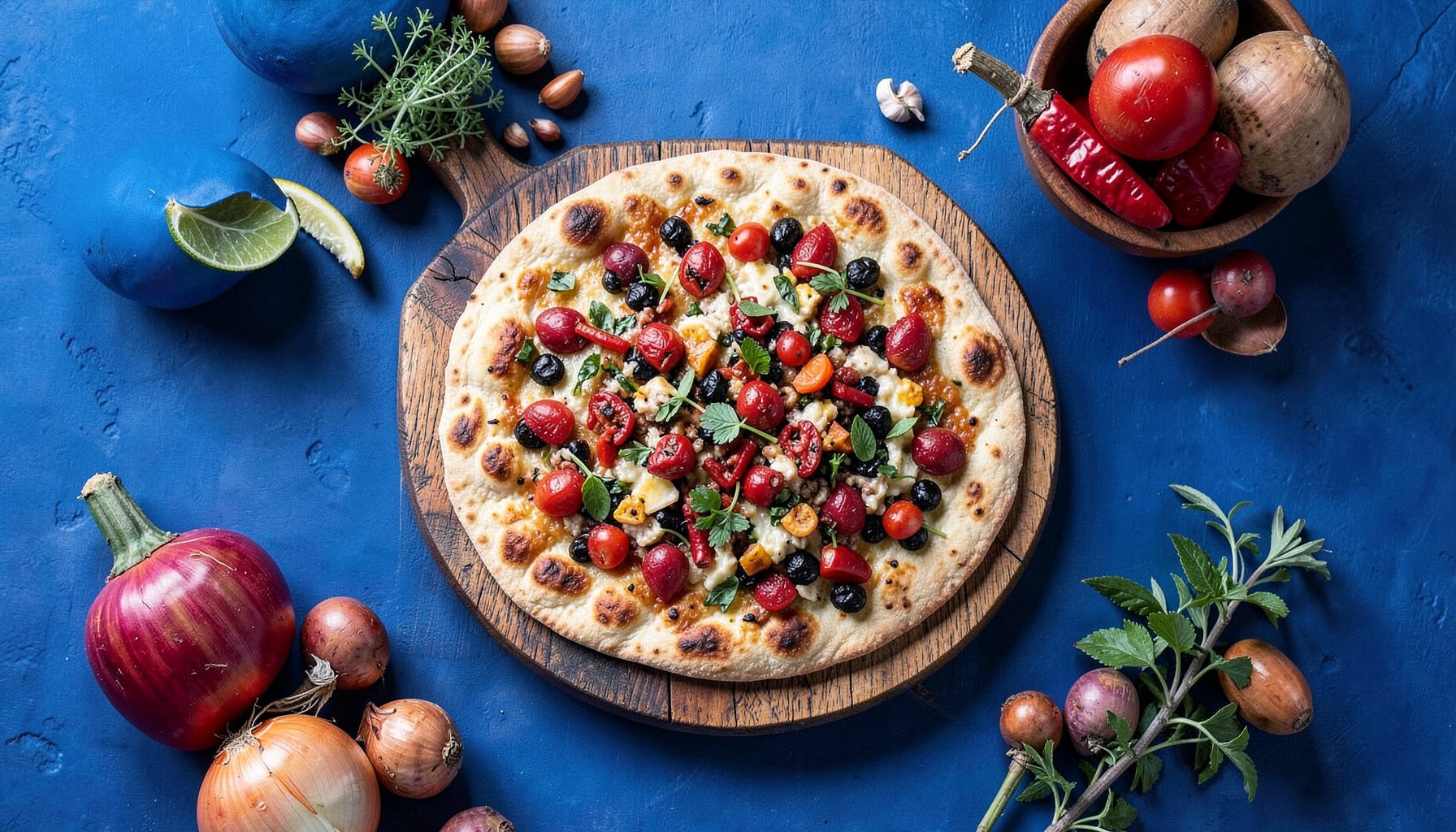
The shape of the loaf also deserves attention. Small rolls may suit a household meal, while a large round loaf evokes the bakery environment suggested by finds from Roman towns. Flatbreads are equally plausible and require less fermentation control. Pressing the dough into a shallow round and baking it with herbs, oil, or seeds creates a different but historically credible grain preparation.
Pair the bread with foods that make its character visible: lentil stew, olives, salted fish, soft cheese, roasted vegetables, or a simple pulse dish. These combinations reflect the wider Roman diet more effectively than treating the loaf as an isolated novelty. Bread was a carrier, utensil, ration, and social marker as much as a baked product.
Reading The Evidence Through Experiment
Experimental archaeology is useful because written sources rarely provide a complete recipe. Roman agricultural authors discuss sowing, harvesting, storage, and milling, but they do not always specify hydration, fermentation time, or oven temperature. Archaeobotanical remains identify crops and processing traces, while ovens and carbonized loaves provide additional clues.
A reconstruction should therefore keep its claims proportionate. It is reasonable to say that emmer flour, sourdough fermentation, hand shaping, and high-heat baking can create a loaf compatible with Roman ingredients and techniques. It is harder to claim that a particular modern formula reproduces the exact bread eaten in a specific Roman household.
Documentation makes the experiment more valuable. Record the flour type, extraction rate, water quantity, fermentation temperature, cooking vessel, and final texture. Compare a sifted and wholemeal batch, or bake one loaf with sourdough and another with a small modern yeast culture. Such comparisons reveal how processing decisions influence the final food.
Readers interested in the wider historical context can explore the project’s published books, which extend the study of ancient food beyond individual recipes. When sharing a reconstruction, also distinguish historical evidence from modern adaptation and consult the site’s cookie policy when browsing its research resources.
Practical Choices For A Home Bakery
A first attempt is easiest when the recipe remains small and observations are written down. Emmer dough rewards patience, but it does not reward excessive handling. The following choices help preserve its character while keeping the process reliable:
- Use whole emmer flour for a robust, rustic loaf, or sift part of it for a lighter texture.
- Begin with moderate hydration and add water only if the dough feels stiff after resting.
- Choose sourdough for depth of flavor, or use a small amount of baker’s yeast for a faster rise.
- Bake in a preheated covered pot to retain steam and strengthen the crust.
- Cool the loaf completely before slicing, then serve it with pulses, cheese, olives, or stewed vegetables.
A Roman-inspired bread need not be perfectly symmetrical. Uneven scoring, a thick crust, and a close crumb are signs of a grain with different properties from modern high-gluten wheat. The most useful result is a loaf that allows the baker to taste how cereal variety, milling, fermentation, and heat work together.
From Grain To Hearth
Baking with emmer opens a direct sensory route into Roman history. The work of mixing, folding, waiting, and breaking a crusted loaf brings attention to the labor hidden behind ancient meals. It also shows why grain processing was central to household economy, public provisioning, and ritual life.
Bake one loaf with whole emmer, note its aroma and texture, and record each stage of the process. Then share the result as part of a continuing exploration of ancient foodways: a practical reconstruction grounded in evidence, shaped by careful observation, and finished at the modern hearth.