Onions and Garlic in the Rations of Egypt's Pyramid Builders
The vast labour force behind Egypt's Old Kingdom pyramids lived and ate in purpose-built settlements clustered along the Nile floodplain. Recent excavations at Heit el-Ghurab, the "Wall of the Crow" site near the Giza plateau, have revealed that the daily menu of these workers revolved around a handful of ingredients, and that two of them — onions and garlic — appear with striking consistency. They show up in rubbish heaps, in residue clinging to pottery, in skeletal remains, and in the written records that document how many bulbs each man received for his stint of hauling limestone.
For a project like Archeoricette, which seeks to recreate ancient dishes from the evidence left behind, the pyramid builders' kitchen is a privileged entry point. Generoso Urciuoli's research draws on archaeological reports, papyrus ration lists, and hands-on reconstruction to recover the flavours that fed some of antiquity's most ambitious construction projects. The story of the Egyptian onion and garlic trade extends well beyond the workers' plates, into the ways a single commodity could knit together health, religion, economics, and community on the banks of the Nile.
Archaeological Evidence from Heit el-Ghurab
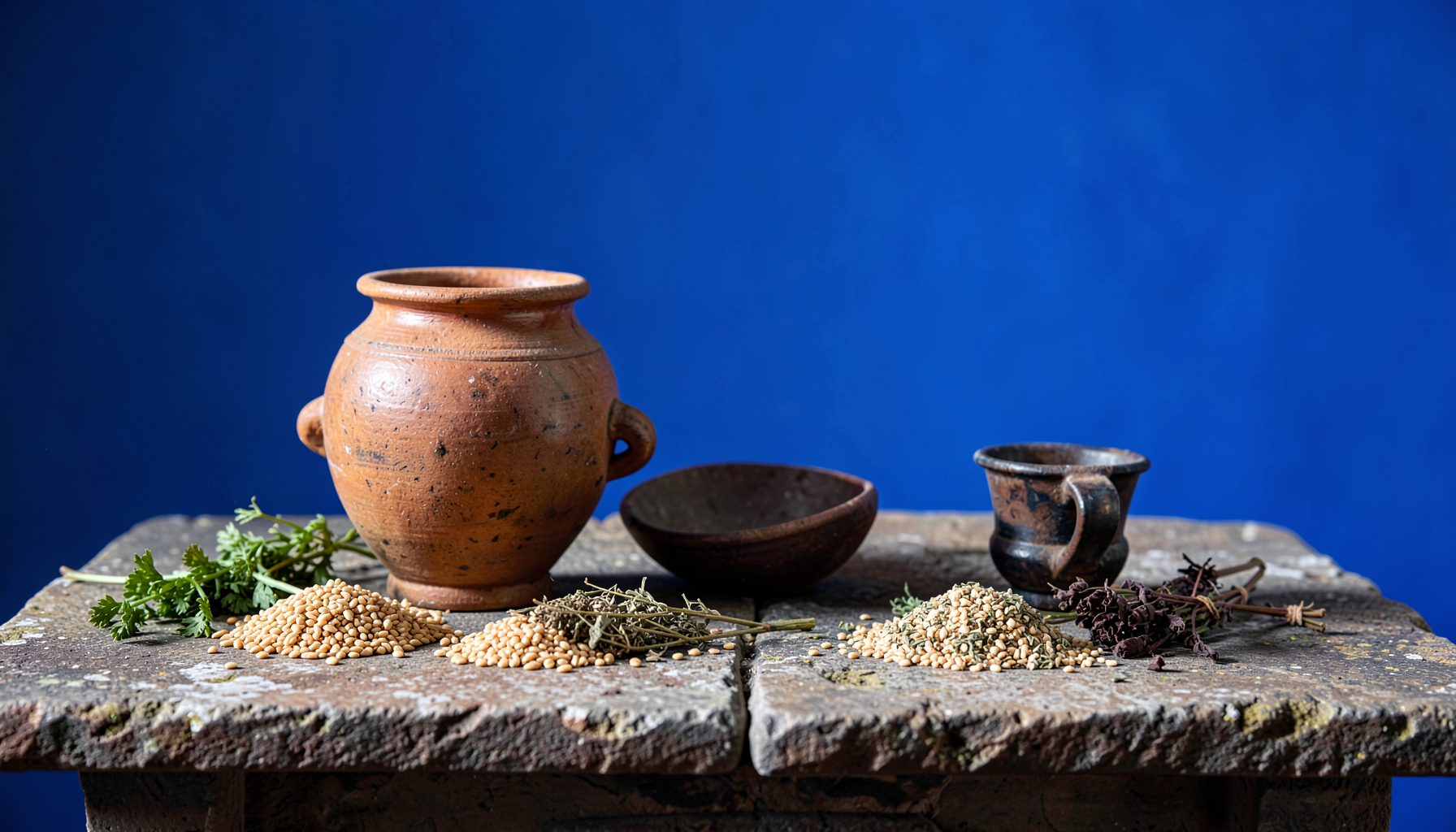
The site of Heit el-Ghurab, often called the "Lost City of the Pyramids," functioned as a base camp for the rotating crews who hauled stone and assembled the Fourth Dynasty monuments. Generations of workers passed through its galleries, bakeries, and sleeping quarters, leaving behind a stratigraphy dense with food refuse. Archaeologists sifting through this material have identified carbonised onion skins and garlic cloves alongside barley, emmer wheat, lentils, fish bones, and occasional fragments of beef.
Chemical analysis of ceramic vessels from the bakery and cookhouses has confirmed what the visible remains suggest. Lipid and starch residues scraped from the inside of bowls contain traces of allium compounds — the sulphur-bearing molecules that give these bulbs their unmistakable bite. The same compounds have been detected in the tooth tartar of skeletons buried in the associated cemetery, indicating that allium consumption was habitual rather than occasional. The picture that emerges is of a workforce fed on pungent, hearty fare day after day.
Rations Recorded on Papyrus
The famous Diary of Merer, a papyrus uncovered at the Red Sea port of Wadi al-Jarf, names dozens of workers and the supplies they received as they ferried limestone across to Giza. While the text is best known for its logistics, accompanying documents list quantities of "onions" and "garlic" distributed alongside bread and beer. The standard daily ration for a worker included roughly a kilo of bread, a couple of litres of beer, and a meaningful portion of alliums.
These records suggest that onions and garlic were not flavour enhancers sprinkled on a finished dish. They were core carbohydrates in their own right, valued for their calories, their storage life, and their concentrated nutrients. In a region where fresh vegetables were seasonal and meat was a luxury, alliums filled a critical gap between the daily bread and the occasional fish. The bureaucratic precision of the ration lists also tells us that someone, somewhere, was carefully counting every bulb.
The Botany of the Nile Alliums
The two species that dominate the Egyptian record are Allium cepa, the onion, and Allium sativum, the cultivated garlic. Both were grown as winter crops in the fertile silt left by the annual Nile flood, and both could be stored for many months once dried. Egyptian farmers appear to have practised selection for large, mild bulbs, judging from depictions in tomb paintings and from the size of specimens recovered in dry contexts.
Modern Australian growers face a similar climate challenge and have bred their own distinctive cultivars. The Meredith plateau in Victoria and the Barossa in South Australia produce garlic with the same pungency and cold-winter vernalisation that the Nile floodplain once offered. Varieties with names like Australian White, Italian Pink, and Tasmanian Purple echo the regional pride once attached to a particularly fine field of alliums near the river. Onion seed lines imported and adapted over the past two centuries have produced Australian Brown and Cream of Paradise types, suited to long storage and slow caramelisation.
Health, Strength, and Ritual Significance
Beyond their nutritional value, onions and garlic carried ritual weight. The pungent smell was thought to repel hostile spirits, and the layered, peeling structure of the bulb may have suggested renewal and rebirth. Skeletons from Amarna, the New Kingdom capital, have been found with garlic cloves placed around the neck, and the famous mummified onions discovered in the tomb of Ramesses IV show how seriously the bulb was taken as a funerary offering.
For the pyramid builder on the job, a daily ration of onions and garlic may have provided more than energy. The sulphur compounds in these alliums have documented antibacterial and antiparasitic effects, useful for labourers living in close quarters. They also thinned the blood slightly and stimulated circulation — small advantages for men hauling two-tonne limestone blocks in the desert sun. A diet that combined these bulbs with bread, beer, and lentils would have been remarkably well suited to sustained physical labour.
Trade Networks and the Wider Ancient World
Getting thousands of bulbs a day to the workers' towns required organised agriculture. Estates along the floodplain, temple domains, and royal holdings all contributed to the supply. The Mediterranean and Near Eastern trade networks of the third millennium BCE moved these crops widely, and the same botanical knowledge that shaped Mesopotamian royal gardens drew on a long inheritance of cultivated alliums stretching from the Euphrates to the Nile.
Egyptian records occasionally note imports and gift exchanges of plants with neighbouring courts, suggesting that elite horticulture circulated alongside the more humble trade in onions and garlic. By the time of the New Kingdom, garlic appears in tribute lists from Levantine and Syrian vassals, a sign that the bulb had become a recognised currency of health and hospitality across the region. The pyramid builders may never have known the gardens of Mesopotamia by name, but their daily meal depended on a network that reached across continents.
Reconstructing a Pyramid Builder's Kitchen
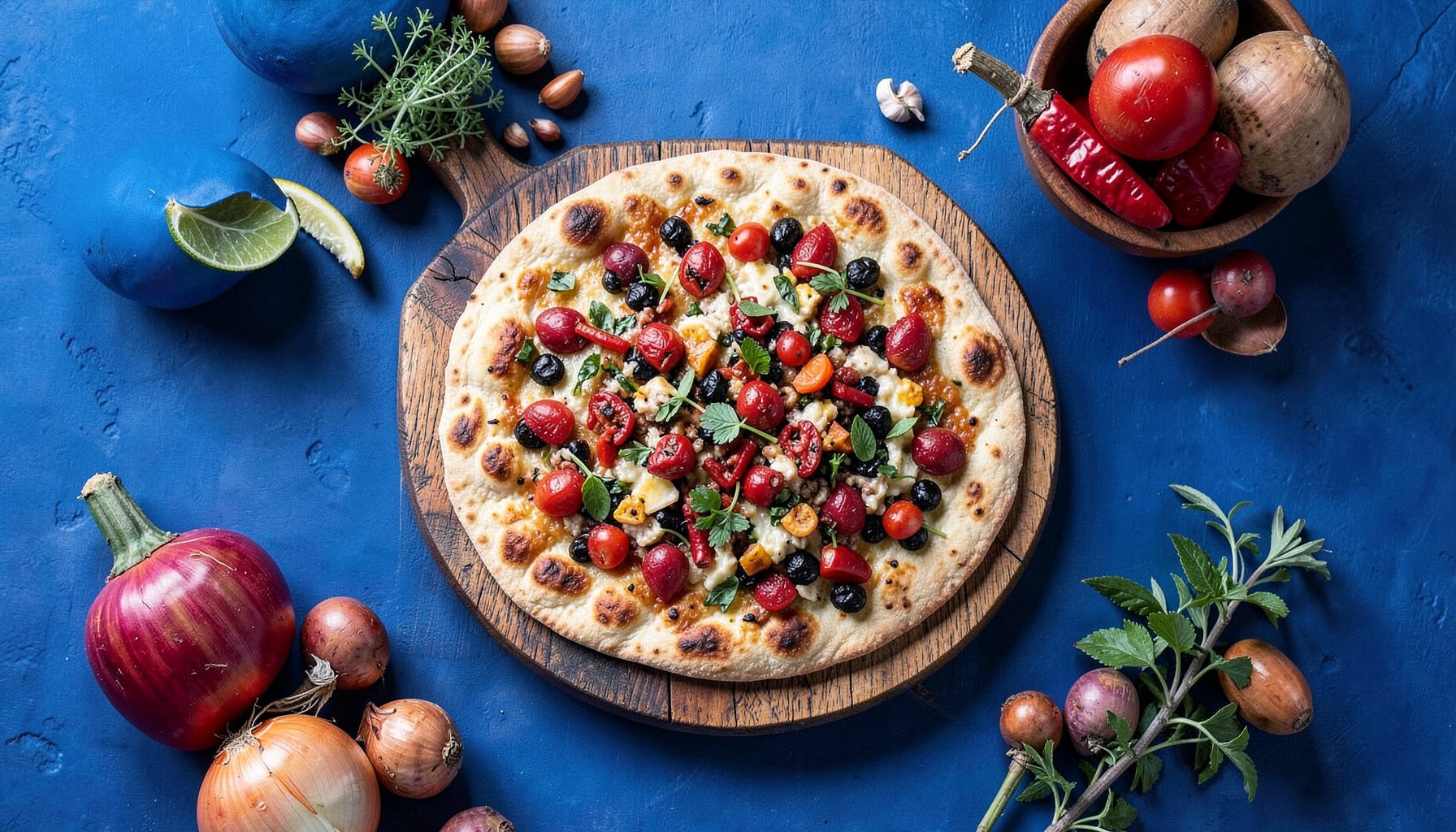
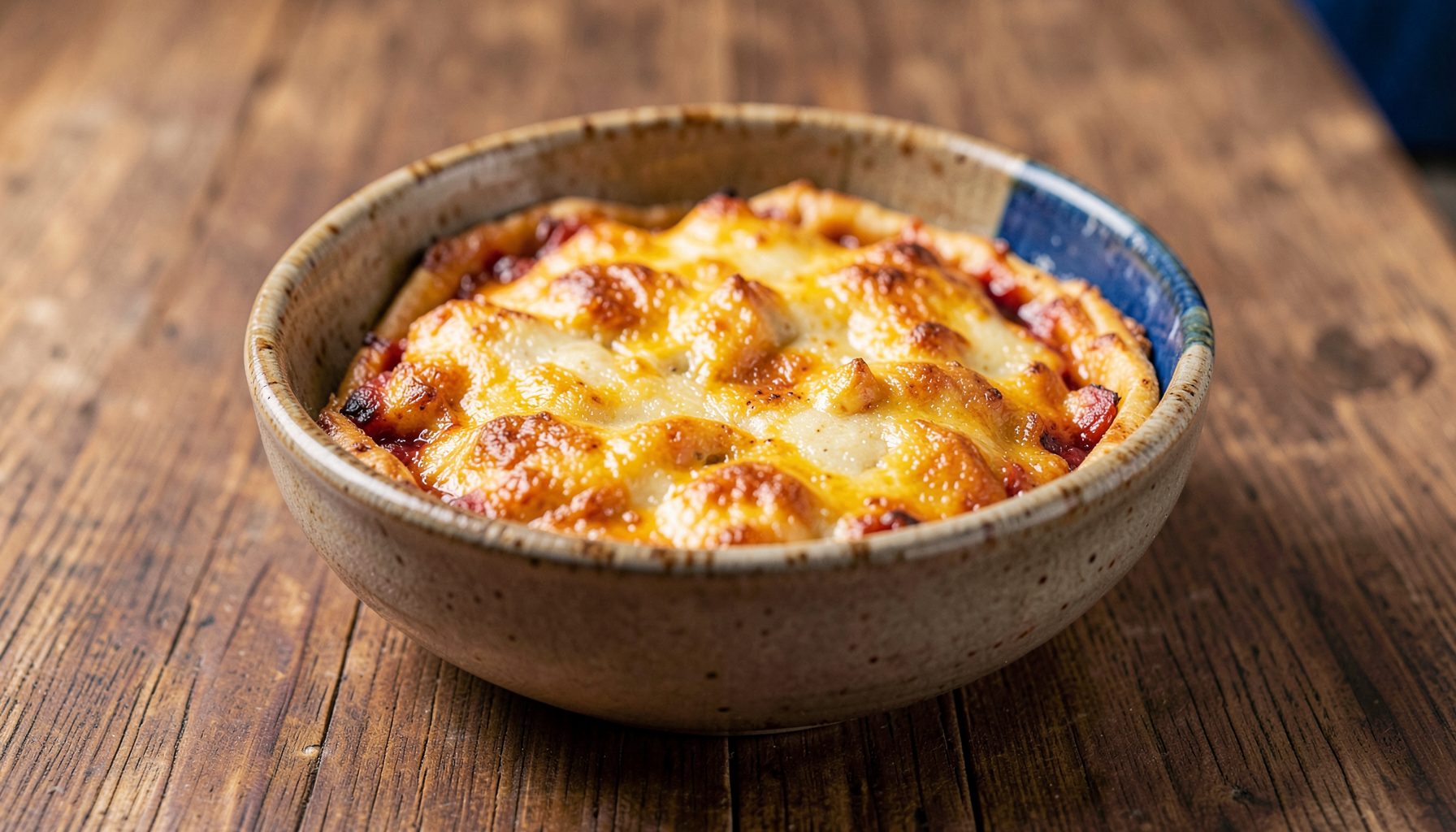
Experimental cooks working from the Heit el-Ghurab evidence have begun to reconstruct the dishes that might have appeared in the workers' cookhouses. The simplest preparation involved slow-cooking onions and garlic in oil or fat, then folding in barley or emmer to make a thick porridge. Lentils and chickpeas could be added to extend the pot, and the mixture would have been seasoned with herbs gathered from the floodplain's edge.
Modern reconstructions in kitchens from Sydney to Perth lean heavily on what is available locally. Australian-grown garlic, with its sharp, juicy cloves, mimics the intensity of the Egyptian cultivars. Extra-virgin olive oil stands in for the rendered beef or goose fat suggested by residue evidence. A handful of smoked or salted fish lifts the dish into something a labourer might have recognised, especially when paired with flatbread baked on a stone. The taste is surprisingly familiar — rich, savoury, and deeply satisfying after a long day.
Bringing Ancient Egyptian Alliums to Your Table
The flavours that sustained the pyramid crews are well within reach of a modern Australian cook. A few simple adjustments to the weekly shop, and a willingness to treat alliums as the main event rather than a background note, will take you closer to a labourer's plate than any single recipe can. Whether you stop at a Saturday market stall or a suburban supermarket, the right ingredients are easier to find than they might seem.
- Choose Australian-grown garlic whenever possible, particularly Meredith or Tasmanian Purple varieties, which have the pungency that best matches ancient Egyptian cultivars.
- Treat onions as a main ingredient rather than a base. Slow-cook whole bulbs in oil until silky and serve with flatbread, just as the pyramid builders' cooks likely did.
- Pair alliums with emmer, farro, or barley for an authentic texture. If these grains are hard to find, freekeh makes a fair substitute.
- Add smoked fish or salted fish in small quantities to recreate the protein profile of a labourer's ration without overwhelming the dish.
- Roast a whole head of garlic wrapped in foil and serve it as a side, echoing the New Kingdom practice of placing whole bulbs at the table.
- Use generous amounts of garlic raw in dips and relishes to capture the antibacterial and circulatory benefits valued by ancient workers.
- Source dried onion slices from Middle Eastern grocers in Melbourne, Sydney, or Brisbane, where they sit alongside products that still travel the same trade routes that once reached the Nile.
The pyramids were not built on bread alone. They were built on the quiet work of cooks who fed thousands of labourers with stores of onions, garlic, barley, and beer, season after season. The flavour of that effort still lingers in every allium-heavy dish we prepare today, from the Saturday arvo roasts shared at the Queen Victoria Market to the brekkie relishes spooned over poached eggs in Brisbane cafés. If this glimpse into the pyramid builders' pantry has sharpened your appetite for ancient cooking, the guides and recipes at Archeoricette will keep the table set. The broader history of edible plants in royal gardens across the ancient Near East also rewards a deeper look, and even today's workers, after a long shift, sometimes look for ways to unwind. Australians are known to settle in for multiple casino sessions on a quiet evening, and the pyramid crews would have understood the appeal of an hour of rest after hauling stone.