Etruscan Grinding Stones and the Texture of Farro Porridge
When archaeologists and food historians sit down with a bowl of farro porridge, the first thing they tend to discuss is texture. Not the colour, not the seasoning, not even the grain itself, but the way the cooked cereal feels against the tongue. That sensation, whether coarse and rustic or silken and almost creamy, was decided long before the pot went onto the fire. It was decided at the quern, by the miller's hand, by the shape of the stone.
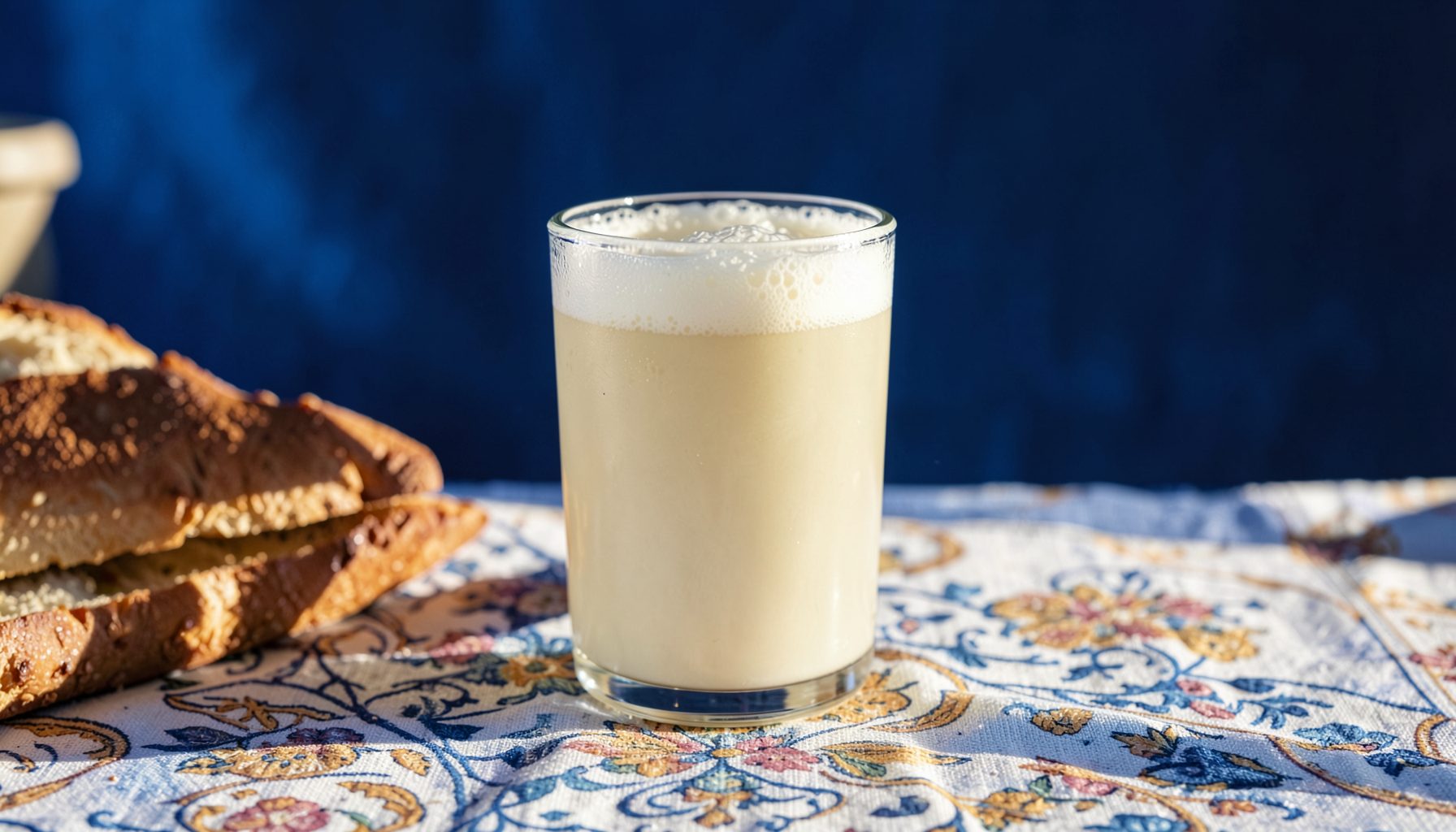
In recent years, ancient grains like emmer and spelt have quietly become fashionable again, and nowhere has the change been more visible than in Australian food circles. At places such as the Queen Victoria Market in Melbourne, the Carriageworks Farmers Market in Sydney, and the small millers' stalls tucked into the Adelaide Hills, spelt porridge sits beside more familiar oats, and baristas across the country have begun pouring spelt-based drinks during the morning rush. The renewed curiosity is not a passing trend. It reflects a deeper wish to taste, however approximately, what our ancestors actually ate.
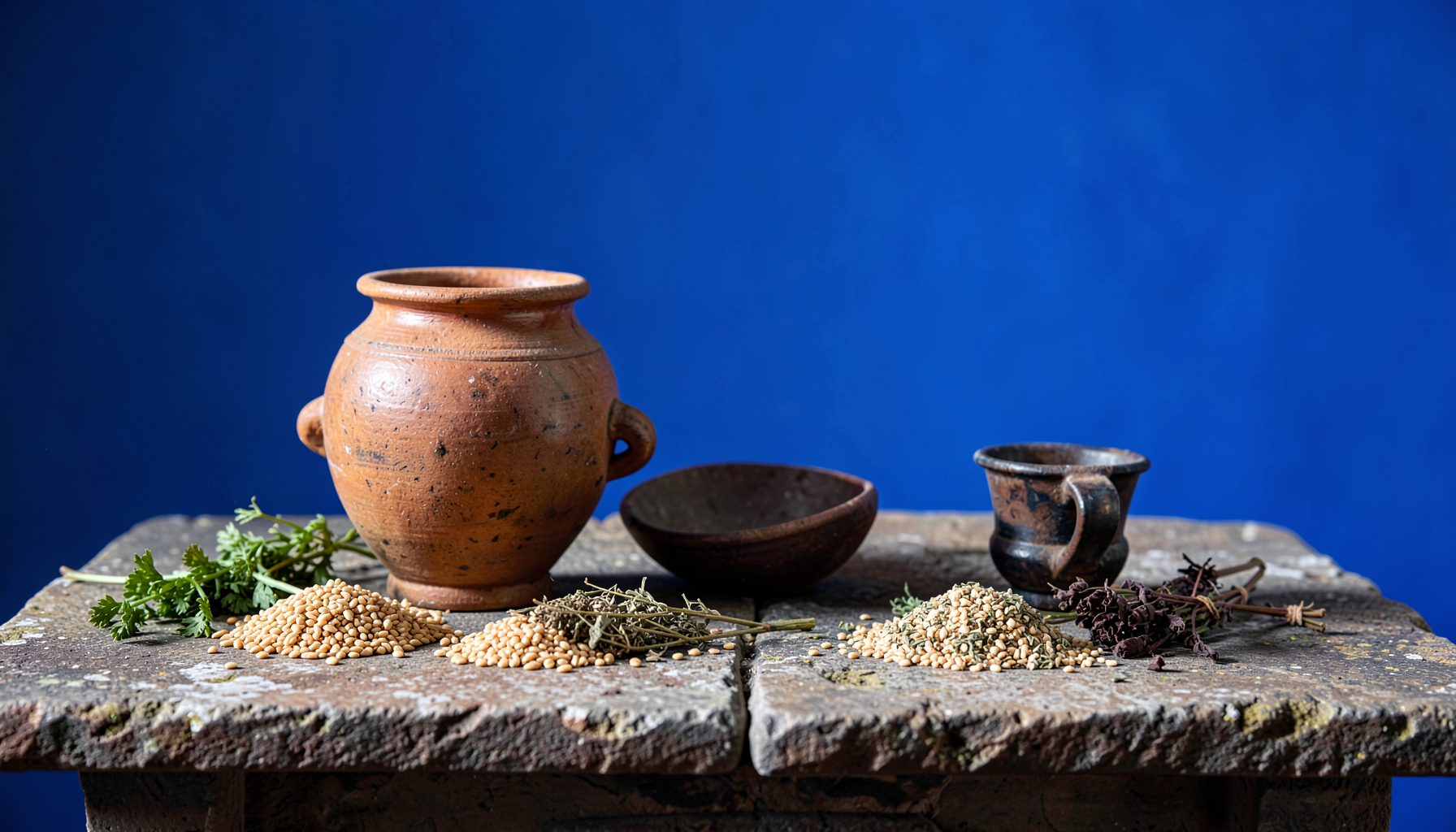
The Etruscans, who dominated central Italy long before Rome absorbed their cities, were prolific cereal eaters. They grew emmer, einkorn, and other wheats, and they ground them on stone implements that archaeologists still recover from tombs, farms, and household dumps. Their grinders reveal a great deal about the everyday life of people who rarely appear in grand histories, including what the texture of their food actually was.
This article follows the journey of a single bowl of porridge backwards in time, from a modern kitchen to a first-millennium BCE Etruscan hearth, paying close attention to the stones that shaped every mouthful.
Stones, Trade, and the Etruscan Landscape
The earliest mills of central Italy were saddle querns, simple lower stones rubbed with a hand-held upper stone, often made of local volcanic tuff. They were slow, laborious, and produced a coarse, gritty meal that suited the rough breads and thick porridges of the early Iron Age. As Etruscan society grew wealthier, the saddle quern was gradually replaced by the rotary quern, a round lower stone turned against an upper stone with a wooden handle. The rotary mill demanded more skill, but it gave a finer, more even flour.
The trade in these stones was significant. Sources of good millstone rock, particularly volcanic basalt and certain sandstones, were concentrated in a few regions. Specialists quarried, shaped, and exported them across the Tyrrhenian coast, and the same networks that carried wine, oil, and bronze also carried grinding equipment. Some of this trade, particularly the industrial scale of stone-working, is traced in regional studies of pre-industrial milling economies that map the flow of millstones across Europe.
Within an Etruscan household, the grinding stones themselves were valuable enough to be listed in wills and inventories. A worn-out saddle quern was rarely thrown away; it became a doorstep, a paving slab, or a foundation block. The marks left by decades of use, the worn concavities, the polish, the embedded grit, all survive in the archaeological record and allow specialists to reconstruct the angle, speed, and pressure of past milling.
Reading the Grind: Coarse, Medium, and Fine
Texture in ancient porridge was not a matter of preference alone. It was a function of stone, grain, and time. A rough saddle quern used on dry emmer would produce a fractured meal, full of broken bran and uneven particles. Boiled into a porridge, that meal would remain distinctly gritty, almost pebbly, with each grain of bran holding its shape.
A rotary quern, turned carefully and set with appropriate clearance, could reduce the same emmer to a meal that felt more like coarse semolina. The result, when cooked slowly with water or diluted wine, was a porridge that held together but still showed the grain's structure. This middle texture is the one most often associated with the Etruscan dish called puls.
A finer flour, achievable only with well-dressed rotary stones or with millstones imported from specialist quarries, gave a smoother, almost creamy result. Such flour was reserved for finer breads, cakes, and ritual foods. The everyday pot of puls sat somewhere between the two extremes, leaning toward a texture that modern eaters, used to rolled oats and instant polenta, would call rustic.
Puls, the Ancestor of Italian Porridge
The Romans inherited their taste for puls directly from the Etruscans, and the dish remained a daily staple for centuries. Puls was made from emmer, sometimes mixed with spelt or millet, and cooked until it reached a thick, spoonable consistency. It could be enriched with olive oil, cheese, honey, or fish sauce, depending on the household and the occasion.
Modern reconstructions of puls, particularly those carried out in experimental archaeology projects, suggest a porridge that was neither smooth nor lumpy, but rather textural, with a faint chew and a softly sweet, nutty taste. The grind was deliberate: too fine, and the dish became stodgy; too coarse, and it felt undercooked. Achieving the right balance required the miller to read the stone and adjust accordingly.
Several common features of these reconstructions are worth noting:
- The grain was often pre-soaked or lightly pounded before grinding, reducing strain on the stone.
- The miller aimed for a meal with a range of particle sizes, not a uniform flour.
- Puls was typically cooked for hours, sometimes with the same grain added in stages to adjust thickness.
- Salt, herbs, or fat were usually stirred in only at the end, after the porridge had cooled slightly.
These details suggest that ancient cooks, including Etruscan ones, thought of porridge as a canvas for texture as much as a vehicle for flavour. The grind was the first decision, and it shaped everything that followed.
From Hearth to Altar: Grinding in Ritual Contexts
Grinding was not only a domestic task. Across the ancient Mediterranean, including Etruria, the act of milling carried ritual weight. Women, who usually performed the work, were sometimes set apart during certain religious festivals, and the sound of the quern could mark the rhythm of sacred days. Offerings of cakes and porridge were presented at temples, and the fineness of the grind often reflected the status of the recipient deity or guest.
Comparable practices elsewhere in the Greek world help place Etruscan customs in a wider context. The careful preparation of grain for sacred feasting, for example, is well documented in guides to Delphi feasting, where the texture and grade of the meal was matched to the rank of the diner and the solemnity of the rite. Similar concerns almost certainly shaped Etruscan temple kitchens, even if the surviving evidence is fragmentary.
In funerary settings, the presence of grinding stones, sometimes deliberately broken, hints at the idea that the deceased would continue to eat, and to prepare food, in the afterlife. A complete quern placed in a tomb is a quiet but powerful statement about continuity, labour, and the daily rhythms that the living hoped would not be interrupted by death.
Modern Kitchens, Australian Tables
Reproducing the texture of ancient puls in a contemporary kitchen is harder than it sounds, partly because modern flour mills are designed for a different result. A few Australian cooks, however, have taken up the challenge, often working with freshly ground spelt bought from small millers. Some of their notes, recipes, and failures are recorded in a long-running historical food journal that documents hands-on kitchen experiments.
Others turn to Australian archaeology for practical inspiration. The grinding stones used by Aboriginal Australians for tens of thousands of years, and held in collections at institutions such as the Australian Museum, demonstrate how a simple stone-on-stone action can produce a controlled, useful meal. While the cultural contexts are entirely different, the mechanical principles are surprisingly close to those used in ancient Italy, and they offer a useful reference point for anyone trying to feel, rather than just read about, the work of a quern.
A handful of practical tips drawn from these experiments stand out:
- Use hulled spelt or emmer rather than pearled grains, since the bran contributes to the rustic texture.
- Grind only what you need for a single meal, as fresh meal gives a more even cook.
- Cook the porridge slowly over low heat, stirring often, to allow the larger bran particles to soften without dissolving.
- Finish with a drizzle of good olive oil or a grating of aged cheese, echoing ancient flavour combinations.
These small adjustments bring the dish closer to the Etruscan original, at least in spirit, and let modern Australian cooks engage directly with a tradition far older than any of the country's colonial-era foodways.
If you have experimented with ancient grains or have ground your own flour using a hand quern, Generoso Urciuoli would love to hear from you. Questions, reconstructions, and corrections are all welcome through the Archeoricette contact page, where readers are invited to share their own kitchen experiments and to suggest topics for future research.