Greek mountain herbs and goats' milk cheese
Greek mountain herbs in goats' milk cheese production connect pasture, dairy craft, and regional identity. Across Greece's uplands, aromatic plants define summer grazing, and milk from goats and sheep has long been turned into compact cheeses that travel well from remote dairies to village tables. The result is not one fixed formula but a family of techniques shaped by altitude, season, available salt, smoke, and the plants growing close to the herd.
Archeoricette approaches such foodways through archaeological evidence, ancient texts, and experimental reconstruction. That method keeps two ideas in view: cheese was an ancient staple, while a modern mountain cheese carries a long, living history rather than a laboratory-perfect survival from antiquity. A useful reconstruction can therefore combine historical clues, knowledge of pastoral environments, and careful observation of what happens in a present-day kitchen.
Landscape, herds, and seasonal rhythms
Herds moved between lower winter pastures and high summer meadows, and their milk reflected the plants available at each stop. Goats browse shrubs and tough herbs that larger cattle often ignore, while sheep graze closer to the ground. Both traits encouraged dairies in rugged districts to work milk quickly, often before its aroma could fade. Mountain herbs also entered the cheese later as dried seasonings, brine ingredients, or fragrant smoke.
Ancient evidence supports the broad sequence without supplying a single Greek formula. Literary sources discuss milk, cheese, and the influence of diet; Aristotle, for example, treated animal feeding and milk properties as connected questions. Archaeologists have found dairy-related vessels, presses, molds, and storage containers in settlements around the Mediterranean. These finds show that cheese-making was organized craft, but they do not prove that every modern oregano-and-thyme combination existed in classical kitchens.
Scale is another useful clue. Aggregated population estimates for ancient regions can suggest how densely communities were settled, which affects the balance between arable food and mobile pastoralism. They cannot tell us the flavor of a cheese, yet they help explain why portable, high-value dairy foods could matter in landscapes where seasonal movement and limited storage shaped daily work.
The aromatic plants behind the flavor
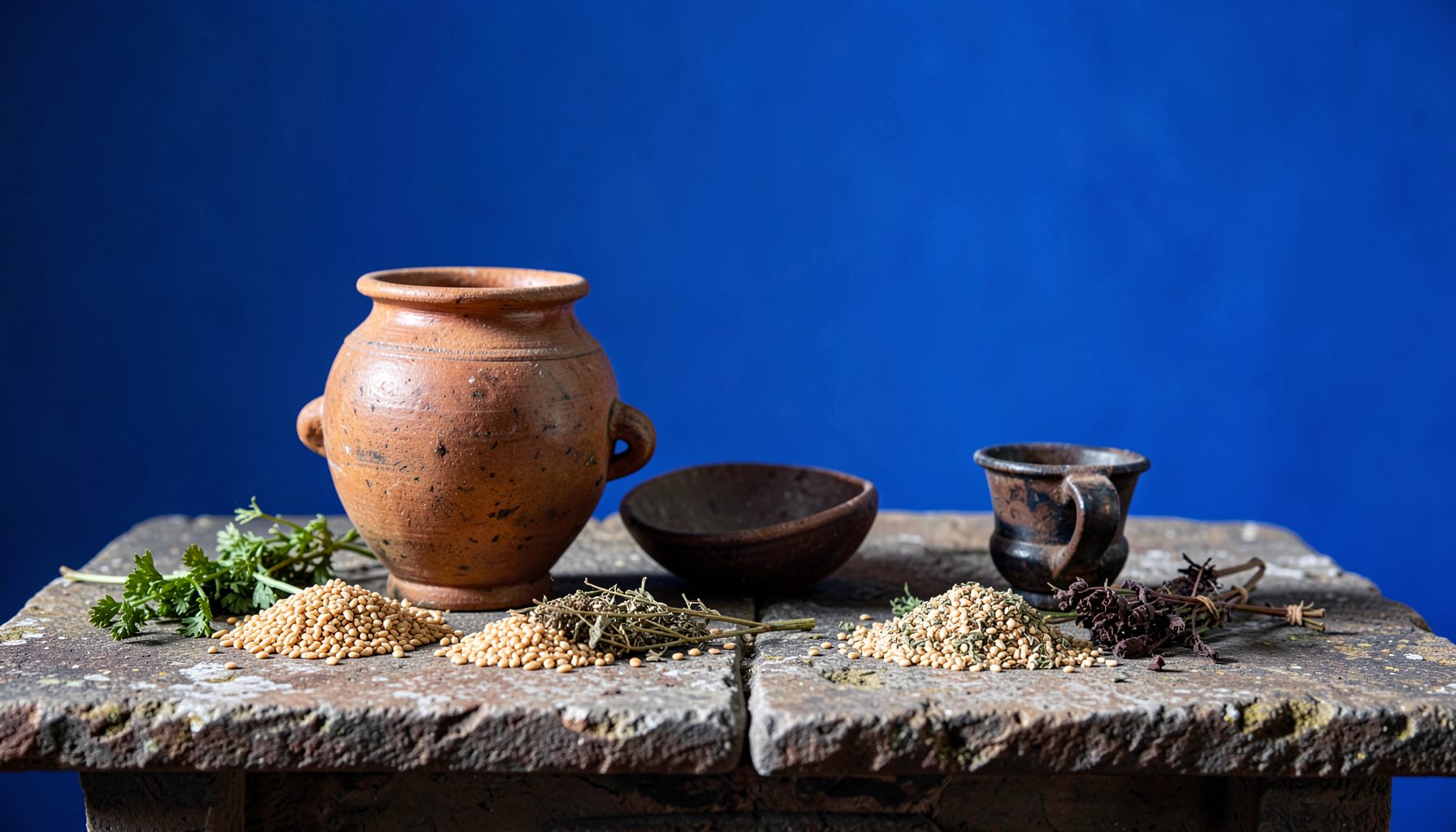
The most convincing plant set comes from the same hillsides as the animals: Greek oregano, common thyme, mountain savory, sage, rosemary, mint, wild fennel, and the regional Sideritis known as mountain tea. Ancient botanical writings, including Dioscorides' De materia medica, describe thyme, oregano, savory, fennel, and mint, although medicinal uses cannot automatically be read as recipes. Plant identity still matters, since volatile-oil proportions can vary considerably between populations.
Herbs are also ingredients, not decorations. Bruising releases oils into brine or surface moisture; crushing them too early exposes those compounds to air and heat. Drying in shade helps retain aroma, and using flowering tops with small leaves often gives more flavor than bare stems. Salt draws out moisture and firms the rind, allowing herb particles to adhere, but herbs themselves should never be treated as a substitute for controlled acidification, salting, refrigeration, and sound hygiene.
Sweetness needs comparative care. The site's account of ancient Egyptian honey shows how honey could soften bitter or acidic foods within a wider Mediterranean pantry, yet an Egyptian example cannot be transferred into a Greek recipe without evidence. For an experimental wheel, honey is best treated as a modern pairing: a small spoonful can reveal the cheese's tang, but it should not mask a poorly set, overly salty, or sour result.
Salt, smoke, and the work of time
Most Greek-style goat cheeses fall into fresh, brined, or aged categories, and mountain herbs suit each differently. A fresh goat cheese is soft and delicate, so a little thyme or oregano is enough. Brined cheeses can carry more assertive seasonings, while firm aged wheels benefit from herbs rubbed onto the exterior during turning. Wherever the herb goes, the salt concentration must match the moisture and pH of the particular style; a generic brine copied from a cow's-milk recipe may overwhelm a goat wheel.
Smoke supplies another layer. Traditionally dried shrubs or clean aromatic wood can lend a faint resinous note without coloring the curd heavily, whereas green branches create harsh deposits of soot and acrid compounds. Wooden boards, baskets, and cloth draining bags also shape moisture and aroma, but their surfaces cannot compensate for poor sanitation. Each vessel, brine, and drying environment should be recorded because it changes the outcome as much as the milk does.
Time turns those choices into flavor. Young brined cheese tastes clean and grassy; longer aging softens green notes and develops lactic complexity. Refrigeration slows that change but does not stop it. Progress and event reports can be followed through the project news reports. The useful experiment is comparative: make one plain control and one herb cheese from the same milk, then taste them at fixed intervals under the same conditions.
A cautious kitchen reconstruction
A manageable trial wheel uses about one liter of pasteurized whole goat milk, a reliable mesophilic starter, and rennet dosed according to its strength. Warm the milk, inoculate, allow the acidity to develop, add rennet, and wait for a clean cut. Cut the curd, heat gently while stirring, drain it in cloth, press or basket it, and salt it. Hold the finished cheese submerged in an appropriate brine or coat the rind with dry salt before refrigeration. Quantities and times should follow a tested formulation for the chosen style, not a table of rules applied blindly.
Once the base cheese is stable, introduce the herbs as a controlled variable:
- Choose clean, correctly identified oregano, thyme, savory, or one local aromatic; reject moldy or musty bundles before they reach the curd.
- Begin with roughly two to three grams of dried herb per kilogram of cheese, then taste before increasing the dose.
- Combine one dominant herb with a quieter partner, such as oregano and thyme, rather than using every available mountain plant.
- Add herbs in two stages: a restrained amount in brine or curd, then a light surface rub after the first salting.
- Keep smoke subtle, use clean dry wood, and never rely on smoke or aromatic herbs to make unsafe cheese safe.
- Record milk temperature, coagulation time, salt percentage, herb weights, storage temperature, and tasting dates.
For this trial, a simple oregano-and-thyme blend suits a brined goat cheese; savory is better in a firmer, aged wheel, where its sharper profile can endure. Rub the blend onto the rind after the initial brine stage so the interior remains clean and the exterior becomes fragrant. If the surface is damp, press the herbs on gently rather than adding loose material to the brine, where sediment can become difficult to judge and remove.
Cut the wheel only after it has firmed, and taste a thin piece at one, three, and seven days. If salt dominates, serve smaller portions or dilute the brine with cool water for a later batch. If the herbs are loud but the cheese tastes bland, extend pressing and aging before adding more seasoning. A useful reconstruction is repeatable: the cook can alter one factor at a time and learn which choices actually create the intended mountain character.
Taste the landscape and share the experiment
A finished wheel is best introduced slowly: plain bread, olives, tomatoes, cucumber, and a few walnuts give the cheese room to speak. Honey works as a contrast, but a little bitter leaf or fruit can be more revealing than sweetness. For contemporary Mediterranean serving ideas, the food site Kifli Mally offers a useful reference point for placing handmade cheese within a broader table of small, flavorful plates.
Presentation should not conceal the experiment. Show the plain control beside the herb wheel, note their textures, and invite tasters to compare aroma, salt, tang, and bitterness. More importantly, keep the batch notes with the recipe. They become a record of local plants, weather, milk supply, and decisions that future makers can test rather than repeat blindly.
Make a small batch this week, compare it with an undressed control, and write down what the mountain herbs changed. That combination of evidence, tasting, and careful revision is how an ancient food tradition stays alive without pretending that every modern experiment is ancient.