Roman Oysters with Liquamen and Fresh Herbs
In the kitchens of ancient Rome, oysters held surprising prestige. Pliny the Elder documented their cultivation along the Lucrine Lake, while Horace praised their brininess in verse. The Roman appetite for these bivalves was no casual matter — oysters were a marker of refinement, served at the opening of meals and dressed simply yet memorably.
The classic dressing relied on two pillars: liquamen, the fermented fish sauce that anchored nearly every Roman kitchen, and a generous handful of fresh herbs gathered from the garden. Together they transformed the briny flesh into something layered, savoury, and unmistakably ancient. The combination feels surprisingly modern, given how often today's cooks reach for umami-rich condiments and bright green garnishes.
This article traces the preparation of Roman oysters from the moment they were pulled from their beds to the final anointing of sauce. Drawing on archaeological evidence, surviving recipes from Apicius, and experimental work with reconstructed tools, the process reveals a cuisine far more sophisticated than its caricature of lead pipes and over-spiced dormice would suggest.
For Australian readers, where oyster cultivation runs from Coffin Bay to Tasmania's southern waters, the Roman approach offers a fresh way to think about a familiar local product. The seasons differ, but the principles of briny freshness, careful shucking, and a lifting dressing translate directly to a Sydney or Hobart kitchen bench. No worries if you have never tried fermented fish sauce; the method is simpler than it sounds.
Oysters Across the Roman Table
Roman writers treated oysters with the attention usually reserved for fine wine. Pliny catalogued several varieties, noting which suited raw eating and which cooking. Ostrea from Cyzicus was considered the finest, while smaller oysters from Baiae near Naples were praised for their tender flesh. Trade routes carried oysters inland in barrels of seawater or brine.
At a formal cena, oysters appeared early in the service alongside eggs, olives, and light salads. Their purpose was to whet the appetite rather than satisfy hunger — a savoury punctuation mark between social ritual and the heavier courses that followed. The host who served exceptional oysters demonstrated wealth and taste simultaneously.
Ordinary Romans ate oysters less often but knew the dish. Fish sauce, bread, and herbs were pantry staples even in modest kitchens, and a sauce made from these elements could elevate the cheapest oyster into something memorable.
From Melbourne's CBD to the oyster sheds of Bruny Island, the same logic applies. A dozen Coffin Bay natives on the half shell, dressed with something sharper than lemon, can carry an entire starter course. It is a fair dinkum upgrade on plain citrus.
Liquamen: The Backbone of Roman Flavour
Liquamen was the Roman equivalent of Southeast Asian fish sauce, produced by fermenting whole small fish — anchovies, sardines, or mackerel — with sea salt in open-air vats under the Mediterranean sun. Fermentation ran for weeks or months, producing a translucent amber liquid with an intensely savoury depth. Garum was the premium grade; liquamen was the everyday version found in nearly every kitchen.
The sauce rarely appeared on its own. It was splashed into stews, drizzled over vegetables, mixed with wine for an oenogarum, and combined with oil, vinegar, and herbs for table dressings. Its role was so fundamental that archaeologists reconstructing ancient flavours almost always begin with a good batch of fermented fish sauce.
Modern recreations often use Thai or Vietnamese fish sauce as an approximation, though the Roman product had a rounder profile. Home fermenters in Australia can mirror the ancient method with small sardines from the Sydney Fish Market and unrefined sea salt. The result rarely matches a Roman jar from Pompeii, but it carries the same logic.
Sourcing and Shucking in the Ancient Kitchen
Roman oysters arrived at the kitchen either live in buckets of seawater or freshly opened from a local supplier. Apicius offers recipes for both raw preparations and brief cooking over heat, but the most celebrated method was raw, just-shucked, and dressed at the table. The cook needed a sturdy knife — the cultellus — to pry open the hinge and keep the liquor inside the shell.
Roman cooks did not have specialised oyster knives the way Australian oyster-shuckers do, but they managed with whatever blade was at hand. The skill mattered more than the tool. Texts refer to aperire — opening — as a basic kitchen competency alongside boning fish and trimming meat.
Shucking is something many home cooks outsource to the fishmonger. Vendors at the Sydney Fish Market will open oysters to order, keeping them in their own liquor for the trip home. That same principle made the Roman preparation work: keep the liquor, keep the freshness. Discarding the brine meant discarding half the flavour.
The Mortarium and the Art of the Sauce
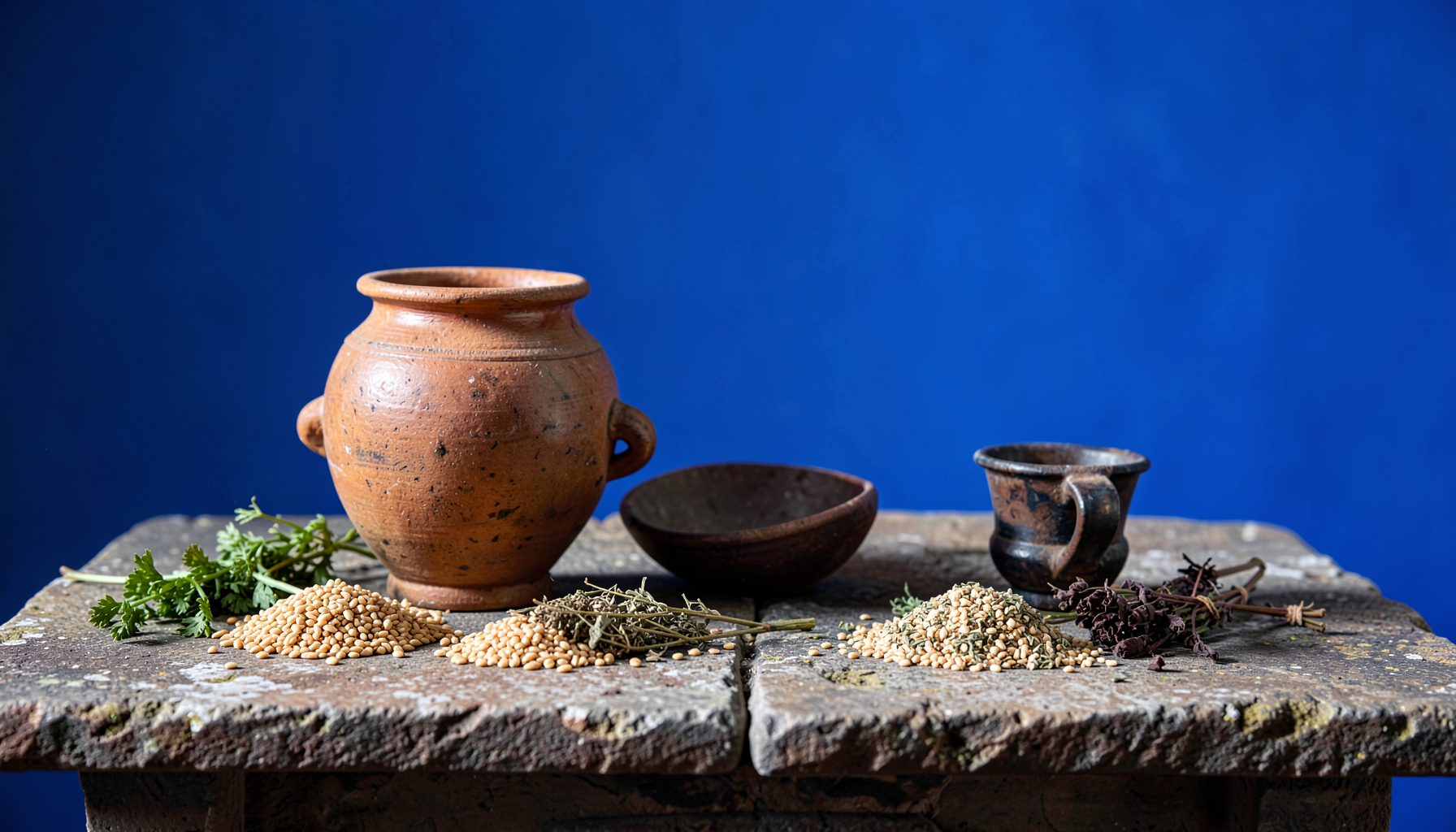
The dressing was the moment of artistry. Romans used a mortarium — a heavy ceramic or stone mortar with a rough internal surface — to pound herbs into a paste with salt, then loosen the mixture with liquamen, oil, and sometimes wine or vinegar. The rough surface crushed herb cells far more effectively than a smooth bowl.
The history of Roman mortaria and sauces shows how a single tool reshaped a whole cuisine. Without the rough mortar, the herb sauces would have been coarse mixtures; with it, they became emulsions that clung to food in a way modern blenders still struggle to replicate.
For the oyster dressing, herbs were pounded just enough to release their oils, then combined with a generous pour of liquamen and a smaller measure of good olive oil. The ratio mattered: too much oil and the sauce slid off the slippery flesh; too little and the liquamen dominated. Apicius suggests a rough proportion of one part oil to two parts liquamen for delicate seafood.
Modern cooks without a Roman-style mortar can achieve a similar effect with a mezzaluna and a cutting board, though the texture will differ. The key is to bruise the herbs thoroughly rather than slice them cleanly, releasing the aromatic oils that carry the dressing's perfume.
Herbs of the Roman Garden
The herb component varied by season and region, but a few staples recur. Apium — celery or parsley — provided a grassy backbone. Rue added a bitter edge that balanced the brine. Mint offered freshness, while oregano and savory contributed the resinous notes familiar from modern Italian cooking. Sometimes pepper was added; sometimes passum, a concentrated raisin wine, lent faint sweetness.
The combinations were not arbitrary. Romans understood that bitter herbs cut through richness, that mint refreshed the palate, and that oily herbs clung best to slippery seafood. The logic mirrors what contemporary Australian cooks do when they reach for a fennel frond, a sprig of dill, or a scattering of chives to dress raw shellfish at the table.
Classic herb pairings for the dressing
- Flat-leaf parsley with a few leaves of fresh mint for everyday brightness
- Oregano combined with savory for a deeper, more resinous profile
- Rue paired with a small amount of celery leaf for a bolder, slightly bitter edge
- Thyme and marjoram together for an earthy, almost medicinal note
Recreating the Dish in a Modern Australian Kitchen
Bringing the recipe into a contemporary Australian setting requires only a few substitutions and a thoughtful approach to sourcing. Begin with the freshest oysters available — Coffin Bay, Bruny Island, or whatever local species your fishmonger recommends — and keep them cold but not iced until shucking. The liquor inside the shell is flavour, not waste.
A quality fish sauce from a local Asian grocer stands in for liquamen. Mix it with extra virgin olive oil, a splash of red wine vinegar, and a herb paste of flat-leaf parsley, fresh mint, and cracked black pepper. Pound the herbs with salt first, then loosen with the liquids. The dressing should be intensely savoury and sharp enough to balance the briny sweetness.
Serve the dressed oysters on a bed of crushed ice with no garnish beyond a small lemon wedge if desired. The Roman instinct was to let the seafood and the sauce speak for themselves, and that restraint still works. A glass of dry riesling or a crisp Hunter Valley semillon would be a thoroughly Australian match for the briny richness.
Anyone wanting to refine their technique, share findings from their own reconstructions, or ask about the archaeology of ancient kitchens can contact Generoso directly. Correspondence from cooks and researchers around the world is welcome, particularly from those working on regional seafood traditions or the archaeology of kitchen equipment.
What to have on the bench
- A dozen fresh oysters, opened to order, with their liquor intact
- Fish sauce, olive oil, and red wine vinegar for the dressing
- A rough ceramic mortar and pestle, or a mezzaluna and board
- A small handful of fresh herbs, washed and dried, ready to bruise
Pick up a dozen of your favourite local oysters this weekend, pull together a small handful of fresh herbs, and try the Roman dressing for yourself. Once you have tasted how the salty punch of fermented fish sauce lifts the brine of a freshly opened oyster, you will find it hard to go back to plain lemon.