Salt and Spice in Roman Gaul: The Lost Art of Pork Belly Curing
When Roman legions pushed north into Gaul, they carried more than standards and aqueducts. They carried a taste for fat, salt-cured pork belly that could survive a winter march and still taste good at the campfire. Local Celtic communities, who had been smoking and drying meat for generations, gradually adopted Roman methods, blending imported techniques with native herbs and briny Atlantic salt.
Today you can sense the same curiosity in a sun-drenched deli in Carlton, where a small producer hangs slabs of Berkshire belly next to jars of fermented quince, or in the cured-meat counters of Paddy's Markets in Sydney, where paprika-rubbed bacon nods to Iberian traditions. Australian cooks have always borrowed, adapted and reworked European charcuterie, often swapping traditional pork for lamb or kangaroo but keeping the underlying chemistry of salt, time and smoke exactly as a Gaulish butcher would have done eighteen centuries ago.
What follows is a walk through the practical knowledge Romans brought to Gaul, the salt and spice trade that supported it, and the kitchen techniques that turned a fresh cut of belly into something that could outlast a long winter. The story draws on Cato, Apicius and a handful of archaeological sites, but it also reaches toward modern kitchens where curious cooks are reviving these very methods.
Pork Belly as a Roman Obsession
Pork was the Roman animal. It featured in sacrifices, in triumphal banquets and in the humble meals of legionaries marching along the Rhine. The Latin word lardum, which gave us lard, referred specifically to pig fat, and belly cuts were prized for their alternating ribbons of fat and lean. Apicius, the first-century gourmet, mentions pork belly in several recipes, often paired with honey, pepper or fermented fish sauce.
In Gaul, the climate favoured cereal agriculture and cattle, but pigs thrived in the oak and beech forests that carpeted much of the region. Roman settlers and local landowners quickly established herds, and within a generation pork became a regular sight in butchers' stalls from Lugdunum to Burdigala. The belly, with its protective layer of fat, was the cut most often chosen for preservation because it resisted rancidity longer than lean muscle and absorbed salt more evenly.
The Salt of Gaul and How It Moved
Gaul was remarkably well supplied with salt, which is why curing on a commercial scale became possible there at all. The Atlantic coast produced most of the western supply through evaporation pans worked since pre-Roman times. The Romans expanded these operations and built new ones, particularly around the Bay of Biscay, where strong tides brought rich brine into shallow lagoons.
Inland, the Lorraine region offered another source: underground mines where halite could be chipped directly from the rock. Cato the Elder praised the quality of Celtic salt and noted that merchants could move it cheaply down the Moselle and Rhône rivers. By the early empire, salted pork from Gaul travelled as far as Rome itself, often presented in wooden casks stamped with the producer's mark.
For Australian cooks, the closest parallel is the salt lakes of South Australia, where Olsson's and Tasmanian Sea Salt draw mineral-rich brine by evaporation. The chemistry is identical to what a Gaulish salter would have known: seawater, sun and wind, and a clean flat pan.
Spices That Travelled With the Legions
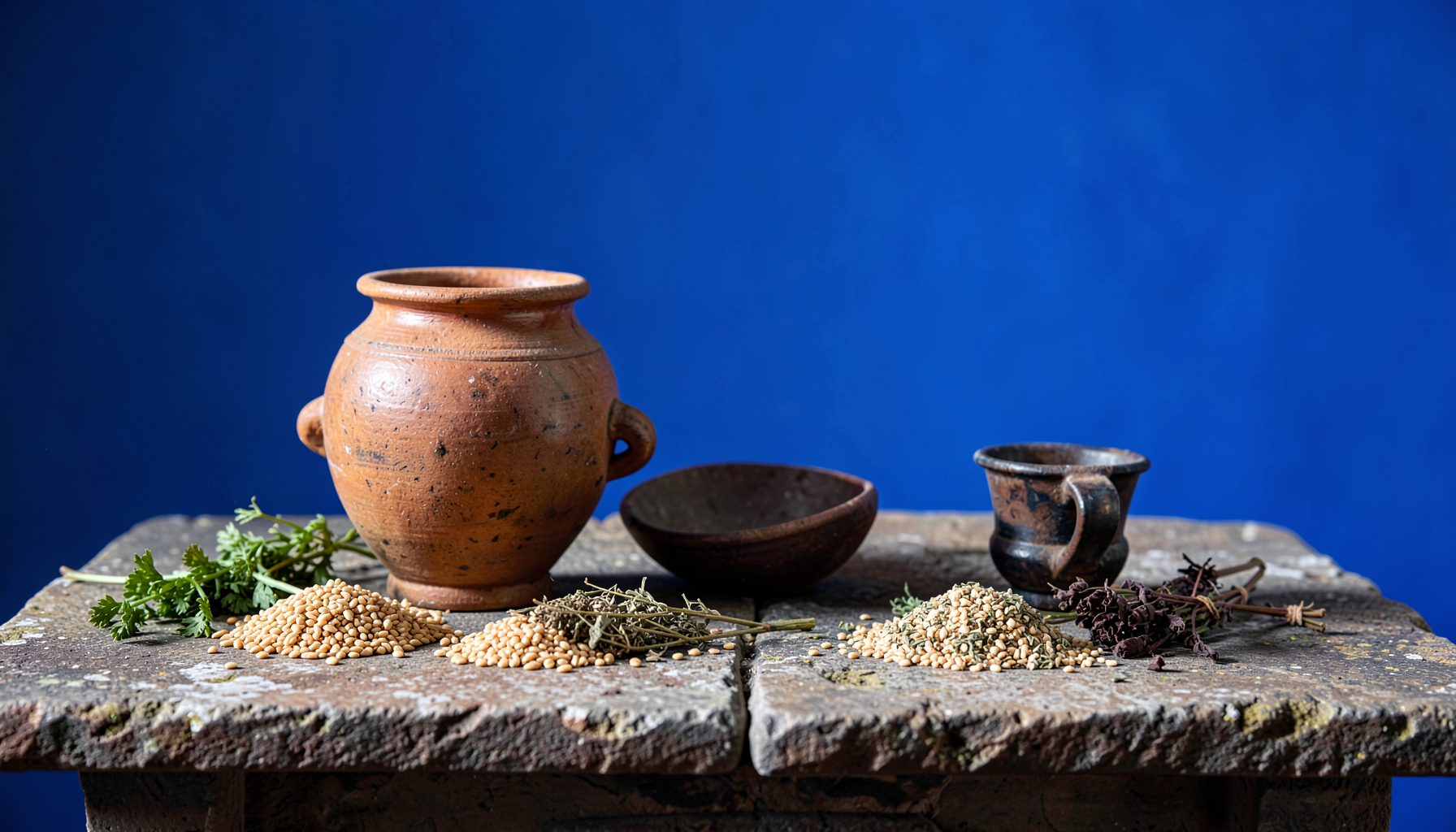
The spice mix Romans brought to Gaul was nothing like the fiery blends of later medieval cuisine. It leaned on a small pantry: long pepper from southern India, black pepper from the same trade routes, cumin imported via Alexandria, and locally grown coriander, lovage, thyme and rue. Apicius suggests a paste of pepper, lovage, oregano and a touch of honey for rubbing onto cuts of pork before salting, which both flavoured the meat and helped drive out moisture.
Some of these spices reached Gaul through military supply chains. Others came via Greek and Phoenician merchants who had long traded along the Mediterranean coast. By the second century AD, the Roman port of Arelate, modern Arles, was a hub for exotic ingredients, and local Gallic cooks blended Mediterranean imports with native herbs like wild thyme and juniper, which still grow in the limestone hills of Provence.
| Region | Primary Salt Source | Signature Spices | Typical Cut | Curing Time |
|---|---|---|---|---|
| Italia | Coastal pans at Ostia | Pepper, lovage, rue | Whole leg | 60–90 days |
| Gaul | Atlantic pans, Lorraine mines | Cumin, coriander, thyme | Belly and shoulder | 30–45 days |
| Hispania | Inland mines | Paprika ancestor, oregano | Belly strips | 20–30 days |
Each region adapted the same chemistry of salt and time to its own climate and palate. Gaulish curing sat between the slow Italian method and the quicker, spicier Hispanic tradition, making its belly cuts a kind of middle ground that suited both local markets and long-distance trade.
The Curing Process, Step by Step
The Roman method described in manuals like Cato's De Agri Cultura was simple, repeatable and well suited to a Gallic household. Fresh pork belly was first trimmed, leaving the skin on, then scored in a criss-cross pattern so the salt could penetrate. Coarse salt was rubbed into every cut surface, sometimes mixed with ground spices to form a damp paste.
The slabs were stacked in stone or wooden troughs, weighted down with heavy boards, and left to cure in a cool cellar for thirty to forty-five days. Every few days the meat was turned and rubbed with additional salt. Once the flesh had darkened and firmed, the slabs were rinsed, dried, and either hung in a smoky room for several days or simply wrapped in linen and stored in a dry pantry. The result was a firm, dense bacon that could be sliced thin and pan-fried, or diced into hearty stews.
Evidence From the Soil and the Page
Archaeologists working at Roman sites in Gaul have uncovered storage jars still holding traces of salted pork fat, salt crystals and spice residues. At Arelate, a sealed workshop contained stone troughs stained with brine and pepper husks, confirming Apicius's recipes in a way no manuscript alone could. Charred spice jars from a villa near Toulouse have yielded grains of long pepper and coriander, the exact blend a Roman butcher might have used on his belly cuts.
The literary evidence is equally rich. Cato lists salt ratios for pork belly, recommending roughly one part salt to four parts meat by weight. Columella, writing a generation later, adds notes on humidity and the importance of a cool curing room. For anyone interested in seeing how ancient Roman cooks treated related cuts of pork with care, the Roman dormice recipe guide offers a useful comparison, even though the animal differs, the underlying seasonings are very similar.
Bringing Roman Gaul Curing Into a Modern Kitchen
Recreating this style of pork belly at home is well within reach for a patient cook in Brisbane, Perth or Hobart. Begin with a fresh, skin-on belly from a heritage breed if you can find one, and source a coarse, additive-free sea salt. Australian producers like Mount Zero and the Saltbush Co-op supply mineral-rich salts that work much like the Atlantic pans of two thousand years ago.
Rub the scored belly with a blend of salt, freshly cracked black pepper, ground cumin and dried thyme, then weigh it down in a glass or ceramic dish in the back of the fridge for five weeks. Rinse, dry, and hang in a cool pantry or smoke lightly over apple wood. The finished bacon will slice thin and taste remarkably close to what a Roman cook in Lutetia or Lugdunum would have recognised as their own. Plenty of arvo kitchen sessions across Melbourne and Adelaide have started with exactly this kind of project.
Spices Worth Tracking Down
- Long or black pepper
- Whole cumin seed
- Dried thyme or wild oregano
- Lovage leaf, if you can find it
Local Salt Sources for Australian Cooks
- Mount Zero Pink Lake Salt from the Wimmera
- Olsson's Sea Salt from the Eyre Peninsula
- Tasmanian Sea Salt from the Huon Valley
- Pyramid Hill salt flakes from Victoria
Cured pork from Roman Gaul was never just food. It was fuel for armies, currency for trade and proof of a kitchen culture that valued patience over speed. The next time you slice a piece of cured belly for a sandwich, remember that the chemistry on your plate is essentially the same chemistry a Gallic butcher trusted two thousand years ago, in a village that might one day have become Lyon or Bordeaux.
For sourcing notes, dietary guidance and the terms under which recipes on this site are shared, see the legal page before adapting any of the techniques above.