Brewing ancient Mesopotamian beer with barley and date syrup
Long before the first vats of lager appeared in Bavarian cellars, the people of southern Mesopotamia were pouring thick, aromatic beers from clay vessels. Archaeological evidence from sites like Uruk, Lagash, and Ur shows that brewing was woven into daily life more than four thousand years ago. Cuneiform tablets, written in the wedge-shaped script of the Sumerians and Akkadians, record not only commercial transactions involving beer but also precise recipes for its preparation.
Archeoricette has long been interested in reconstructing these early foodways, and the Mesopotamian beer recipe is one of the most rewarding experiments the project has undertaken. It combines accessible ingredients with techniques that feel surprisingly modern once you peel back the unfamiliar terminology. The recipe in question comes from a hymn to the goddess Ninkasi, the divine brewer, and from administrative texts found in the British Museum's collections.
The finished brew is not the crisp, golden ale found on tap in a Melbourne pub, nor the cloudy wheat beers popular in Sydney's inner west. It is a fuller, sweeter drink with a deep amber color and a faintly sour edge. Readers who try it will taste a slice of culinary history that pre-dates writing itself.
The cuneiform tablet behind the brew
The most famous Mesopotamian beer text is the Hymn to Ninkasi, composed around 1800 BCE in ancient Sumer. Rather than a dry technical manual, it functions as a kind of poetic recipe, describing each stage of brewing in elevated language. Lines refer to the soaking of grain, the spreading of mash, the work of the fermentation vessels, and the pouring of the final drink.
Sumerologists such as Miguel Civil and later scholars have translated these verses with care, and experimental archaeologists have used them to guide reconstruction attempts. The hymn pairs with administrative tablets, such as those from the city of Umma, that list allocations of bread, malt, and beer to workers. Together they paint a picture of a society where beer was both nourishment and currency, an everyday commodity as well as a sacred offering.
For anyone approaching the text for the first time, it helps to remember that the ancient scribes rarely described measurements in the way a modern brewer would. Quantities were sometimes expressed in ratios, sometimes in labor terms, and sometimes through poetic imagery that hides practical instructions in metaphor.
Barley and date syrup as the foundation
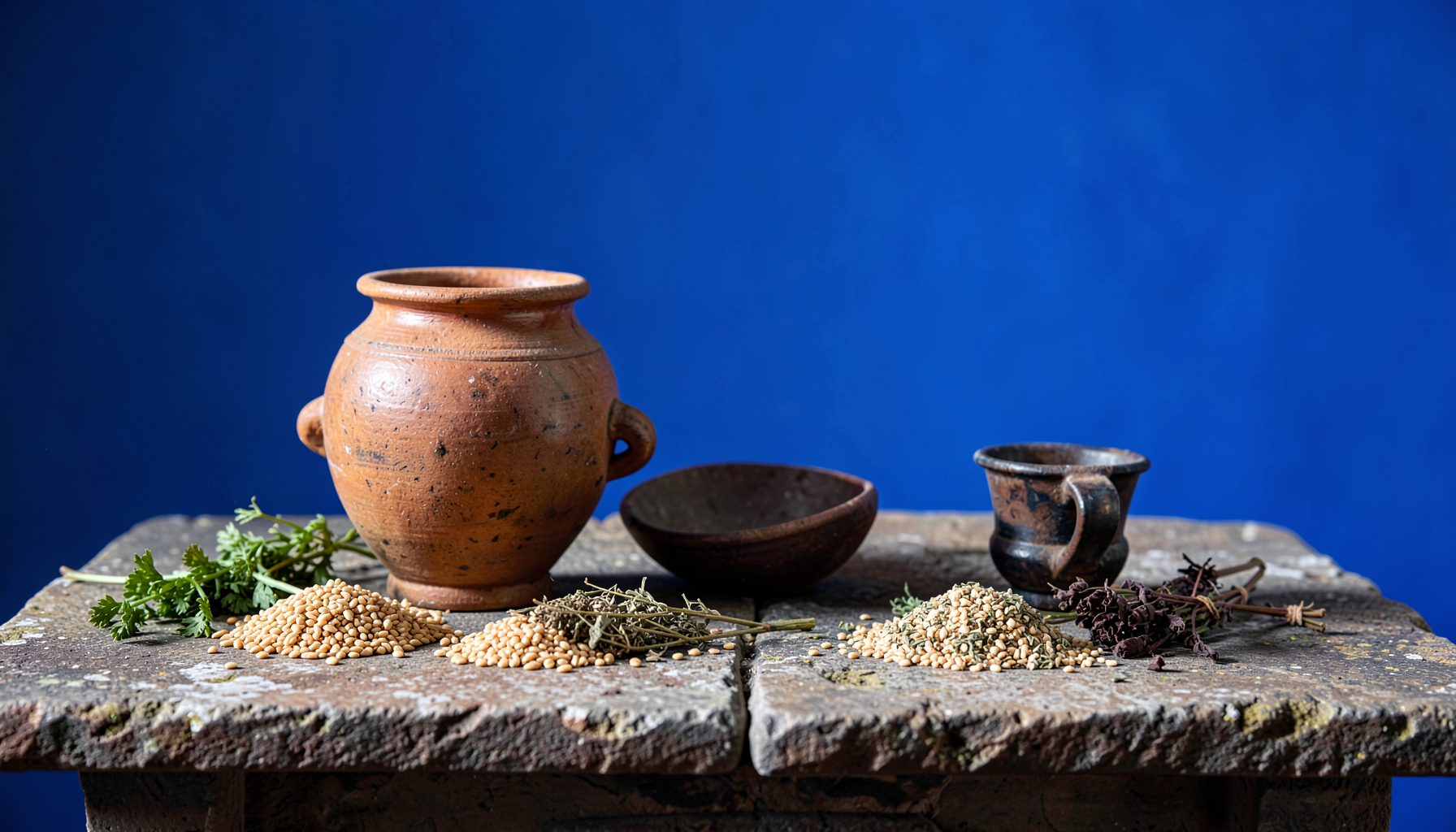
Two ingredients dominate the Mesopotamian brewing tradition: hulled barley and date syrup. The barley varieties used in antiquity were often two-row and six-row types, ancestors of grains still cultivated in dry regions today. The malt was produced by soaking the grain, allowing it to germinate, and then drying it in the sun, much like the floor malting once practiced in European breweries.
Date syrup, sometimes called dibs or honey of the desert in modern Middle Eastern kitchens, brings both fermentable sugars and a deep, caramel-like flavor. The ancient cook would have extracted the syrup by crushing ripe dates and simmering them with water, then straining the liquid through cloth. Modern readers in Australia can find date syrup at Middle Eastern grocers in suburbs like Auburn and Lakemba in Sydney, or at the Queen Victoria Market in Melbourne.
Because the original recipe relied on wild or early cultivated yeast, the modern reconstruction usually calls for a pinch of bread yeast or a captured wild strain. Some experimental brewers have even harvested natural yeasts from organic dates, producing a more authentic, slightly unpredictable fermentation.
Key ingredients for a small batch include:
- Hulled barley, around 1 kilogram
- Date syrup, 250 to 300 millilitres
- Clean water, roughly 6 litres
- A pinch of bread yeast or captured wild date yeast
The brewing process step by step
The first stage mirrors many ancient food processes: the bappir, a kind of lightly fermented barley cake, must be prepared. The barley is soaked, partially germinated, then formed into loaves and baked until firm but not fully dry. These loaves are then crumbled into a large vessel of warm water, where the enzymes begin to convert starches into sugars.
Next, the brewer adds date syrup, bringing the liquid to a sweet, sticky mash. Some modern interpreters add a small amount of crushed grain for body. The mash rests for several hours, often overnight, while the natural enzymes work. After straining off the solids, the liquid is transferred to a fermentation jar, a wide-mouthed ceramic crock being the closest modern equivalent to the ancient bitum-coated pot.
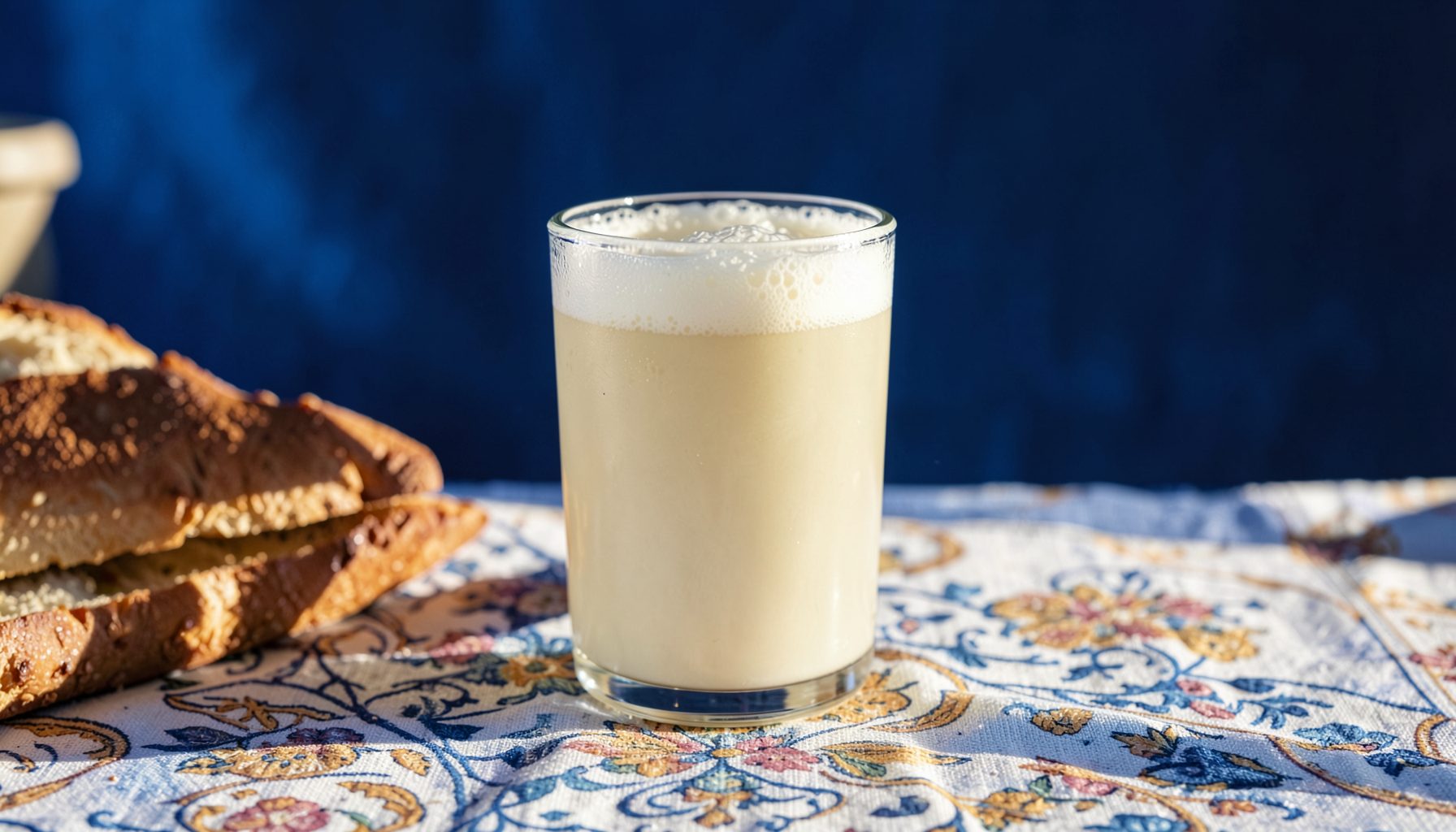
Yeast is introduced, and the jar is loosely covered. Fermentation takes two to three days in a warm room, similar to the climate of southern Iraq. The result is a cloudy, golden drink with a gentle fizz, sometimes served warm. The bitterness of modern hops is entirely absent, replaced by the sweetness of dates and the slight tang of fermenting grain.
Useful tools for the home brewer:
- A large ceramic crock or food-grade plastic bucket
- A wooden spoon for stirring
- Muslin cloth for straining and covering
- A warm corner or insulated box for fermentation
An Australian take on ancient barley
Australian craft brewers have shown growing curiosity about ancient styles, and several have experimented with heritage grains. South Australian farms around the Adelaide Hills and the Yorke Peninsula grow barley varieties suited to both traditional malting and experimental brewing. A handful of breweries in Brisbane's Fortitude Valley and Perth's inner suburbs have begun to brew with einkorn, emmer, and heritage barleys, though the Mesopotamian two-row type remains rare on commercial shelves.
The climate of the Murray-Darling basin, dry and warm, resembles parts of the ancient Fertile Crescent more closely than the wetter coastal regions. Home brewers who want to try the recipe can source malt from local maltsters in Geelong or use imported heritage barley from specialist suppliers. Date syrup is widely available in Australia thanks to the country's strong Middle Eastern food culture, and many supermarkets in cities like Sydney, Melbourne, and Adelaide stock it year-round.
For those who prefer not to brew at home, occasional Archeoricette events in Melbourne feature tastings of historical beers, and there are informal gatherings in Sydney and Brisbane where experimental cooks share ancient recipes. The Australian craft beer community has a long memory for unusual projects, and a Mesopotamian brew fits naturally into that spirit of curious experimentation.
Tasting the past and modern experiments
The finished Mesopotamian beer surprises most first-time drinkers. The aroma is bready, with notes of toasted grain and the dark sweetness of dates. On the palate, the drink is lightly carbonated, mildly acidic, and pleasantly filling. Some tasters compare it to a modern kvass or a thin braggot, while others note similarities to sake because of the grain-forward profile.
Several modern brewers have tried variations, adding herbs such as coriander, cardamom, or even a small amount of myrtle berry. Archaeologists point to traces of such flavorings in ancient residue analysis, though they remain cautious about reconstructing specific blends. At home, the simplest approach is often the most rewarding: barley, dates, yeast, water, time.
For readers interested in exploring the broader world of ancient plant use in cooking, the guide on Roman garden vegetables such as leeks, cabbage, and turnips in Columella offers another window into how classical authors described kitchen gardens. It complements the Mesopotamian focus here, and shows how different cultures approached everyday produce in similar ways.
Beer in Mesopotamian society and ritual
Beer in ancient Mesopotamia was more than refreshment. It featured in temple offerings, funerary feasts, and the rations of laborers building monumental structures. The goddess Ninkasi herself was believed to oversee the brewing process, and her cult centers in Eridu and elsewhere included beer among the gifts to the divine. Workers at sites such as the ziggurat of Ur received daily beer rations, a fact documented in cuneiform ledgers.
The drink also carried social meaning. Feasts in honor of the dead included libations of beer, and certain festivals featured drinking contests where the winner might claim a prize of grain or precious metal. These customs remind modern readers that brewing and drinking in antiquity were acts bound up with community, religion, and economy.
For anyone wishing to recreate this slice of ancient life at home, the recipe rewards patience more than precision. A simple vessel, good grain, sweet dates, and a warm corner of the kitchen will produce something that tastes closer to the past than any packaged ale. Those who want to share results, ask questions, or propose future experiments can reach the project through the contact page.
Set aside a weekend, gather your barley and dates, and let the slow alchemy of fermentation carry you back to the rivers of the ancient Near East. The clay vessels of Uruk may be long gone, but the flavors they once held can be coaxed to life on a modern stovetop. Share the experience with friends, compare notes with other experimental cooks, and keep the dialogue between past and present flowing. If a Mesopotamian brewer could recognize your work, you have probably done something right.