A Mesopotamian Leek and Coriander Salad from a Neo-Assyrian Tablet
Mesopotamian cuisine continues to surprise modern cooks, revealing flavour combinations that predate many familiar dishes by thousands of years. Among the most intriguing discoveries are the food lists inscribed on clay tablets in the royal libraries of ancient Assyria, where scribes recorded not only grand feasts but also the simple, herb-driven preparations eaten in daily life.
One such preparation, a salad built around leek and coriander, appears on a tablet from the Neo-Assyrian period and offers a window into the everyday foodways of the ancient Near East. This article traces the tablet's origin, explores the ingredients as Assyrians knew them, and reconstructs the dish for contemporary kitchens, with a few adjustments suited to Australian pantries.
The source: a Neo-Assyrian tablet
The tablet in question belongs to a corpus of cuneiform texts excavated from the ruins of Nineveh and other Assyrian sites, many originally housed in the famous library of Ashurbanipal. These texts are not cookbooks in the modern sense but rather administrative and ritual documents that occasionally list ingredients, quantities, and serving instructions for dishes prepared in royal or temple contexts.
Scholars have identified several tablets mentioning leek, identified through Akkadian terms such as karšu, alongside coriander, or kisbarû, often paired with other alliums, fresh herbs, and sometimes cheese or bread. The tablet that interests us here records a relatively straightforward mixture of finely chopped leek, coriander, and a binding agent, suggesting it was a daily preparation rather than a ceremonial specialty.
Translating such texts requires careful philological work, since ancient recipe fragments rarely give complete instructions. The tablet fragment preserves ingredient names and proportions but leaves some steps implicit, relying on the cook's familiarity with standard preparation methods of the time.
Ingredients the Assyrians knew
Leek held a respected place in Mesopotamian gardens and kitchens. Ancient texts distinguish between several varieties, including a cultivated form with thick white stalks and a more slender wild type gathered from marshlands. Assyrian herbalists prized leek for both flavour and medicinal qualities, recommending it in various remedies recorded alongside food preparations.
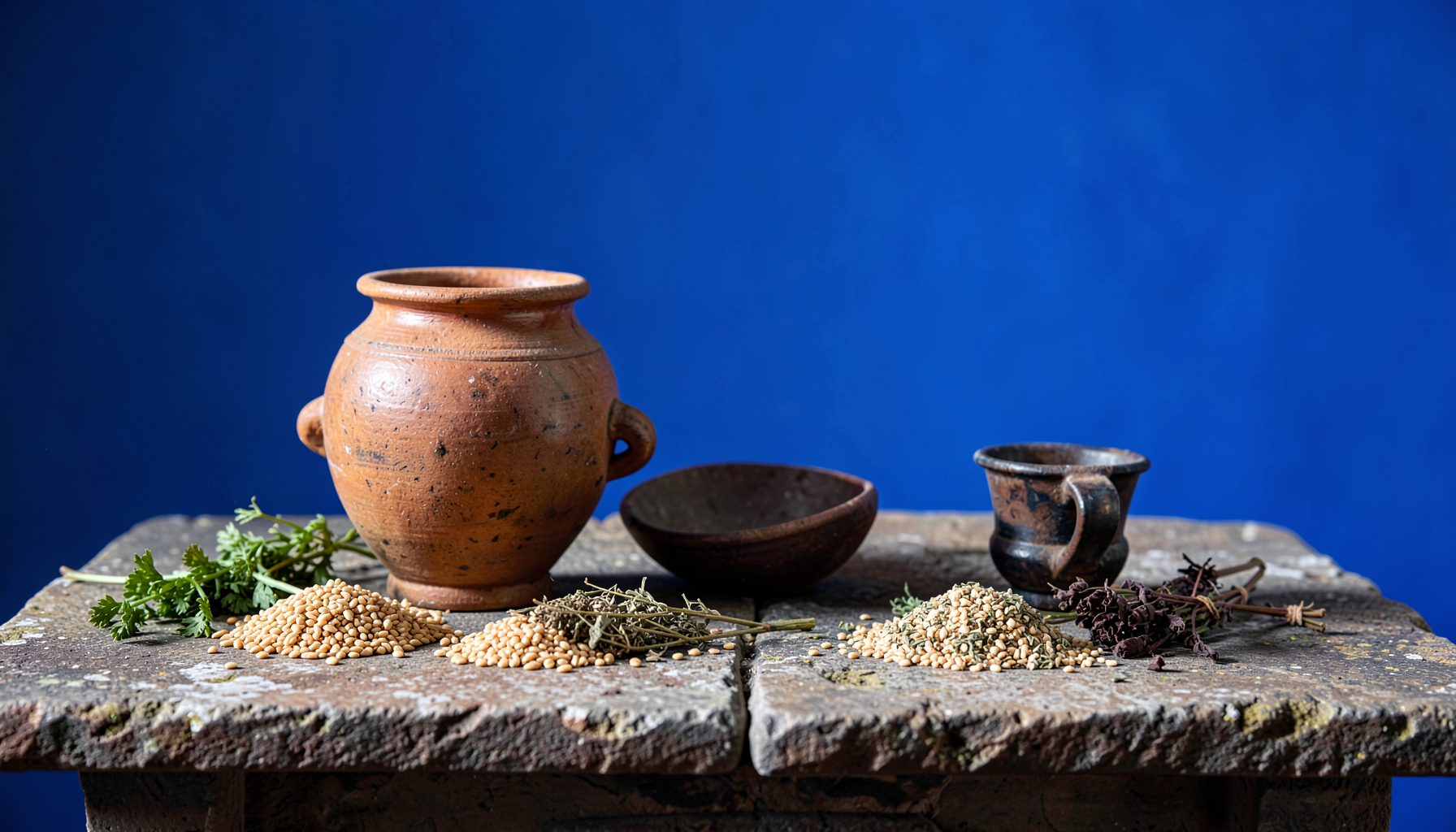
Coriander, the same species grown in Australian herb patches today, was widely cultivated in Mesopotamia. The Assyrians used both the fresh leaves and the dried seeds, distinguishing between applications in cooked dishes and raw preparations like the salad under discussion. Archaeobotanical evidence from sites across the Fertile Crescent confirms coriander's presence from at least the Bronze Age onward.
Other ingredients likely present in the original preparation include spring onion or shallot, salt drawn from the salt pans near modern Iraq, and possibly a souring agent such as verjuice or fermented dairy. Some scholars also suggest a drizzle of rendered fat or a sprinkle of toasted grain, but the core of the dish rests on the leek and coriander partnership.
Royal gardens and field cultivation
Neo-Assyrian kings famously maintained extensive gardens at their capitals, and Ashurbanipal's reliefs from the North Palace at Nineveh depict lush plantings of vegetables and herbs. These gardens served both as prestige displays and as living laboratories for the king's botanical interests, with irrigation channels drawing water from the Khosr River.
The leeks and coriander used in palace kitchens likely came from these royal plots, though ordinary households obtained theirs from local fields and the kitchen gardens that surrounded most Mesopotamian homes. The bīt ṭābi, literally "house of good scent," referred to the herb and spice storage area, suggesting that aromatic plants occupied a dedicated place in domestic architecture.
Trade networks also brought herbs and spices into Assyria from distant regions. Coriander in particular was so widely cultivated that it rarely needed importation, but leeks from particular marshy microclimates were sometimes singled out for their quality. Parallels with later cultures, such as the Etruscan acorn practices explored elsewhere on this site, show how often ancient communities turned to local plants for sustenance.
Reconstructing the salad for modern tables
Translating an ancient recipe into a workable modern version requires both fidelity to the source and practical adjustments. The original tablet seems to call for raw, finely chopped leek combined with roughly torn coriander leaves, dressed with salt and a sour element, and possibly bound with a small amount of yogurt or fermented dairy.
For modern kitchens, this translates into a salad where the sharpness of raw leek meets the bright, slightly citrusy notes of fresh coriander. Australian home cooks can find both ingredients easily; leeks appear in greengrocers from Paddy's Markets in Sydney to Queen Victoria Market in Melbourne, and coriander is a staple in the multicultural produce sections that define the country's contemporary food shopping.
A simple dressing of lemon juice, olive oil, and sea salt allows the two main flavours to speak clearly, while a handful of toasted sesame or a scattering of pomegranate seeds can echo ancient Mesopotamian garnishes. The result is a refreshing dish that bridges three millennia without losing its essential character.
Ancient techniques, modern equivalents
Mesopotamian cooks did not have access to stainless steel knives or food processors, yet they achieved remarkably fine chopping. Texts and archaeological finds suggest the use of bronze or early iron blades for kitchen work, with chopping boards of wood or stone. The phrase "to make small" appears repeatedly in food texts, indicating that mincing and fine chopping were standard techniques.
For the leek and coriander salad, the texture should be delicate enough to allow the flavours to mingle without the diner encountering large, fibrous pieces. Modern cooks can use a sharp knife and a light hand, treating both ingredients gently to preserve their aromatic oils.
The dressing process also differs subtly from contemporary practice. Ancient souring agents, whether from fermented fruit juices or soured milk, carried more complex microbial profiles than today's refined vinegars. A modern approximation using Australian-style Greek yogurt thinned with a little lemon juice can provide a similar tang while remaining accessible.
Comparing the ancient dish with modern variations
| Element | Neo-Assyrian original | Modern reconstruction | Contemporary Australian version |
|---|---|---|---|
| Main vegetable | Cultivated leek, possibly wild variety | Standard leek, white and pale green parts | Sweet leeks from local growers |
| Herb | Fresh coriander leaves and seeds | Fresh coriander leaves | Coriander from multicultural greengrocers |
| Acidic element | Fermented fruit juice or sour dairy | Lemon juice or apple cider vinegar | Lemon juice with optional Greek yogurt |
| Fat | Rendered animal fat or olive oil | Extra virgin olive oil | Australian cold-pressed olive oil |
| Salt | Salt from Mesopotamian pans | Sea salt or kosher salt | Salt compliant with the Food Standards Code |
| Optional garnish | Toasted grains or pomegranate | Sesame seeds or pomegranate arils | Macadamia nuts or pomegranate seeds |
Bringing the dish to Australian kitchens
From a nutritional standpoint, the salad delivers a useful combination of allium compounds, vitamin K from the green herbs, and the digestive benefits traditionally attributed to coriander. Modern research has explored coriander's potential role in glucose regulation and heavy metal detoxification, echoing ancient beliefs about its cleansing properties.
Culturally, the dish reflects a broader Mediterranean and Near Eastern tradition of raw vegetable salads dressed simply, a tradition that continues throughout the region today. The Australian food scene, shaped by waves of Mediterranean, Middle Eastern, and South Asian migration, has naturally incorporated these flavours into everyday cooking, making the Mesopotamian preparation feel surprisingly familiar to many Sydney and Melbourne diners.
A few practical recommendations help ensure success when preparing the salad at home:
- Choose leeks with firm white stalks and bright green tops, avoiding any with yellowing or wilting.
- Wash leeks thoroughly, as grit often hides between the layers, even in commercially cleaned specimens.
- Slice the white and pale green portions finely, reserving the dark green tops for stocks or soups.
- Pick coriander just before using, rinsing gently and drying in a salad spinner to preserve the delicate leaves.
- Dress the salad no more than ten minutes before serving to keep the herbs vibrant and the leek crisp.
- Add a protein element such as crumbled feta, grilled halloumi, or pan-fried chickpeas to turn the salad into a main course.
- Pair with flatbread for a light lunch that echoes ancient Mesopotamian dining traditions, where bread accompanied nearly every meal.
This Mesopotamian leek and coriander salad invites modern cooks to engage directly with the tastes that nourished some of history's earliest urban populations. By sourcing fresh, local ingredients and respecting the simplicity of the original preparation, anyone with a cutting board and a sharp knife can recreate a dish that scribes recorded on clay more than two and a half thousand years ago. Readers curious about the broader research behind this and other ancient recipe reconstructions can learn more about the project and its approach to bringing historical cuisines back into contemporary life.