Recreating an Ancient Roman Egg and Pine Nut Custard (Patina de Piris)
Few dishes from antiquity survive in a form that modern cooks can approach with confidence, but the egg and pine nut custard known as Patina de Piris is a quiet exception. Recorded in the Roman cookbook attributed to Apicius, this delicate preparation combines eggs, pepper, honey, and pine nuts into a savory-sweet custard that would have graced the tables of well-to-do diners across the empire. Its simplicity is deceptive: the recipe demands attention to texture, seasoning, and balance rather than complicated technique.
The dish belongs to a category of Roman cookery called patinae, which were baked or gently set mixtures often involving eggs, milk, and various flavorings. These preparations ranged from sweet desserts to substantial main courses, serving as the backbone of much Roman home cooking. The version with pears (piris in Latin) likely refers to a pear-based custard, though later manuscript traditions sometimes substitute apples or quinces depending on the season and regional availability.
For modern kitchens in Australia, recreating this recipe offers a fascinating exercise in culinary translation. Pine nuts sit on the shelves of Italian grocers in Carlton, pears arrive in season from the Goulburn Valley and Stanthorpe, and pepper — the spice that Romans prized above almost all others — fills the spice aisle of every major supermarket from Brisbane to Perth. The challenge is not exotic ingredients but understanding the techniques that gave Roman custards their distinctive character.
Tracing the Recipe Back to Apicius
The text of Apicius, compiled in the late fourth or early fifth century CE but drawing on earlier sources, preserves the original instructions for Patina de Piris in remarkably spare language. The recipe calls for eggs, pepper, pine nuts, honey, and fruit, combined and baked gently until set. Scholars have debated whether the original used raw or cooked pears, and whether the pine nuts were ground or left whole to provide textural contrast.
Modern reconstructions, including those documented in the published cookbook collection, often interpret the dish as a lightly sweetened custard where the fruit is poached first, then layered with the egg mixture before baking. The pepper, used liberally by Roman standards, gives the custard a gentle warmth rather than sharp heat. Honey provides the sweetness that Romans preferred over refined sugar, which did not exist in their world.
The dish reflects a broader Roman culinary sensibility that valued the interplay of textures and the layering of expensive ingredients. Pine nuts, imported from across the Mediterranean, signaled status and hospitality. Eggs, always present in Roman kitchens, provided structure. Together they created something greater than the sum of their parts, and the recipe has survived because it works.
Finding Ingredients Across Australian Markets
Pine nuts, once a specialty item, are now stocked by most major supermarkets in Brisbane, Perth, and Adelaide, though prices remain high compared to other nuts. For cooks seeking fresher supplies, Italian grocers in Carlton or Haberfield often sell them in bulk at better value. The Australian love of Mediterranean cooking means these ingredients have become familiar staples rather than rare curiosities.
Pears present a more seasonal challenge. The best local varieties include Packham and Williams, both widely available from autumn through spring at places like the Adelaide Central Market or the Queen Victoria Market in Melbourne. When local pears are out of season, imported Williams pears from South Africa or Chile provide an acceptable substitute, though their flavor is less pronounced and their texture slightly different.
Honey varies enormously across Australian producers, from the light clover varieties of Tasmania to the robust leatherwood of the same island's west coast. For the most authentic Roman flavor, a mild, floral honey works best — manuka is too strong and would overwhelm the delicate egg base. Pepper should be freshly cracked from whole peppercorns, as pre-ground pepper lacks the aromatic complexity that Romans prized in their cookery.
Equipment and Preparation
Roman cooking relied on tools that remain familiar today, though some adjustments help modern kitchens achieve the right results. The original recipe would have been baked in a clay vessel over charcoal or in a bread oven of moderate temperature. A heavy ceramic baking dish works well for home cooks, though a metal cake tin lined with parchment is equally effective and easier to find.
Essential equipment for the modern recreation:
- A heavy ceramic or metal baking dish, approximately 20 cm in diameter
- A mortar and pestle for grinding the pine nuts and pepper
- A fine sieve for straining the egg mixture
- A water bath setup using a larger roasting pan to hold hot water
The grinding of pine nuts deserves particular attention. Romans often used a mortar to create a coarse meal rather than a fine flour, and modern cooks benefit from the same approach. This texture adds body to the custard without making it heavy or pasty. Freshly cracked black pepper, ground just before use, releases volatile oils that pre-ground pepper loses within weeks.
Preheating the oven to a moderate temperature — around 160 degrees Celsius — allows the custard to set gently without curdling. A water bath, with the baking dish placed in a larger pan of hot water, ensures even cooking and prevents the eggs from toughening. This technique, common in modern pastry work, mirrors the gentle heat of a Roman bread oven and produces the silky texture that defines a successful patina.
The Method, Step by Step
Begin by lightly poaching the pears in a small amount of white wine or water with a spoonful of honey until just tender. Roman recipes rarely specified cooking times, leaving the cook to judge by texture and appearance. The fruit should yield to a knife but hold its shape on the spoon. Allow the pears to cool, then slice them thinly and arrange them in the base of the buttered baking dish in overlapping rows.
In a separate bowl, beat the eggs with a fork rather than a whisk, which incorporates too much air and creates a foam that mars the final texture. Add the honey, a generous measure of freshly ground pepper, and a splash of milk or passum if using. Stir in the ground pine nuts, reserving a small handful of whole nuts to scatter across the top. The mixture should be smooth but not aerated.
Pour the egg mixture carefully over the arranged pears, allowing it to settle naturally rather than forcing it. Scatter the reserved pine nuts across the surface, along with a light drizzle of honey and a final grind of pepper. Place the dish in the water bath and transfer to the preheated oven.
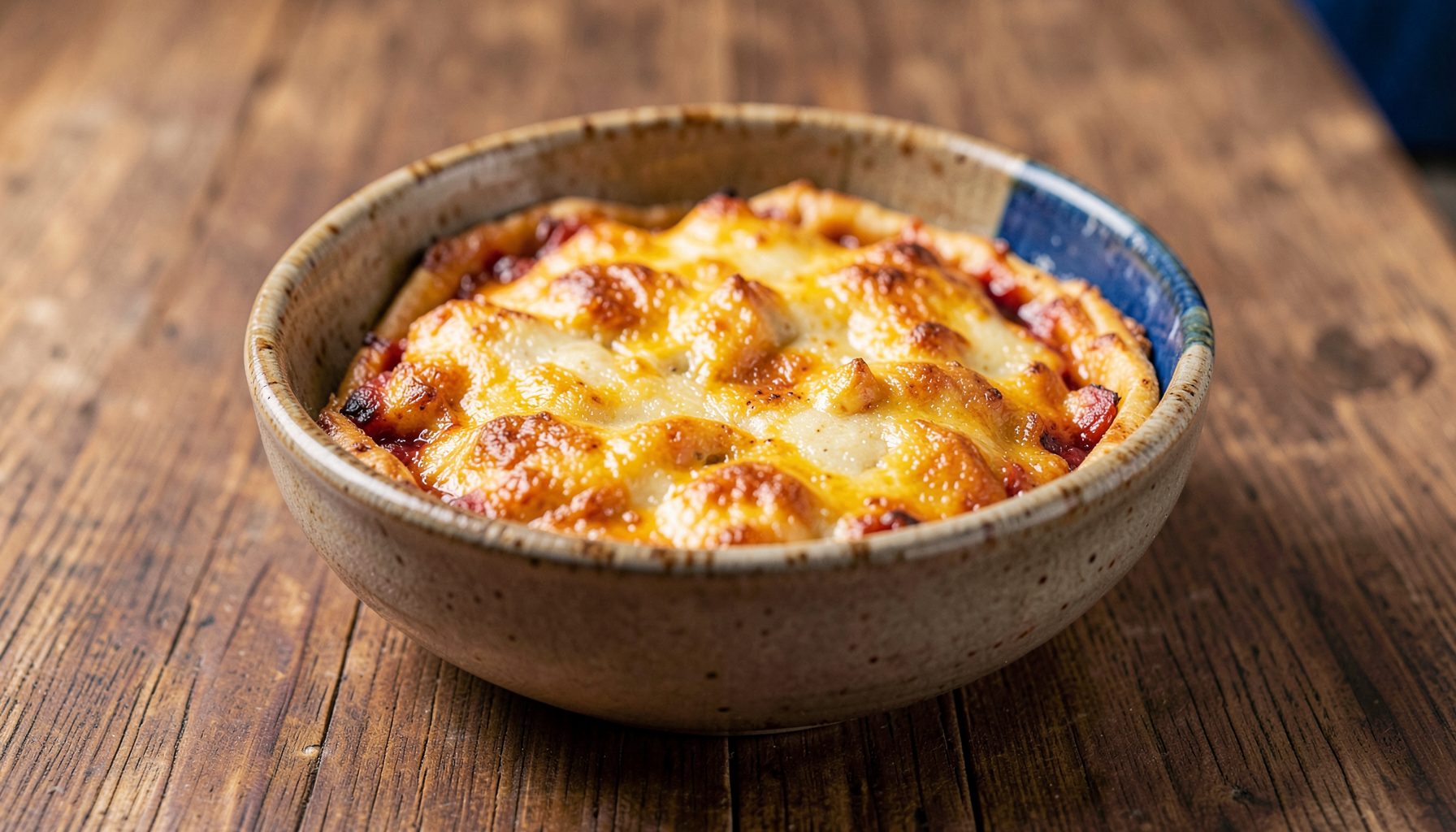
Bake for roughly forty minutes, or until the custard is just set in the center with a slight wobble when the dish is gently shaken. Remove from the oven and allow to cool for at least ten minutes before serving. The custard should be served warm rather than hot, allowing the flavors to settle and the texture to firm up slightly.
Serving Customs and Modern Relevance
In a Roman cena, the formal evening meal, dishes like Patina de Piris might appear as part of the secunda mensa, the fruit and sweet course that concluded the meal. Diners reclined on couches while attendants brought successive plates to the table. The custard, eaten with a spoon or pieces of bread, offered a satisfying finish that combined protein and sweetness in a single, elegant bite.
Modern Australians might find the closest parallel in the brunch culture of inner-city Sydney or Melbourne, where egg dishes occupy a similar position between savory and sweet. The custard works well as a light lunch served with a green salad dressed simply with olive oil and lemon, or as an elegant starter for a dinner inspired by ancient Mediterranean traditions.
The recipe's appearance in the detailed guide to Egyptian pigeon and quail production might seem unrelated, yet ancient elite kitchens across the Mediterranean shared techniques for managing protein sources and luxury ingredients. Understanding these broader networks helps modern cooks appreciate how ingredients like pine nuts traveled from distant forests to imperial tables, and why a recipe like Patina de Piris carried such cultural weight beyond its simple composition. Recreating such dishes reconnects contemporary kitchens with a long, shared human history of hospitality and skill.
Bringing Ancient Flavors to Your Table
Try the Patina de Piris for your next weekend gathering or quiet evening meal. Serve it with a crisp Australian white wine from the Adelaide Hills or a Hunter Valley semillon, whose acidity complements the richness of the eggs and nuts. Share the story of Apicius with your guests as you present the dish, and consider how a recipe nearly two thousand years old still finds a place at contemporary tables. Your kitchen becomes a small museum, a laboratory, and a dining room all at once — proof that history tastes best when it is eaten rather than merely read.