The Greek import of salted tuna from the Black Sea colonies
For Greek communities around the Aegean, fish from the Black Sea was more than a seasonal catch. It was a durable commercial product, packed in salt, sealed in containers and carried along routes linking Pontic colonies with Byzantion, the Hellespont and the major markets of the Greek world. Among these preserved foods, tuna had a particular value because its migratory habits made large catches possible and its firm flesh survived transport.
The Greek import of salted tuna from the Black Sea colonies belongs to a wider history of ancient food logistics. Grain, wine, oil, timber and slaves moved through the same maritime network, yet fish reveals a more intimate side of the economy: the technology of salt, the organisation of coastal labour and the tastes of households that expected marine food far from the shore.
Ancient consumers did not need refrigeration to enjoy fish beyond the day of capture. Salting reduced moisture and slowed decay, while drying, brining and fermentation created distinct products for different markets. A salted tuna loin could be sliced into a meal, added to a stew or served with sharp sauces that balanced its intense savoury flavour.
For an Australian audience, the comparison is immediate. Tinned tuna is a pantry staple, seafood travels through a carefully managed cold chain, and a visit to the Sydney Fish Market makes the scale of modern distribution visible. Ancient Pontic merchants worked with different tools, but they faced the same practical problem: how to turn a perishable catch into a product that could travel.
Fish from the Euxine
The Black Sea, known to Greek writers as the Pontos Euxeinos, supported a rich marine environment and a network of Greek settlements. Important colonies included Olbia in the north-west, Chersonesus in Crimea and the cities of the Bosporan Kingdom around the Kerch Strait. Sinope and Heraclea Pontica on the southern shore also connected local fisheries with Anatolian and Aegean commerce.
Tuna entered the Black Sea through the Bosporus during seasonal migrations. Ancient fishers could exploit these movements with nets, hooks and coordinated boats, especially where currents concentrated the fish. The same waters supported mackerel, bonito, anchovies, sturgeon and other species. Literary references, archaeological fish remains and the importance of salt-fish markets together indicate a commercial culture built around preserving marine resources.
The phrase “salted tuna” should therefore be understood as part of a category rather than a single standard recipe. Cuts may have been packed dry with layers of salt, immersed in brine or processed through a combination of salting and drying. The final quality depended on the fat content of the fish, the cleanliness of the vessel, the quantity of salt and the length of the journey.
Salt, vessels and distance
Salt was the essential infrastructure of the trade. Coastal evaporation ponds, salt springs and mined deposits could supply processors, while imported salt supplemented local production. A successful fishery needed more than boats and nets: it required workers to gut and portion the fish, storage areas, containers, loading facilities and merchants able to forecast demand.
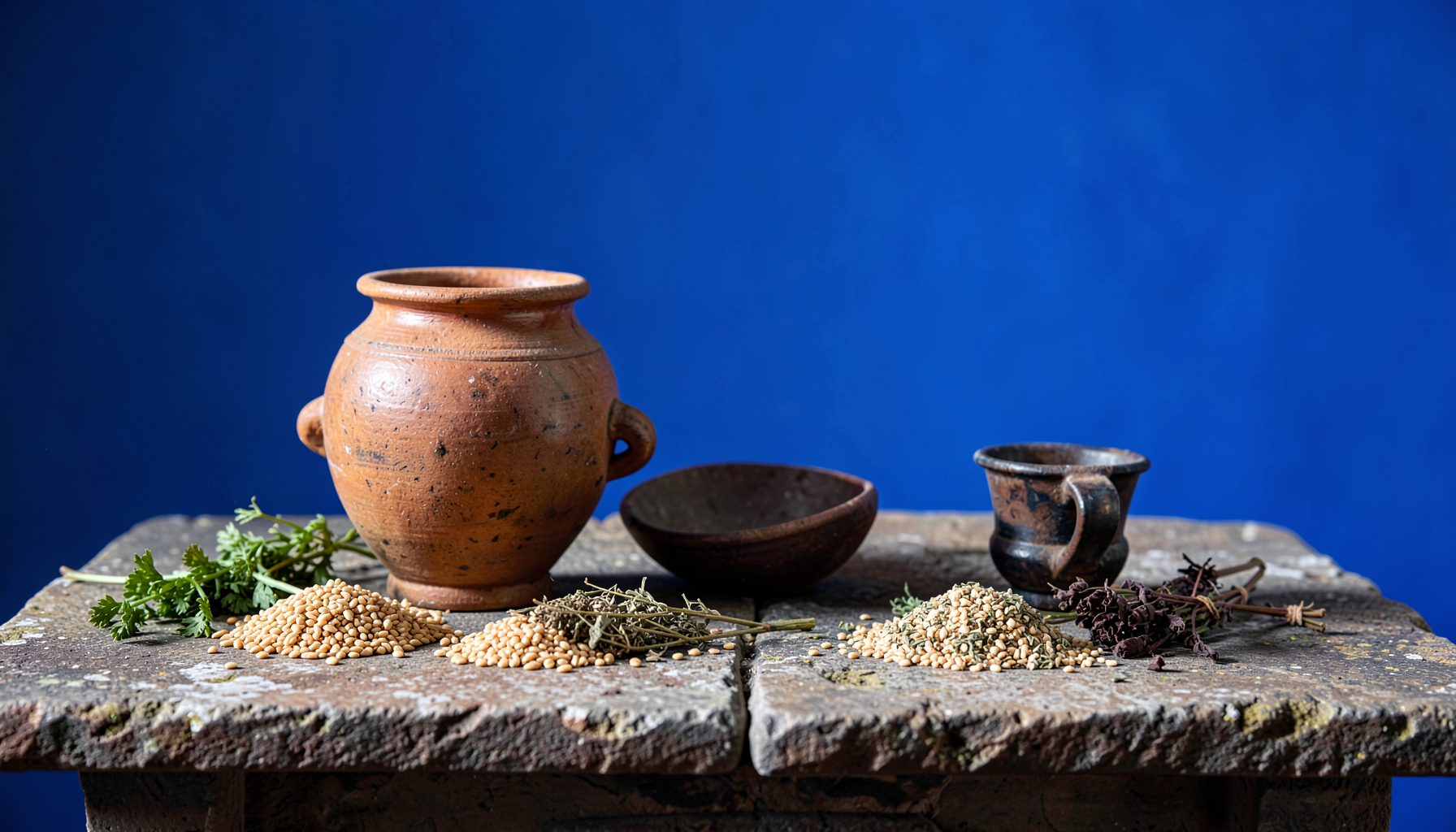
Ceramic vessels were central to this system. Large jars could hold salted fish under brine, while smaller containers suited retail distribution or household storage. Amphora shapes and fabrics sometimes help archaeologists trace production zones, although fish products could be repacked during their journey. Stamped handles, workshop remains and residues inside vessels add further evidence about ownership and movement.
The route from the Pontic coast to a Greek consumer was long and vulnerable to weather. Fish might move from a colony to a regional harbour, then through the Bosporus and across the Aegean. Byzantion occupied a strategic position at the entrance to the Black Sea, while the Hellespont connected Pontic shipping with markets around the Propontis and Aegean. Cargoes were often combined, allowing a vessel carrying grain or wine to transport preserved fish as well.
Modern Australians are accustomed to food crossing enormous distances, but ancient transport had no refrigerated trucks or insulated containers. A salted product made commercial sense because it could remain stable aboard a ship and in a warehouse. In a hot climate such as inland Australia, the value of preservation is easy to grasp, even though ancient salting cannot be treated as a safe substitute for modern food processing.
A taste shaped by the market
Salted tuna was probably sold through several levels of the Greek economy. Wealthier households could purchase choice cuts or highly regarded preparations, while less expensive pieces flavoured pulses, grains and vegetable dishes. Fish sauce, vinegar, herbs and olive oil helped transform preserved fish into a dish suitable for a symposium, a family meal or a religious occasion.
Ancient writers frequently connect particular cities and regions with prized food products. Athens had an energetic market in fresh and preserved fish, and comic poets used fish prices as a subject for humour because consumers knew the difference between ordinary and luxury varieties. The presence of Black Sea imports in Aegean markets would have tied distant colonies to everyday urban appetites.
The commercial story also has a social dimension. Fishing, salting and transport created seasonal employment, while merchants controlled access to vessels, salt and market information. Colonies could export marine products even when their agricultural hinterlands were less productive than those of southern Greece. Their prosperity rested on making local resources useful to distant consumers.
Clues that reveal the trade
- Fish bones and scales in settlement deposits
- Salt-working areas near coastal towns
- Amphora fragments and residue analysis
- Literary references to Pontic fish markets
The evidence is rarely a single complete recipe or invoice. Archaeologists assemble the picture from many small traces: species identified in refuse, cuts marked by butchery, jars associated with storage, and texts that mention fish prices or origins. This method also prevents an easy assumption that every Black Sea colony produced the same style of salted tuna.
Reconstructing the ancient flavour
A cautious reconstruction begins with the fish itself. Fresh tuna should be cut into thick portions, rinsed only when necessary and covered generously with salt. Ancient processors may have used sea salt containing different minerals from modern refined salt, but the basic preservative principle remains familiar. The fish would then be weighted or packed tightly so that liquid drawn from the flesh formed a concentrated brine.
The seasoning profile was probably direct rather than elaborate. Olive oil, wine vinegar, coriander seed, fennel, oregano-like herbs and perhaps garlic could accompany the fish, depending on region and period. Sweet-sour contrasts were also available. Reduced wine syrups such as defrutum could add depth to sauces; a historical discussion of reduced wine syrup helps explain how concentrated grape flavours entered ancient cooking.
A modern cook should separate historical interpretation from food safety. Raw fish cured in salt is not automatically safe, and home fermentation or long storage can create serious hazards. In Australia, seafood preparation must follow the Food Standards Code administered through Food Standards Australia New Zealand, while businesses also work under state and territory food laws. Home cooks should use commercially handled fish, reliable refrigeration and tested preservation methods rather than imitate an ancient storage vessel in a warm cupboard.
Ingredients for a historically inspired serving
- Thick tuna portions, commercially handled
- Sea salt used with a tested curing method
- Olive oil and wine vinegar
- Coriander, fennel or oregano-like herbs
The result need not pretend to be an exact ancient dish. It can instead demonstrate the relationship between preservation and flavour: salt concentrates the fish, vinegar sharpens it, herbs provide fragrance and oil softens the texture. Served with barley bread, lentils or boiled vegetables, it becomes a plausible interpretation of how a small quantity of an expensive imported product might extend a meal.
From Pontic cargo to Australian table
The contrast between ancient and modern seafood supply is clearest in the market. At Sydney Fish Market, shoppers encounter fillets, whole fish, smoked products and chilled logistics designed for rapid turnover. In Melbourne, Queen Victoria Market and specialist fishmongers present another version of the same principle: a distant catch becomes a local purchase through standards of grading, refrigeration and traceability.
Australian habits also shape how the ancient product is imagined. Fish and chips, tuna sandwiches and canned seafood make preserved fish familiar, but their textures and seasoning differ from a heavily salted ancient preparation. Contemporary Australian consumers may also check country-of-origin labels, sustainability claims and species names before buying. These expectations reflect legislation and public awareness that did not exist in the Pontic trade.
The legal framework matters when recreating old foodways. Country-of-origin food labelling rules apply to many foods sold in Australia, and seafood businesses must meet hygiene and temperature-control requirements. Salted tuna made for a historical demonstration should therefore be treated as a culinary experiment using approved ingredients, not as an invitation to sell or store an unvalidated preserved product.
For a practical version, use a small serving of safely prepared cured or smoked tuna and pair it with lentils, barley, olives, leafy herbs and a sharp wine-vinegar dressing. Those ingredients evoke the ancient pantry without claiming that a modern kitchen can reproduce every condition of a Black Sea processing yard. Further ideas for historically grounded dishes can be found among these reconstructed recipes, where technique and evidence meet on the plate.
The story of Black Sea tuna becomes most vivid when read as a chain: migrating fish, skilled coastal workers, salt producers, ceramic workshops, merchant ships and hungry diners. Explore the archaeological evidence, prepare a careful modern interpretation and let the finished dish stand as a small edible map of the ancient Greek world.