Asafoetida, garum and the flavour of the ancient table
The use of asafoetida in Greco-Roman cooking as a garum substitute reveals how ancient cooks solved a practical problem: how to create savoury depth when a particular ingredient was unavailable, expensive or culturally unsuitable. Asafoetida was not simply an ancient version of fish sauce, yet its powerful aroma and lingering savouriness could help reproduce some of the effects that garum brought to Roman dishes.
This distinction matters when reconstructing historical food. Garum was a fermented fish product with salt, marine richness and complex umami, while asafoetida was an aromatic resin obtained from giant fennel relatives in regions east of the Mediterranean. Their histories overlap through trade, substitution and experimentation, rather than through perfect equivalence.
| Ingredient | Ancient identity | Main flavour effect | Best modern use |
|---|---|---|---|
| Garum | Fermented fish sauce | Salty, marine, deeply savoury | Fish, meat, pulses and sauces |
| Liquamen | A related or broader fish sauce term | Salty umami with varying intensity | General seasoning |
| Asafoetida | Dried resin of Ferula species | Sulphurous, onion-like, bitter when overused | Tiny amounts in legumes, vegetables and sauces |
| Silphium | Cyrenaican aromatic plant, later unavailable | Garlicky, resinous and pungent | Historical comparison rather than easy replacement |
What asafoetida was in the ancient world
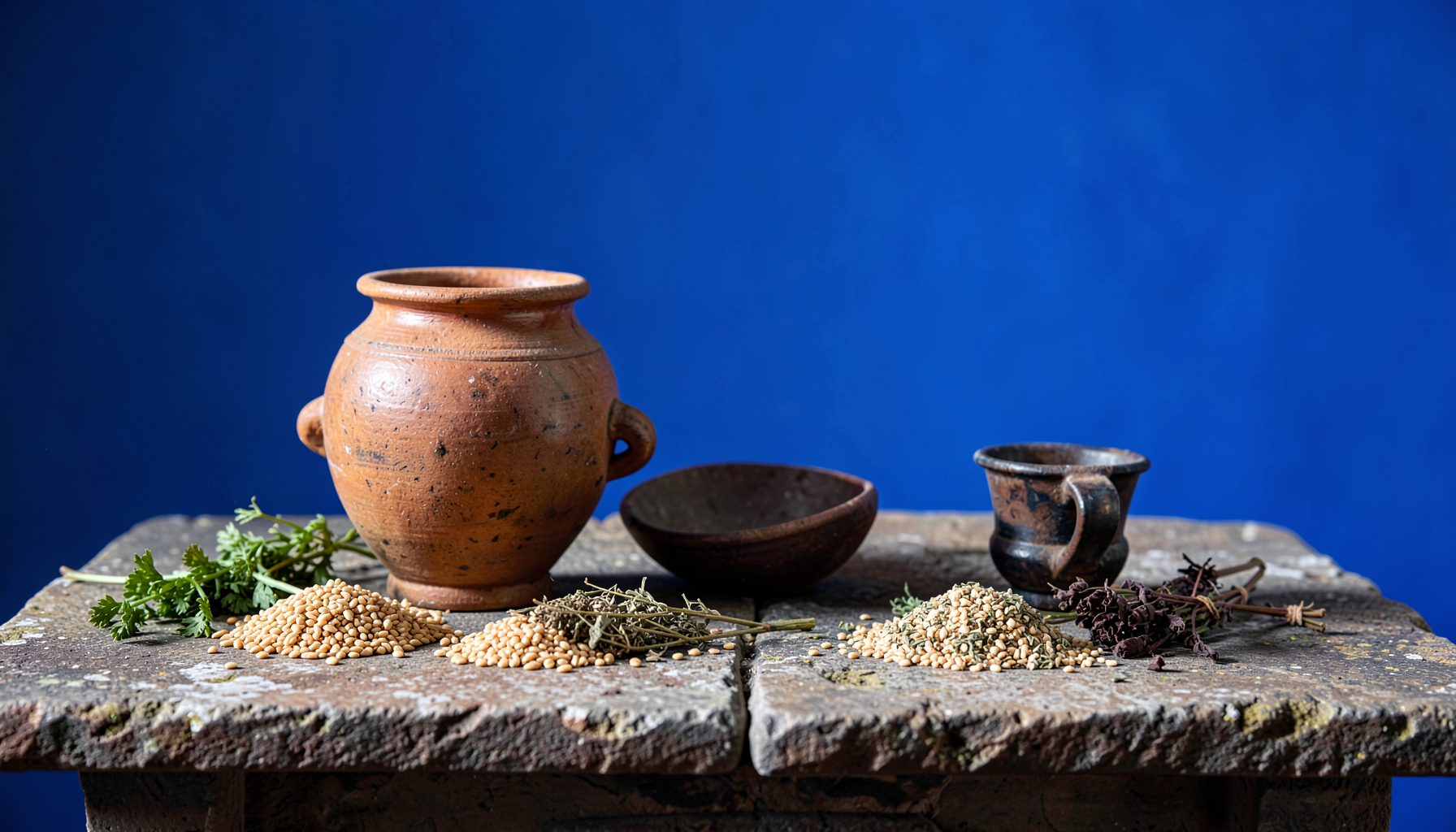
Asafoetida comes from the resinous sap of several Ferula species, especially plants associated with Iran, Afghanistan and Central Asia. The raw resin has an aggressive smell often compared with garlic, onion, leek and sulphur. Once fried in oil or diluted into a sauce, however, that harshness becomes rounder and more savoury.
Greek and Roman writers knew powerful aromatics from the eastern trade routes. The Latin word laser is especially important, although ancient terminology does not map neatly onto modern botanical names. Some references probably concern silphium from Cyrenaica, while others may describe related substitutes, including eastern resins that resemble asafoetida.
This uncertainty is part of the evidence rather than an inconvenience to be removed. Ancient authors classified ingredients according to commerce, appearance, smell and reputation, not according to modern taxonomic systems. A reconstruction should therefore state when it is using asafoetida as a plausible analogue rather than claiming certainty.
Why it could stand in for fish sauce
Garum supplied several functions at once. It seasoned food with salt, carried fermented flavour through a dish and added a concentrated savoury note to bland ingredients such as lentils, cabbage, pulses and boiled grains. Asafoetida cannot reproduce the marine character or salt content, but it can provide pungency and depth in recipes where the main requirement is aromatic complexity.
Its strongest contribution is the transformation that occurs during cooking. A pinch bloomed in olive oil loses much of its raw odour and creates a flavour reminiscent of cooked alliums. Combined with salt, wine, vinegar, herbs and oil, it can make a vegetable or pulse dish seem fuller and more rounded.
The substitution works best when garum is functioning as a background seasoning rather than as the central flavour. A seafood sauce, a liquamen-rich dressing or a preparation where fish fermentation is unmistakable requires a different ingredient. Asafoetida is better understood as a functional alternative for some dishes, especially vegetarian reconstructions.
The silphium question
Silphium was one of the celebrated products of Cyrenaica, in modern Libya. Ancient sources describe it as valuable, aromatic and useful in food and medicine. Its disappearance is often linked to overharvesting, changing landscapes and the difficulty of cultivating the plant, although the precise history remains debated.
Because asafoetida has a pungent, resinous and allium-like profile, it is frequently used in modern attempts to evoke silphium. That does not prove that every ancient mention of laser means asafoetida. It does show why the two ingredients are often discussed together: both belong to a family of intensely aromatic seasonings that could define a dish in very small quantities.
For a Greco-Roman kitchen reconstruction, the most honest approach is to test several interpretations. One version might use asafoetida, another garlic or leek, and a third a combination of celery seed, lovage or long pepper. Recording the differences makes the experiment more valuable than presenting a single modern ingredient as the definitive answer.
How to use it in a reconstructed recipe
Asafoetida should be measured in pinches, not spoonfuls. For a household-sized pot of lentils, beans or braised vegetables, begin with less than one-eighth of a teaspoon. Bloom it briefly in olive oil, then add the remaining ingredients. If the resin is stirred directly into a cold dressing, its raw smell can dominate the dish.
A useful garum-substitute mixture combines olive oil, salt, a little wine vinegar and a small amount of asafoetida. A pulse dish can then be finished with coriander seed, cumin, lovage, mint or black pepper, depending on the textual and regional evidence being followed. The aim is layered savouriness, not a conspicuous sulphur note.
For readers in Sydney or Melbourne, asafoetida is usually easier to find in Indian grocery shops than in a conventional supermarket spice aisle. It may be sold as a compounded powder containing flour, gum or turmeric, so the label should be checked before calculating the quantity. A concentrated resin and a diluted commercial blend are not interchangeable by volume.
What changes for Australian cooks
Australian kitchens already have a familiar relationship with intense savoury seasonings. Vegemite, stock powders, soy sauce and fish sauce occupy different culinary traditions, yet they demonstrate how a small amount of concentrated flavour can transform toast, noodles, braises or vegetables. Asafoetida belongs in that same practical conversation without being treated as an ancient form of any modern condiment.
The local market also affects historical reconstruction. In Brisbane, Perth or Adelaide, cooks may find imported spices through South Asian grocers, while regional communities may rely on online retailers. Storage matters in Australia’s warmer months: keep the container tightly sealed, away from sunlight and separate from delicate spices, because the aroma can travel through a pantry.
Australian food law adds another layer. Imported asafoetida products must comply with applicable food and biosecurity requirements, and the Food Standards Code administered by Food Standards Australia New Zealand governs labelling and permitted ingredients. Anyone serving a public reconstruction meal should check the current requirements rather than relying on an informal recipe note.
Fish, vegetarian practice and historical context
Replacing garum with asafoetida changes more than flavour. It can make a dish suitable for vegetarian diners, but it does not make the dish historically vegetarian. Roman cooks used fish sauces widely, and a substitution reflects the conditions of a modern experiment, a dietary preference or a missing ingredient.
Fish sauce also carries allergen implications. In Australia, fish must be declared when present as an allergen, while an asafoetida-based seasoning avoids that particular ingredient but may contain other components in commercial blends. Cross-contact, imported-product labelling and the needs of guests should be considered before serving a public meal.
This is where reconstruction benefits from clear documentation. A recipe can identify the ancient source, explain the modern substitution and state what sensory quality the substitute is intended to reproduce. Readers who follow online material should apply the same care to provenance that they would when checking site legal information, especially when an ingredient claim sounds more certain than the evidence allows.
Designing a small tasting experiment
A simple comparison can show what asafoetida contributes. Prepare three small portions of plain lentils or chickpeas: one with salt and olive oil, one with a measured amount of garum or fish sauce, and one with asafoetida bloomed in oil. Keep the herbs, acidity and cooking time identical so that the seasoning remains the variable.
Taste the samples warm and again after several minutes. Note saltiness, marine flavour, onion-like aroma, bitterness, persistence and how well each seasoning integrates with the pulse. A fourth sample using garlic or lovage can help distinguish the effects of asafoetida from more familiar allium flavours.
Digital research benefits from the same disciplined comparison. The internet places archaeological recipes beside unrelated commercial material, including guides to fastest e-wallet cashouts; that proximity makes source evaluation essential. Ancient texts, botanical studies, excavation reports and experimental notes should be separated from modern advertising and unsupported certainty.
Reading the substitution as culinary history
Asafoetida and garum tell a broader story about ancient foodways. Ingredients moved across long-distance trade networks, names shifted between languages and cooks adapted recipes to local supplies. Substitution was probably ordinary kitchen practice, even when elite writers described ideal ingredients from distant places.
The comparison also highlights the difference between reconstructing a flavour and reconstructing a recipe. A pinch of asafoetida may evoke the pungency of a lost or inaccessible aromatic, while a fermented fish sauce may reproduce salinity and umami more accurately. Neither choice restores the ancient dish completely, but each can illuminate a different part of its sensory design.
Try the experiment with a documented recipe, record every adjustment and serve the result with an explanation of what is known, inferred and modern. Explore ancient foodways through careful cooking, transparent evidence and measured tasting, bringing the ancient table into an Australian kitchen without disguising the gaps in the record.