Ancient Egyptian Spikenard And Coriander Seed In Aromatic Oils
In ancient Egypt, fragrance belonged to everyday life as much as to temple ritual, personal grooming, medicine, and burial practice. Oils and unguents carried botanical aromas onto the skin, hair, clothing, statues, and sacred objects. Their scents also communicated status: a perfumed body suggested access to costly ingredients, skilled preparation, and trade networks reaching well beyond the Nile Valley.
Spikenard and coriander seed make an intriguing pairing because they represent two very different kinds of aromatic material. Spikenard was a precious rhizome imported from far to the east, while coriander was a familiar annual herb that could be cultivated around the Mediterranean and in parts of Egypt. One offered a deep, earthy perfume; the other contributed a warm, green, gently citrus-like note.
Reconstructing such an oil requires caution. Ancient recipes rarely provide the full information expected by a modern formulator, and the word “oil” could describe a perfumed fat, a maceration, or a more complex compound containing resins, wine, honey, or wax. The aim is therefore to build a historically plausible interpretation rather than claim a single definitive formula.
| Ingredient | Likely ancient role | Aroma profile | Historical significance |
|---|---|---|---|
| Spikenard rhizome | Luxury perfume and unguent ingredient | Earthy, woody, musky, slightly sweet | Imported over long-distance trade routes |
| Coriander seed | Fragrant culinary, medicinal, and cosmetic botanical | Warm, spicy, green, citrusy | More accessible and familiar in eastern Mediterranean foodways |
| Sesame or moringa oil | Carrier for aromatic substances | Mild to nutty, depending on oil | Suitable for absorbing and carrying fragrance |
| Beeswax or animal fat | Thickener and protective base | Soft, fatty, sometimes honeyed | Useful for balms, salves, and solid unguents |
| Resinous materials | Fixative and perfume component | Balsamic, smoky, pine-like | Connected with temple offerings and imported aromatics |
Spikenard And Its Long Journey
The plant usually identified as spikenard is Nardostachys jatamansi, a Himalayan member of the valerian family. Its fragrant underground rhizomes were gathered, dried, and traded in bundles. In classical sources, nard appears as a high-value perfume material, and the Greek and Roman worlds associated it with India and the eastern regions of Asia. Egyptian use may have depended on the same broad commercial corridors that carried spices, aromatics, gemstones, and textiles westward.
This distance matters when imagining an Egyptian perfumer’s workshop. Spikenard was not a garden herb picked beside the Nile. It arrived as a foreign luxury, potentially after several stages of exchange through South Asian, Arabian, Levantine, or Red Sea networks. Its presence in a scent blend would have connected the finished oil to global commerce, even when the preparation itself took place locally.
The identity of ancient “nard” is not entirely uncomplicated. Plant names shifted between languages, writers, and periods, and similar aromatic roots could be grouped under related names. A reconstruction should therefore state whether it uses Himalayan spikenard, a historically available substitute, or a modern botanical approximation. That transparency is more useful than presenting a modern ingredient as an unquestionable ancient match.
Coriander Seed In Egyptian Scent Culture
Coriander (Coriandrum sativum) was far more familiar than spikenard. The plant belongs to the eastern Mediterranean and western Asian sphere, and its seeds were valued in food, medicine, and fragrance. When crushed, coriander seed releases warm essential oils with notes that can recall citrus peel, dried grass, spice, and pine. The scent changes quickly after grinding, making freshly bruised seed especially attractive for experimental work.
Coriander’s culinary identity should not obscure its cosmetic potential. Ancient households commonly moved aromatic materials between kitchen, medicine chest, and perfumer’s bench. Seeds, leaves, resins, roots, and flowers could all be interpreted according to their smell and perceived properties. An oil containing coriander might have been applied to the body, used in a medicinal preparation, or included in a more elaborate perfume.
For an Australian audience, coriander is an especially approachable ingredient. It is easy to find in supermarkets and farmers’ markets from Melbourne to Brisbane, while coriander seed is stocked by spice merchants and Middle Eastern grocers. The fresh leaves are often called “coriander” in Australia, rather than “cilantro”, so a reconstruction should specify the dried seed to avoid confusion. The seed gives a much warmer aroma than the leafy herb sold in bunches.
How An Aromatic Oil Could Be Reconstructed
A practical reconstruction begins with a carrier. Sesame oil is a strong candidate for the ancient eastern Mediterranean and Egypt because it was widely known, nutritionally useful, and naturally aromatic. Moringa oil is another possibility, especially when considering Egyptian plant resources and the long-standing value of the moringa tree. Olive oil may be used for experimental comparison, although its distinctive fruitiness can dominate delicate perfume notes.
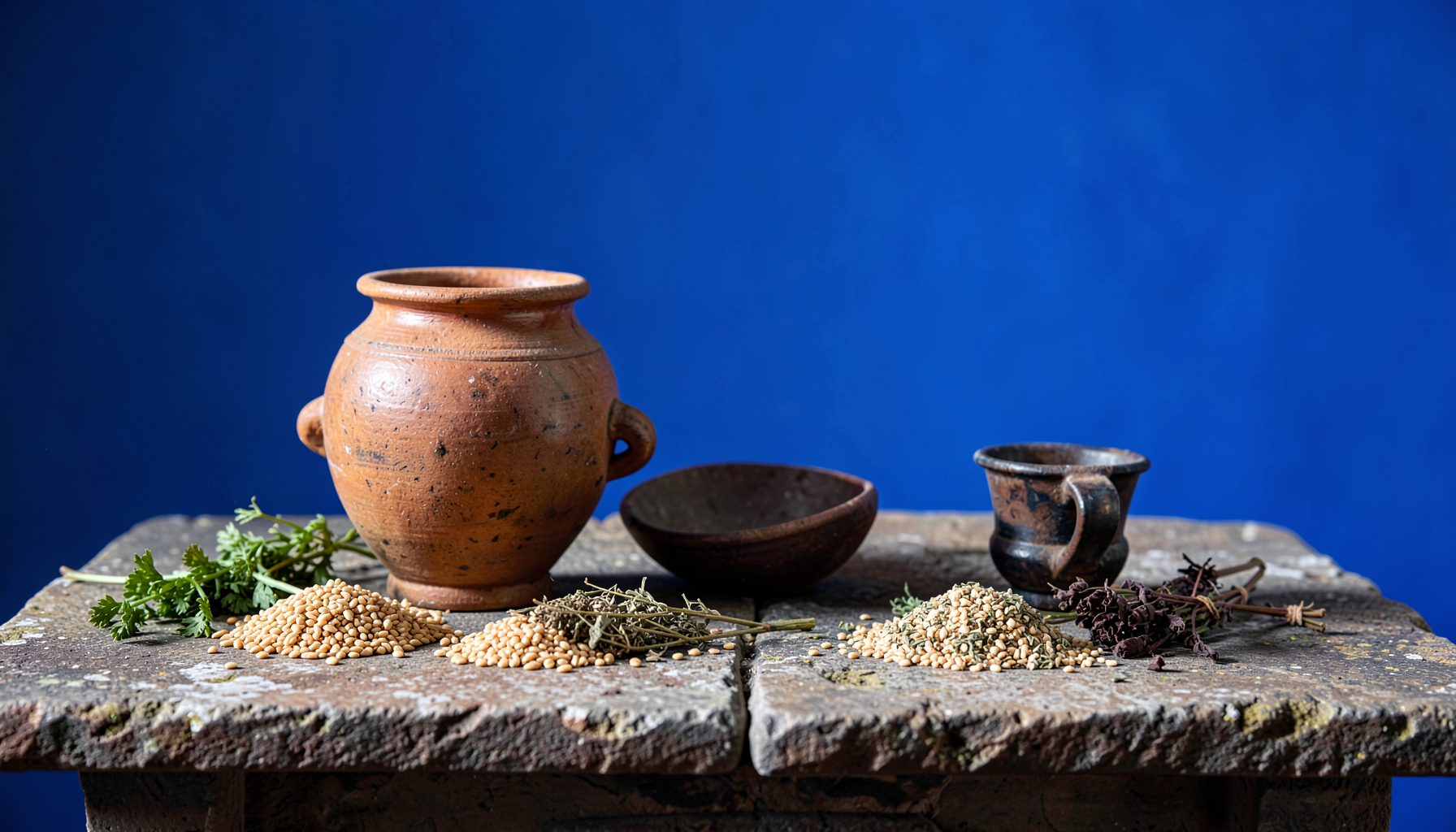
To prepare a small batch, lightly crush coriander seed and combine it with a modest quantity of carrier oil. Warm the mixture gently in a closed vessel or place it in indirect sunlight for several days, filtering it before adding a carefully measured amount of spikenard. The root can be broken into small pieces, but it should not be reduced to an excessively fine powder, which makes clarification difficult. A little beeswax can turn the scented oil into a soft balm rather than a liquid unguent.
The order of infusion changes the result. Coriander gives a bright opening impression, while spikenard develops slowly into a darker, drier base. Adding both materials at once produces a rustic, integrated scent; infusing the seed first and the root later preserves more of the coriander’s lift. Ancient craftspeople may have used repeated heating, settling, and straining, although the surviving evidence does not allow a single method to be assigned to every workshop.
This kind of hands-on investigation belongs alongside textual and archaeological study. The wider ancient food research associated with experimental historical practice shows why sensory testing can reveal practical details that written sources leave unstated: how much plant material is needed, how long an aroma lasts, and how a finished preparation behaves in a warm climate.
Perfume, Ritual, And Social Meaning
Scent in Egypt was never merely decorative. Perfumed oils could mark transitions in life, assist in temple ceremonies, accompany elite hospitality, and prepare the dead. Tomb scenes and textual evidence show the importance of unguents, cones, resins, and aromatic substances, although the exact composition of many products remains uncertain. Fragrance crossed the boundary between the physical and sacred worlds because it was visible through smoke, perceptible through smell, and associated with cleanliness and divine presence.
The famous use of scented cones in New Kingdom banquet scenes has encouraged modern discussions of ancient Egyptian perfume. These cones should not automatically be equated with a spikenard-and-coriander oil, but they demonstrate how fragrance could be displayed socially. A guest wearing or receiving perfume participated in a sensory performance involving appearance, touch, heat, and smell.
Luxury ingredients also carried economic meaning. An imported root could signal rank in the same way that rare wine, coloured stone, or fine linen did. More accessible coriander might have helped extend a costly perfume, adding character without relying entirely on imported material. A workshop could therefore create different grades of aromatic oil for temple use, elite clients, household medicine, or funerary preparation.
Readers interested in how food, ritual, and social performance overlap can compare this subject with the sensory world explored in The Last Supper. Although the historical setting is different, the same principle applies: ingredients gain meaning through the occasions, people, and gestures surrounding their use.
Heat, Storage, And The Australian Experiment
An Australian reconstruction should take climate seriously. A scented oil left in a hot shed in Perth, a sunny kitchen in Adelaide, or a market stall in Darwin will behave differently from the same preparation stored in a cool cupboard. Heat accelerates extraction, evaporation, and oxidation. Dark glass, a tight lid, and a stable indoor temperature will help preserve the result, even if the original vessel was ceramic, stone, or metal.
Australian sourcing also changes the experiment’s ethical and practical context. Imported spikenard may be sold in small quantities by herbal suppliers, but botanical identification and sustainability should be checked carefully. Coriander seed is inexpensive and widely available, making it suitable for trial batches. Local beeswax and cold-pressed oils can provide useful modern materials, provided the reconstruction clearly separates present-day substitutes from claims about ancient manufacture.
Begin with a tiny quantity and record every variable: the weight of each ingredient, the carrier oil, the heating time, the colour, and the aroma at intervals. Smell the oil immediately after filtering, then again after one week and one month. Notes such as “dry root”, “green spice”, “camphoraceous”, or “honeyed” are more useful than simply calling the perfume pleasant. A tasting-style vocabulary adapted for scent can make comparisons between batches much sharper.
The finished oil should be treated as a historical experiment, not as a guaranteed ancient cosmetic or therapeutic product. Modern essential oils can be highly concentrated, and some preparations may irritate the skin. Testing a small diluted sample and avoiding eyes, broken skin, and ingestion are sensible safeguards. The historical value lies in understanding materials and techniques, not in reproducing every ancient practice without judgement.
Spikenard and coriander also invite comparison with other aromatic foodways. Sweet spices, honey, nuts, and fragrant oils often moved between dining and ritual contexts, as shown by the reconstruction of Greek dessert gastrin. Such comparisons reveal a shared ancient habit: scent and flavour were shaped by trade, season, social rank, and the skill of the person preparing them.
Make a small, well-documented batch, source the botanicals responsibly, and record the scent as it changes over time. Each experiment can become part of a richer picture of Egyptian material culture, linking a Himalayan root and an everyday seed to the workshops, rituals, markets, and trade routes of the ancient world.