Cooking with asafoetida in the Roman kitchen
Long before it became familiar in Indian and Iranian cooking, asafoetida occupied a place in the Mediterranean imagination as an exotic, powerful, and useful seasoning. Roman cooks knew it under names connected with laser or laserpicium, terms that could refer to several pungent plant resins and to the prized silphium of North Africa.
The ingredient was intensely aromatic before cooking, with a sharp smell often compared with onions, garlic, or sulfur. Heat transformed it into something rounder and more savory. Used carefully, it could deepen a lentil dish, sharpen a fish sauce, or add complexity to vegetables without dominating the finished preparation.
Studying this resin means moving between botanical uncertainty, trade history, literary evidence, and practical experimentation. The project background offers useful context for this kind of historical food research, where ancient texts and modern kitchen trials inform each other.
What Romans called asafoetida
The Latin vocabulary surrounding asafoetida is complicated. Roman authors used laser, laserpitium, and related forms for valuable aromatic resins, while Greek writers referred to silphion. Some passages clearly concern the famous silphium of Cyrene; others may describe eastern asafoetida or a substitute that entered Mediterranean markets through long-distance trade.
Pliny the Elder provides important evidence in his Natural History. He describes silphium as a major commercial product and records its culinary, medicinal, and economic value. By the first century CE, genuine silphium had become scarce, and Roman consumers increasingly encountered related resins from regions farther east. The distinction was meaningful to ancient specialists, but it is not always possible to identify the exact plant behind every surviving reference.
For modern reconstruction, the safest approach is to treat asafoetida as a plausible relative or substitute within the Roman family of pungent laser-like seasonings, rather than claiming that every mention of laser means the powdered resin sold today.
From silphium to an eastern resin
Silphium was associated with Cyrenaica, in present-day Libya, and its value was tied to a particular landscape and supply. Ancient accounts suggest that it resisted successful cultivation, making wild harvesting central to its production. Its disappearance is often linked to overexploitation, environmental change, and the pressure of commercial demand, although the precise history remains debated.
As silphium became difficult to obtain, merchants supplied alternatives from the east. Asafoetida is produced from the dried latex of several Ferula species native to areas including Iran, Afghanistan, and Central Asia. The resin could travel in lumps or processed forms, surviving long journeys because a small quantity carried a great deal of flavor.
This trade connects Roman cuisine to wider networks involving spices, aromatics, medicinal substances, and luxury goods. Asafoetida was not an everyday seasoning for every household. Its price, intensity, and foreign origin likely made it more visible in elite kitchens, professional cooking, and recipes designed to imitate fashionable flavors.
A flavor built for sauces and pulses
Roman cuisine relied heavily on layered seasonings. Garum or liquamen supplied salt and fermentation; wine, vinegar, honey, herbs, pepper, cumin, coriander, and lovage added acidity, sweetness, warmth, and perfume. A resinous allium-like note could fit naturally into this system, especially in dishes based on beans, lentils, fish, and vegetables.
The surviving recipes attributed to Apicius rarely provide a simple modern ingredient list. They describe combinations and processes that assume culinary experience. When a recipe calls for laser or a related aromatic, the cook must judge quantity, timing, and the balance of other strong ingredients. Asafoetida therefore works best as a seasoning dissolved into a sauce, broth, or fat rather than scattered heavily over finished food.
| Ancient culinary context | Likely role of asafoetida | Modern reconstruction |
|---|---|---|
| Lentils and beans | Savory depth and aromatic lift | Bloom a tiny pinch in olive oil before adding legumes |
| Fish sauce or garum-based dishes | Sharp counterpoint to salt and fermentation | Mix into diluted fish sauce with vinegar or wine |
| Cooked greens and vegetables | Onion-garlic character without fresh alliums | Add to cabbage, leeks, chard, or fennel during cooking |
| Meat stews | Background complexity | Combine with pepper, cumin, coriander, and broth |
| Medicinal or digestive preparations | Pungent warming substance | Treat separately from culinary use and avoid unsupported claims |
The comparison also clarifies why asafoetida should not be treated as a direct replacement for modern garlic. Its aroma is more concentrated and more resinous, and its raw smell can seem startling. Once heated in oil, however, it becomes gentler and more integrated.
Reconstructing a Roman seasoning blend
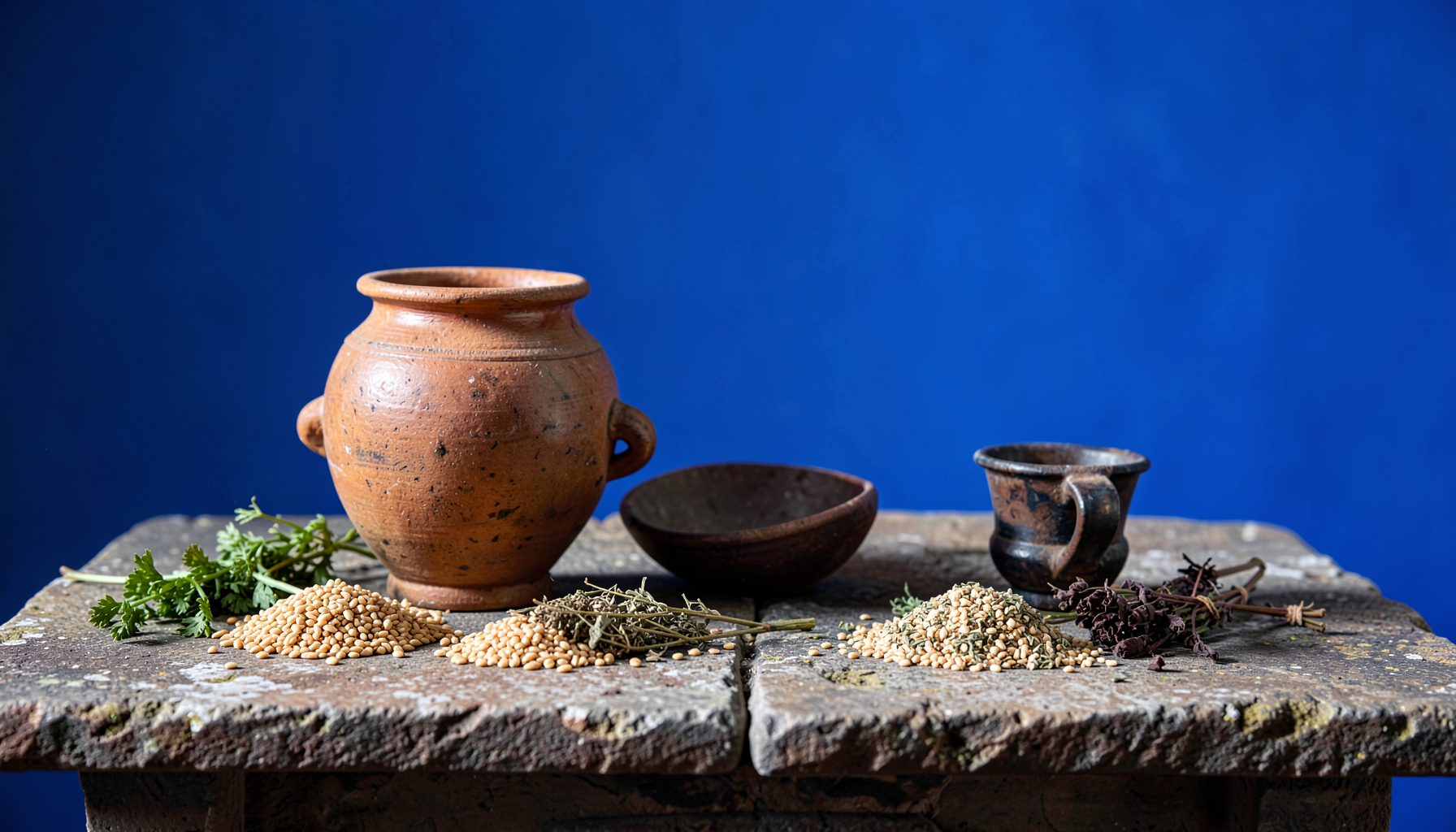
A practical Roman-inspired blend might include asafoetida, black pepper, cumin, coriander seed, dried lovage, and a small amount of toasted fennel seed. This is an experimental interpretation rather than a recovered ancient formula. The proportions should remain restrained, since the goal is to create a layered seasoning rather than a single dominant spice profile.
Begin with one tablespoon of olive oil in a small pan. Add a pinch of asafoetida, no more than a small fraction of a teaspoon, followed by crushed cumin and coriander. Warm the mixture briefly until fragrant. Add cooked lentils, chickpeas, cabbage, or mushrooms, then moisten with a little broth, wine, or diluted fish sauce.
Acidity is especially valuable. A splash of wine vinegar or grape must reduced with the dish can prevent the resin from tasting heavy. Honey may soften the sharper edges, while pepper adds a familiar Roman warmth. Fresh herbs such as coriander leaf, mint, or parsley should be used at the end, not as a substitute for the resin’s cooked aroma.
Historical cooks also cared about texture. A sauce thickened with mashed legumes, bread, or reduced liquid would carry the seasoning more effectively than a thin broth. The final dish should taste cohesive, with the asafoetida sensed as a deep savory note rather than identified immediately.
What the evidence tells us about the Roman table
Food texts reveal preferences, but they do not describe the entire population. An ingredient appearing in a gourmet recipe may indicate fashion, availability, or the author’s interest in elaborate cookery rather than ordinary household practice. Asafoetida’s presence in Roman culinary culture should therefore be understood alongside cheaper herbs, local alliums, and regional substitutes.
Archaeological evidence can add another layer. Residues in vessels, botanical remains, trade amphorae, and grinding equipment help establish what moved through ancient markets and how ingredients were processed. Such evidence is rarely complete, so historical recipes are strongest when read together with trade records, environmental data, and comparative plant studies.
The research bibliography is valuable for following these connections. It places ancient foodways within a broader conversation about archaeobotany, textual criticism, commerce, ritual, and experimental archaeology rather than reducing the subject to a list of exotic ingredients.
A practical route into ancient flavor
The easiest experiment begins with a familiar dish. Cook lentils with onion, carrot, and olive oil, then prepare a separate seasoning of asafoetida, cumin, coriander, black pepper, vinegar, and a little fish sauce. Stir it into the pot near the end and compare it with an unseasoned portion. This makes the resin’s contribution easier to recognize.
A second trial can use roasted cabbage or leeks. Toss the vegetables with oil, add a very small amount of asafoetida during the first minutes of cooking, and finish with vinegar and chopped herbs. The result evokes the Roman preference for vegetables transformed by sauces and aromatics while remaining accessible to a modern palate.
Choose food-grade asafoetida from a reliable source, preferably one clearly labeled for culinary use. Many commercial products are blended with flour, gum, turmeric, or other ingredients, so their strength varies. Start with less than expected, record the quantity, and increase only in later trials.
Guidelines for a historically informed kitchen
Reconstruction becomes more convincing when it acknowledges uncertainty rather than hiding it. These principles help keep the experiment both flavorful and responsible:
- Treat asafoetida as a plausible Roman-era substitute or related resin, not as a guaranteed identity for every ancient reference to laser.
- Use a very small quantity and cook it in oil or another moist medium to soften its raw aroma.
- Pair it with ingredients documented or strongly associated with Roman cuisine, including vinegar, wine, garum-style fish sauce, pepper, cumin, coriander, legumes, and greens.
- Compare several batches and record proportions, cooking times, and substitutions so the result can be evaluated rather than remembered vaguely.
- Distinguish culinary evidence from ancient medicinal claims, which belong to a different historical and ethical context.
These guidelines also preserve the pleasure of discovery. A Roman-inspired dish does not need to pretend that its modern cook has recovered an untouched original. It can instead show how evidence, informed judgment, and sensory testing create a responsible interpretation of the ancient pantry.
Continue the experiment at the table
Asafoetida gives Roman food history an unexpectedly vivid point of entry. Its journey from eastern resin to Mediterranean seasoning illuminates changing trade routes, the decline of silphium, the complexity of Latin culinary vocabulary, and the skill required to balance powerful aromas.
For readers who want to go further, the published books extend this investigation into ancient recipes, food customs, and experimental reconstructions. Cook a small batch of lentils or greens, season it with restraint, and let the finished dish become a practical encounter with the Roman world.