Verjuice in Roman and medieval kitchens
Verjuice is the thin, sharply acidic juice pressed from grapes harvested before they ripen. In the kitchens of Rome, and later in the courts of France and the households of medieval England, that liquid did the work that lemon juice and wine vinegar do today: it cut through richness, sharpened a bland sauce and gave a plate its edge. The fruit never reached sweetness, so the juice carries a green vegetal bitterness as well as the sourness.
Archeoricette follows the evidence for ancient foodways wherever it leads, and this liquid leaves an unusually clear trail. The juice appears in the Roman cookery transmitted under the name Apicius, in late medieval recipe books written in French and English, in the medical literature of the period, and in the calendar of the vintage itself. It can also be tested: press green grapes, taste the result, and set it beside oysters, roast fowl or lentils.
The vocabulary around it is equally informative. Latin authors wrote of agrestum, the sour juice taken from unripe clusters; French cooks of the fourteenth and fifteenth centuries wrote verjus, the green juice; English cooks took up verjuice, a word that later drifted toward the meaning vinegar. The same liquid was also a cooling drink prescribed for hot fevers, which is why it survived at all.
What verjuice is and what it was called
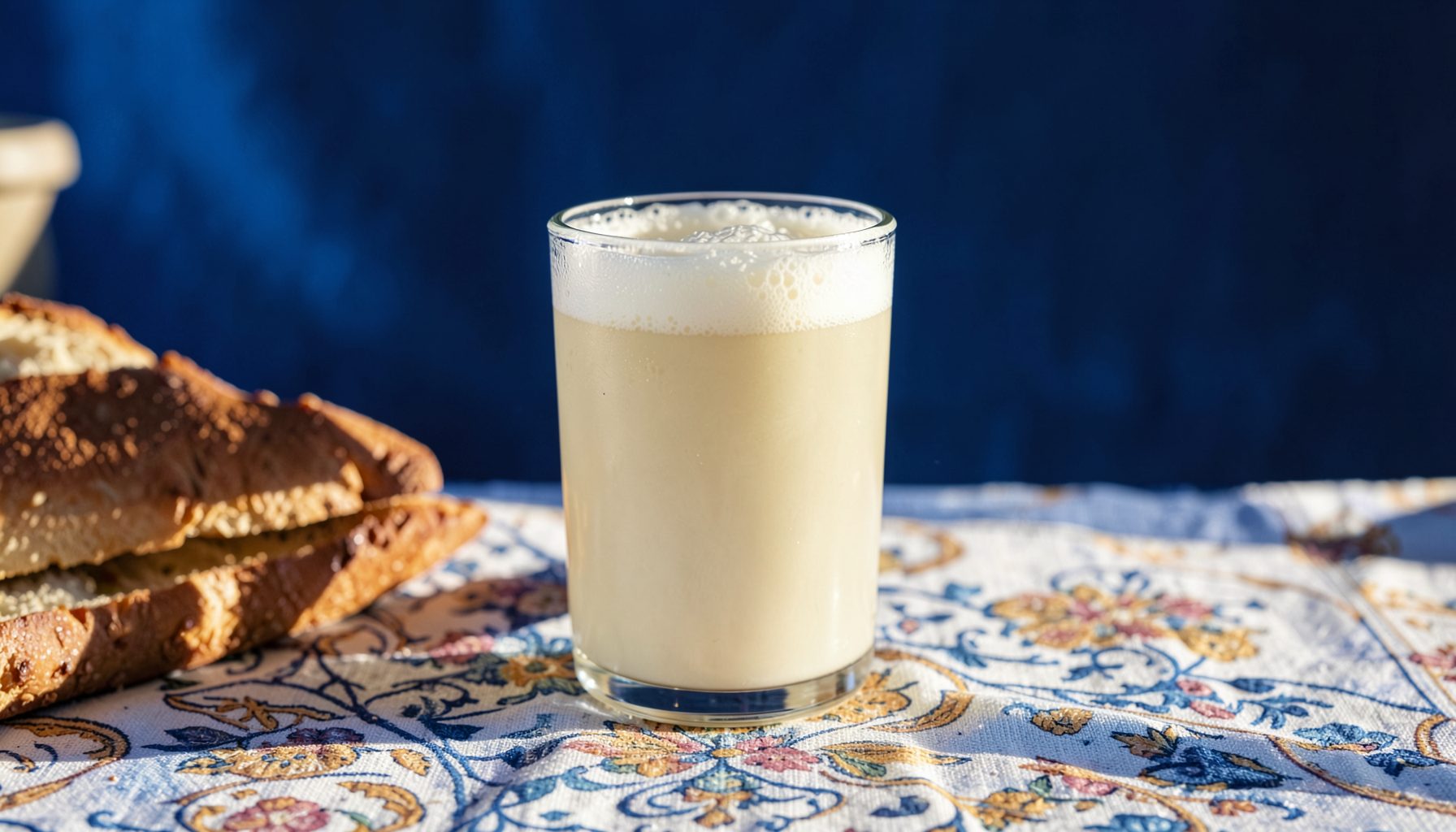
Everything starts with an early harvest. Grapes cut while still green carry very little sugar, so the pressed must never becomes wine; what runs from the press is cloudy, faintly green, and dominated by the hard tartaric sourness of the grape, with a little tannin from the skins. Strained through linen it looks like thin cider and tastes closer to a tart dry white wine crossed with green apple.
The Romans knew it well enough to name it. Pliny follows the sequence of the vintage and notes the juice drawn from clusters gathered before full ripeness, the liquid that agricultural writers render as agrestum. It had to be pressed in the country, at the moment of picking, since ripe fruit kept in store would no longer give the same liquid. That is why the early harvest appears in the ancient sources as a date on the calendar.
Storing it was the difficult part. Pressed juice clouds and sours within days, so cooks strained it hot into clean jars, kept it as cold as the household allowed, and boiled it down to a dark syrup that could be loosened again with wine or broth. In French and Italian records of the later Middle Ages the word verjus covers both the fresh juice and the concentrated version, and English writers of the fifteenth century carried the term into the household books.
Verjuice in the Roman kitchen
Apicius is the most direct witness. In the recipes for shellfish and in sauces built on oil, pepper and wine, the sharp juice of green grapes appears as the acid element. Oysters dressed in it were among the most refined preparations on a Roman table, and the scale of the trade described in the guide to Roman oyster farming explains why the dish could carry so much status.
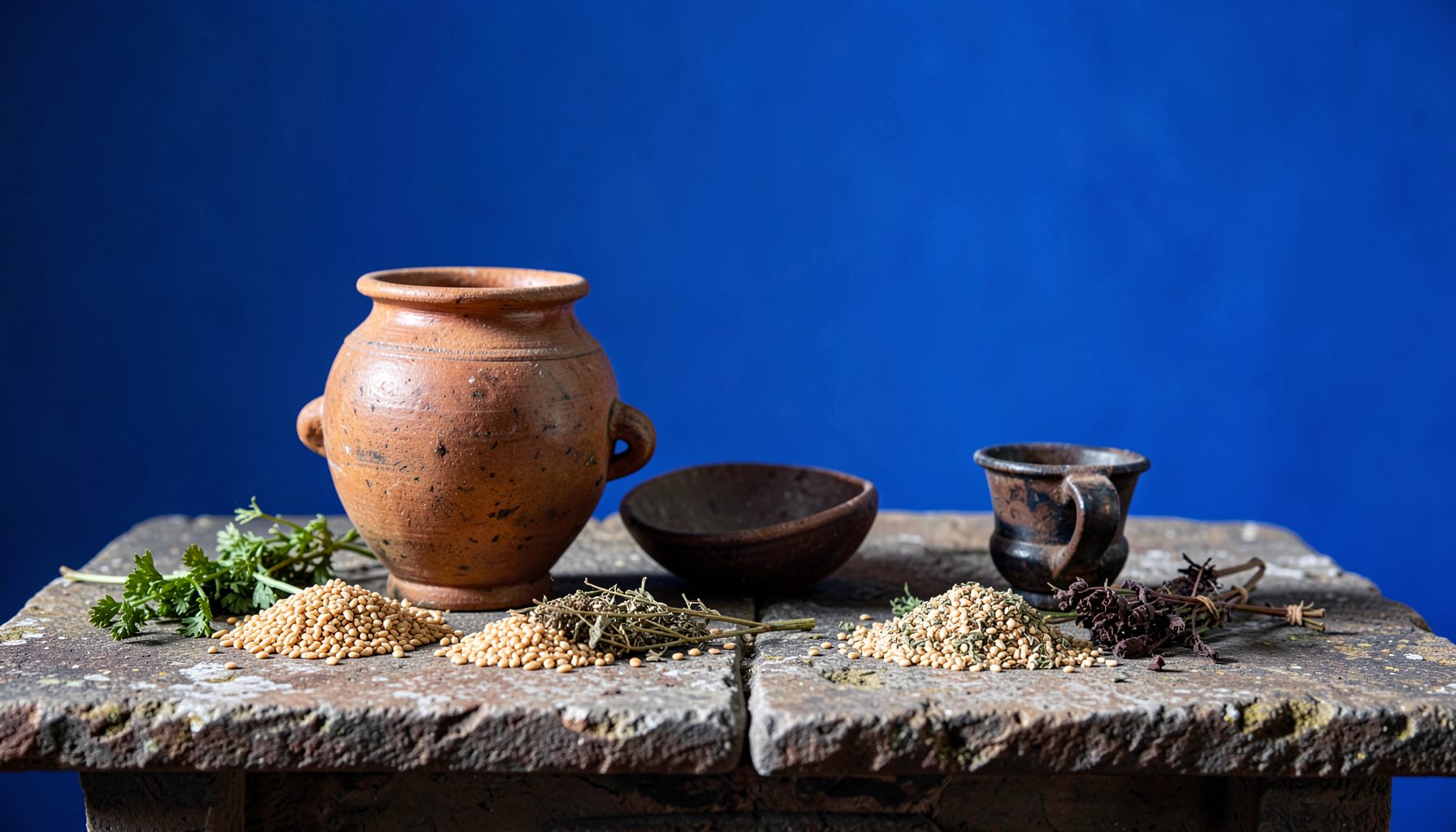
The wider Roman pantry shows why the sauce mattered. Cooks worked with garum and liquamen, intensely salty fermented fish sauces, with acetum, the strong sourness of vinegar, with posca, the cheap sour wine given to soldiers, and with defrutum, must reduced to a syrup. Against that background verjuice was the cheap, local, gently bitter alternative to imported citrus, and it softened the harshness of oil and salt without flattening the dish.
At the table the pairing was the point. Brine and acid have always belonged together, so the tart grape juice went with shellfish, with mackerel and anchovies, and with the roast birds served at a convivium. Verjuice also brought out the sweetness of onions and pulse, which is why it returns, in a later form, in the reconstructions assembled here.
Verjuice in the medieval recipe books
By the fourteenth century the practice was routine rather than remarkable. The Forme of Cury, compiled for the household of Richard II, lists verjus among the sharp sauces of the English royal kitchen, and the manuscript cookery books of the fifteenth century repeat the pattern in dressing for boiled fowl, fish and roasted meat. French courtly cookery treats verjus with the same quiet confidence, sauced onto birds and river fish as a matter of course.
The vocabulary widened as the liquid travelled. verjus in French, the sour grape juice still sold under that name in Italy and Sardinia, verjuice in English, and a shortening in some texts to green wine all point to the same substance: unripe grapes pressed at harvest. Physicians prescribed the same drink for patients burning with fever, and a kitchen liquid that was also a medicine stayed in the household for a long time.
Later cooks kept the word even as its meaning narrowed toward vinegar. In early-modern English kitchens the verjuice cup that accompanied a sauce at table also became a baking ingredient and a drink, a continuity of use that can be followed through the recipe collections gathered in D.C. Rose's cake history, where early English and American books still show the sour grape juice at work in sauces and in sweet dishes.
A practical reference for the modern kitchen
The reconstruction was made at home, with green grapes picked from a vine in early September and pressed in a kitchen press. A kilogram of unripe fruit yields roughly half a litre of juice, less after careful straining, and the flavour is greener and less sharp than shop-bought verjus, which is often made from more mature clusters.
Making a small batch
- Pick a kilogram of unripe green grapes, sour ones being ideal
- Crush and press, then strain twice through a clean cloth
- Chill and use within a week, or freeze in small portions
- Reduce half of the juice to a syrup for keeping
Using it at the table
- A spoonful in a dressing for oysters, raw fish or goat cheese
- Two teaspoons loosened into a warm sauce for roast fowl or braised greens
- A splash in a stew of onions, beans or lentils to lift the sweetness
- Half a teaspoon drizzled over a sharp cheese with honey
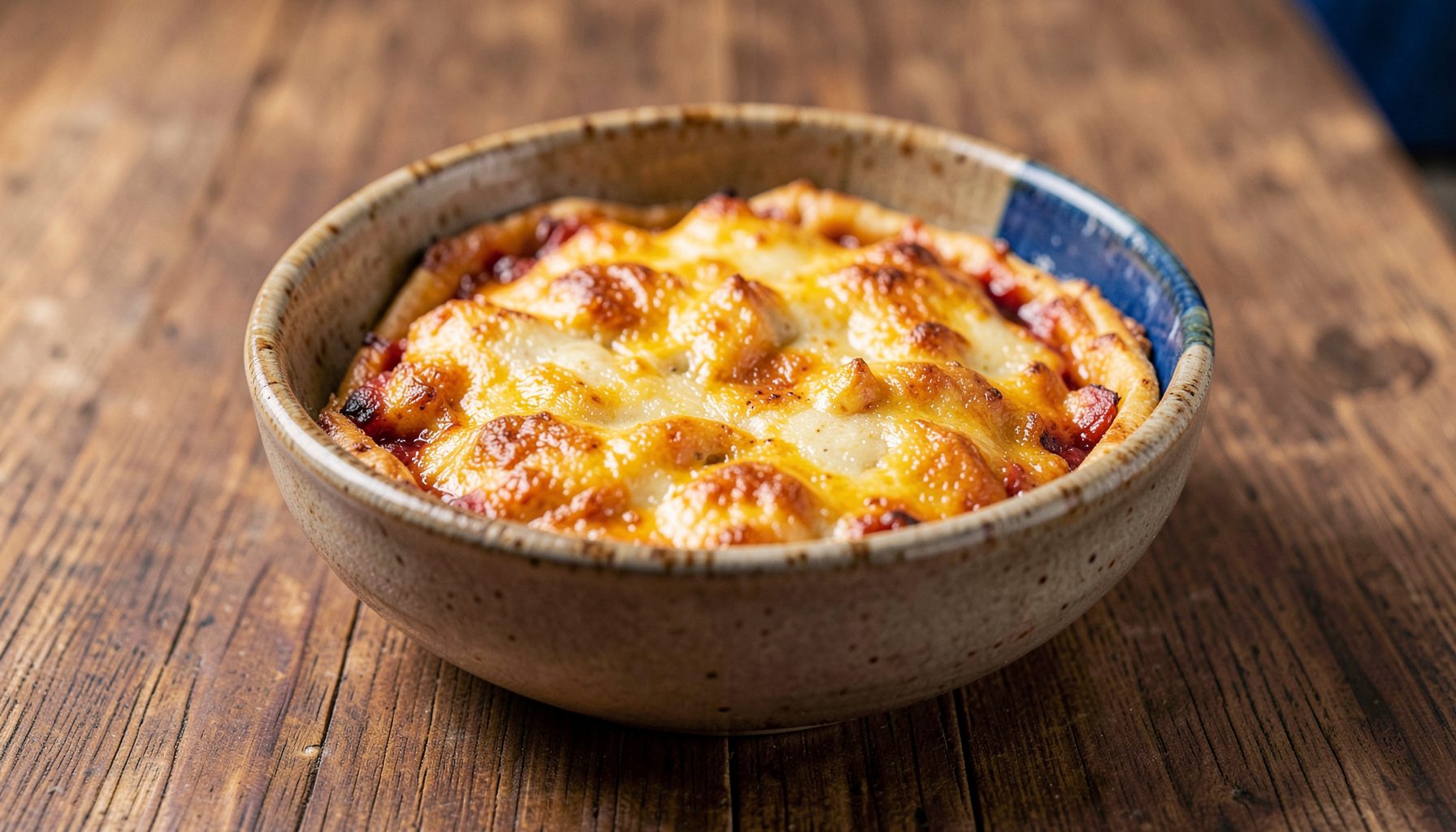
In place of the real thing, lemon juice or dry white wine sharpened with a little vinegar will do. For the last of the trials we used a hot waffle, the griddle tradition documented in the waffle iron history collection, split and dressed with aged cheese and verjuice, a pairing that a medieval kitchen would have recognised as ordinary rather than experimental.
The quantities are modern estimates. Roman and medieval recipes rarely give measures, and they assume a cook who tastes as they go, so the reconstruction is really a proposal about balance: enough sourness to make the fat sing, never enough to turn the dish into a wine pairing.
Reconstructing the flavour of the ancient kitchen
Evidence and experiment have to meet in the middle. The recipes give ingredients and sequence but almost never quantity, and the taste descriptions in the medical and agricultural writing are general rather than precise. What the kitchen work supplies is a range: verjuice sits at the tart, faintly bitter end of the scale, greener and less aggressively sour than cider vinegar, with an astringency that settles behind the salt of a fish sauce.
Testing that range against older reconstructions was revealing. A spoonful stirred into a reconstruction of the ancient Mesopotamian lentil stew, with its onions and leeks, set the green tang against the sweetness of the vegetables and the roundness of the pulse, and the result was closer to the ancient idea of a sharp, seasoned stew than the unsharpened version. On a roast bird the same measure was too loud, so the sauce was cut with wine and honey.
The limits should be stated plainly. The original grapes are gone, and a Roman agrestum may have been strained through wool or linen, or drunk cloudy as it came from the press, each choice altering the taste. What survives is a workable range of flavour, and within it the dishes can be rebuilt with confidence: sour first, then salted, then balanced with oil, bread or wine.
None of this needs a vineyard or a special season to begin. A bag of unripe grapes from the market, or a bottle of verjus, is enough to taste what the Roman and medieval kitchens took for granted, and an afternoon at the stove is enough to find the balance: sharp enough to wake a dish, gentle enough to leave the main ingredient clear.
Make the juice this month, keep a jar in the fridge, and serve it with something simple. The recipe archive on this site carries the method forward, and readers who want to see the same logic applied to older material can follow the guide to sacred grove feasts, where acorn bread and venison are built around the same instinct for strong, deliberate flavours. Notes and photographs of your own trials are welcome at the editorial desk, where the next reconstruction is taking shape.