How the Romans made posca: a sour wine vinegar drink for legionaries
Among the many staples of Roman life, posca occupies a curious place. Mentioned in passing by historians, recorded in soldiers' letters, and described in technical manuals, this humble sour wine drink sustained Roman legionaries across centuries of conquest. Yet for all its significance, posca rarely appears on modern menus. Its ingredients were cheap, its flavor sharp, and its reputation lowly—qualities that made it indispensable to the empire's fighting men. Today, interest in historical foodways is reviving worldwide, and Roman posca is being brewed again in kitchens from Tuscany to Tasmania, rediscovered as both a curiosity and a doorway into ancient daily life.
At Archeoricette, Generoso Urciuoli has spent years reconstructing the foods, cooking techniques, and forgotten recipes of the ancient Mediterranean using archaeology, classical texts, and hands-on experimentation. Posca sits inside that mission: a drink born of necessity, shaped by climate and logistics, and flavored by the practical ingenuity of ordinary Romans. The sections below walk through what posca actually was, why it mattered to the legions, how it was produced, and how modern experimenters, including several based in Australia, are breathing new life into this two-thousand-year-old thirst-quencher.
What posca actually was
Posca was not a single recipe but a category of tart, watered drinks made from soured wine. Roman authors used several names for related beverages, including vinum acetum ("vinegar-wine") and lora, the press residue left after the first pressing of grapes. Columella, writing in the first century CE, describes how farms deliberately encouraged their lower-grade wines to turn acidic so they could be sent to kitchens, the slaves' quarters, and the barracks.
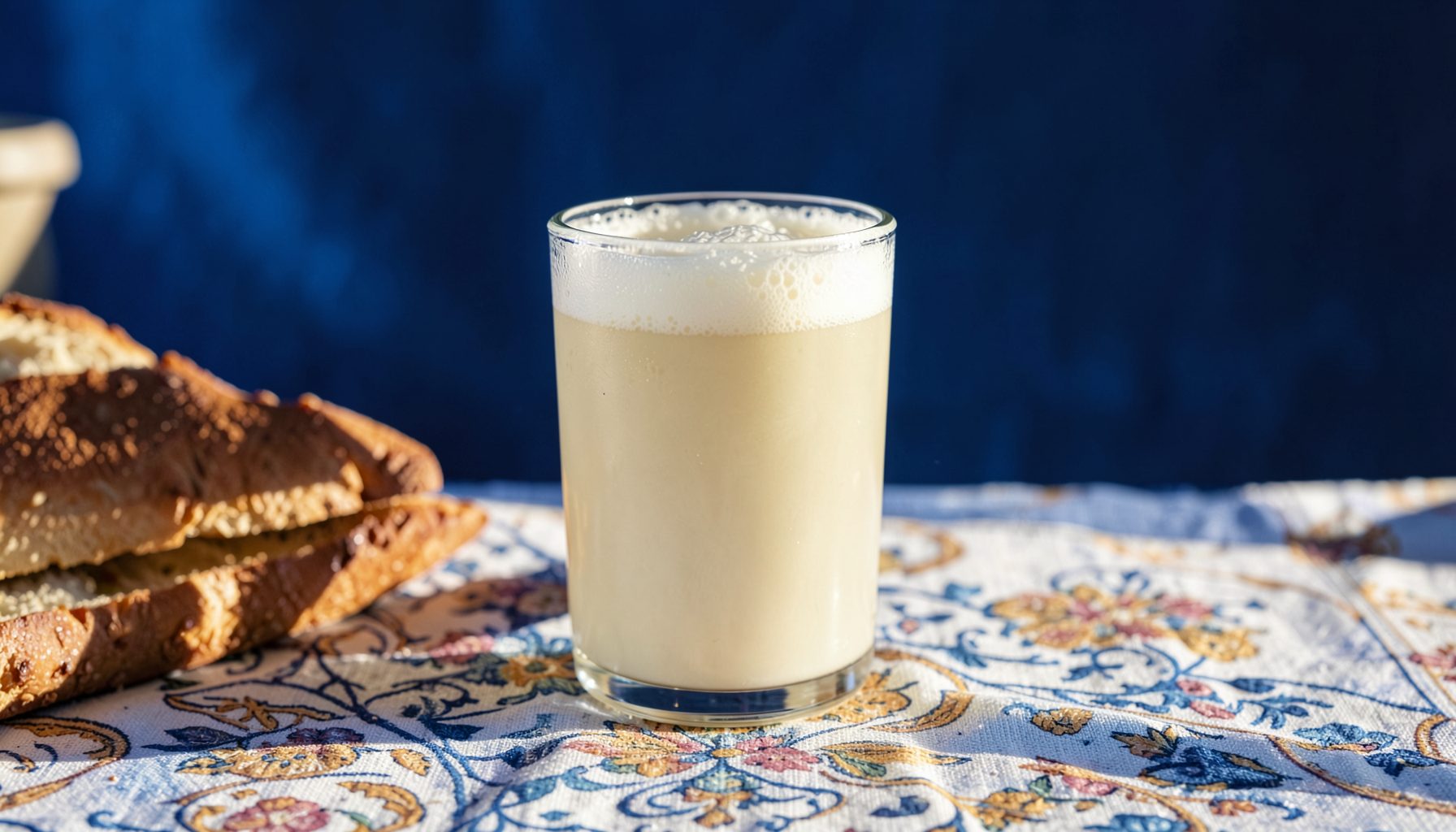
The defining feature was sharpness. It tasted unmistakably vinegary, often with a faint winelike undertone, and was almost always cut with water before drinking. Some recipes called for herbs, honey, or reduced must, but the core identity held: a refreshing, acidic, low-alcohol beverage safe to drink in large quantities. In essence, posca was a Roman sports drink—affordable, accessible, and surprisingly well suited to long marches under the Mediterranean sun.
A soldier's everyday drink
While wealthy Romans quaffed Falernian and Setine from fine glassware, posca was what the common soldier carried. Polybius, writing in the second century BCE, records that each legionary received a daily ration of grain, salt pork, cheese, olive oil, and a measure of posca alongside a regular wine allowance. The drink kept well, didn't spoil as fast as fresh wine in the heat, and offered hydration plus a clean lift of acidity that helped mask the fatigue of long foraging days.
One famous reference to posca comes from outside the Roman sources. The Gospel of John records that soldiers at the cross offered a sponge soaked in oxos—the Greek equivalent of posca—to a condemned prisoner, a detail often cited as evidence of how deeply embedded the drink was among Roman troops. The episode captures its cultural status perfectly: an everyday beverage of the military class, carried in clay jars and leather flasks, gulped at the end of a hard march or shared around a campfire in a foreign province.
The base ingredients
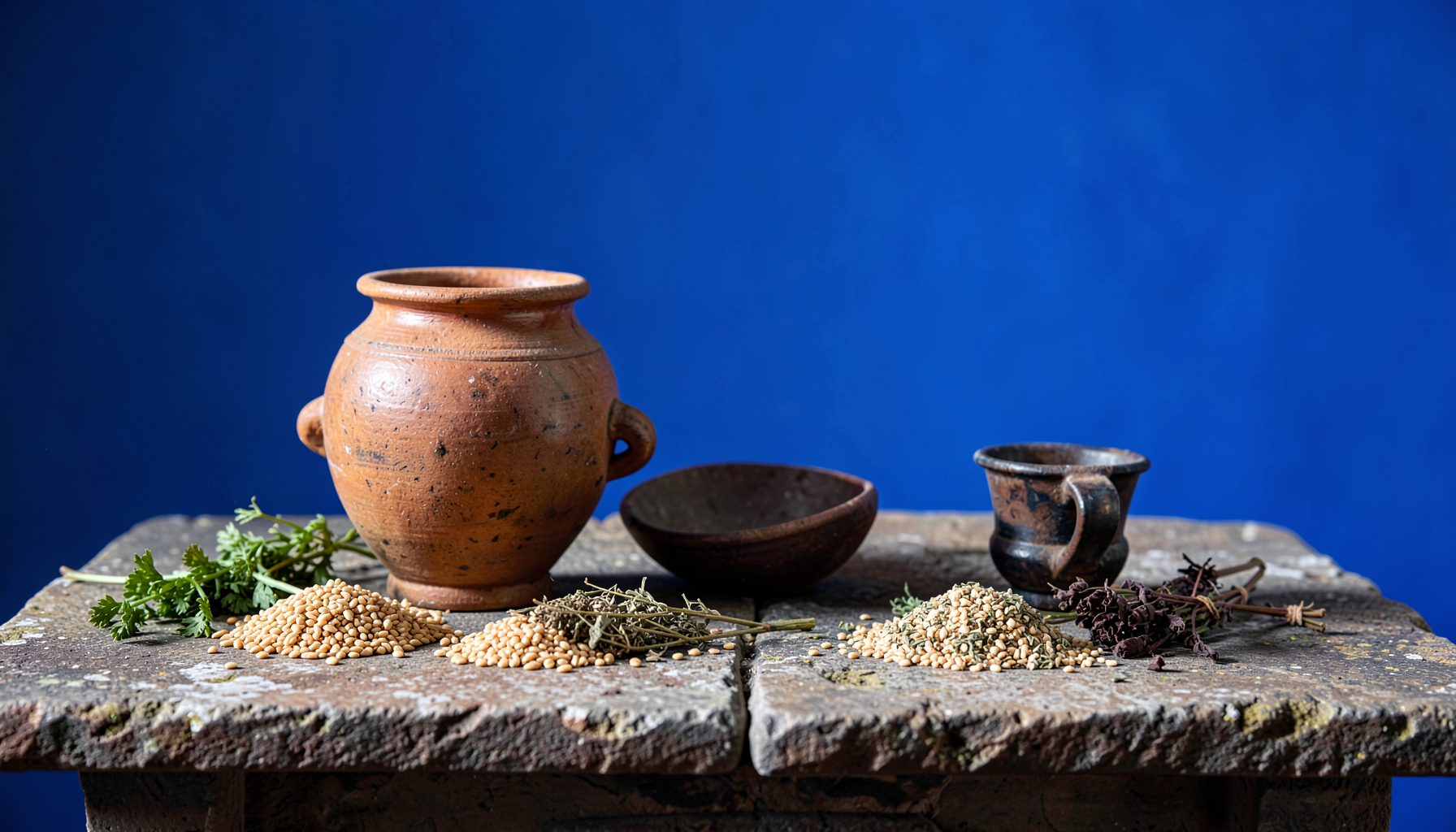
Making posca started with the right kind of wine. Roman winemakers produced several grades, and the cheapest tier—vinum de lora, or second-press wine—was ideal for souring. Growers left this wine in contact with the lees and open air for weeks, encouraging natural acetification. Once sharp and vinegar-like, the liquid could be transferred into amphorae, pitched jars, or wooden casks, where it continued to evolve.
Beyond the soured wine, recipes called for a small set of supporting ingredients. Water was mandatory; posca was almost never drunk neat. Honey, when added, helped balance acidity and was welcome in northern campaigns where the wine base was rougher. Crushed coriander, dried mint, or cracked pepper occasionally appeared in civilian versions, though military posca stayed plain. Salt was sometimes stirred in to make an early electrolyte drink, particularly during summer maneuvers in Spain, North Africa, or on the dusty steppes of the Danube frontier.
How it was prepared each day
Preparation in barracks and farms followed a simple rhythm. The soured wine base went into a large mixing bowl or pail—often a wooden situla in military contexts—and was diluted with water at roughly one part wine to three or four parts water, depending on sharpness and taste. A servant or soldier stirred vigorously with a long-handled ladle, aerating the liquid and helping suspended particles settle.
After dilution, the mixture rested briefly so impurities sank to the bottom. The clean liquid above was decanted into cups, leather bottles, or small amphorae. In the field, legionaries typically drank posca in the late afternoon, after the heaviest work was done, though officers occasionally distributed it at dawn during forced marches. Unlike beer or mead, posca carried no ritual of preparation; its appeal lay in unpretentious availability. A modern home brewer working with grape pomace from a Barossa vineyard could follow the same steps and end with a drink that would taste comfortably at home in a Roman camp.
Storing and serving on campaign
Posca's strategic advantage was stability. Because the wine had already partly converted to acetic acid, it resisted further spoilage far better than fresh wine, which could turn bitter in the heat of a marching column. Roman quartermasters stored bulk posca in large ceramic vessels, often sealed with a layer of olive oil to limit oxygen, and decanted as needed.
Soldiers carried their personal ration in a leather bottle, the uter, slung over the shoulder or attached to a marching pack. These bottles were durable, lightweight, and refillable at supply dumps. Digs at Roman military sites, including the legionary fortress at Vindolanda along Hadrian's Wall, have uncovered fragments of these containers alongside residues consistent with vinegar-based drinks. For legionaries deployed far from Mediterranean vineyards, posca was effectively a preserved form of home—a liquid link to the camp kitchens of Italy or Hispania, no matter how distant the frontier.
Beyond the battlefield
Soldiers were the largest single consumer group, but posca was not restricted to the ranks. Slaves drank it as a daily staple during the agricultural season, when they worked long hours under the summer sun. Sailors carried it aboard imperial grain ships, since the acidic profile held up well. Roman physicians, including Galen, prescribed diluted posca for patients recovering from fever, attributing to it mildly cooling and digestive properties.
In religious contexts, posca occasionally appeared in ritual use. Some scholars suggest that household libations relied on sour wine rather than fine vintage, mirroring the everyday drinks of the family. The emperor Tiberius, noted Suetonius, once responded to a petitioner with "a cup of posca"—a quip that became proverbial for the spartan simplicity expected of a true Roman. That simplicity is part of why posca resonates today: it was a drink of the people, consumed by the majority of citizens whose names rarely appear in surviving histories.
Modern recreations across Australia
In Australia, the renewed appetite for fermented and historical foods has given posca an unexpected foothold. Sydney and Melbourne host thriving communities of home fermenters, and kombucha enthusiasts—who already embrace sharp, vinegary flavors—have begun experimenting with grape-based analogues of the classical drink. Small-batch vinegar makers in the Barossa Valley and Tasmania's cool-climate Huon Valley produce grape vinegars with the depth and roundness that mirror descriptions in Columella and Pliny, giving any curious cook a fine starting point.
A growing number of Australian cooks and food historians also take part in classical cuisine events and Latin food clubs, where Roman-inspired dishes—including pulmentum, spiced wine reductions, and posca—are reconstructed for tasting menus. Universities in Perth, Brisbane, and Adelaide now offer courses that touch on ancient foodways, pairing lectures with hands-on workshops where students brew their own version of the sour wine. For Australians wanting to try it at home, the recipes section offers step-by-step guidance built directly from archaeological and textual sources.
Posca was never glamorous, yet for over five centuries it quenched the thirst of the men who built and held the Roman Empire. From the legionary marching into Germania to the slave tilling an Etruscan field, from the sailor's leather flask to the emperor's famous retort, this sour, sharp, faintly bitter drink was woven into the daily texture of Roman life. Reconstructing it today is a way of tasting the lived reality of an empire that ran on routine, discipline, and a well-struck cup of vinegar-wine.
If this glimpse into Roman posca has stirred your appetite for ancient flavors, the broader collection of reconstructed dishes and event reports gathered on the Archeoricette site is the natural next stop. Pairing posca with a moretum of fresh cheese, herbs, and vinegar offers an especially vivid taste of how Romans ate and drank in everyday life. Brew it slowly, dilute it generously, drink it unapologetically: the Roman way.