How to make ancient Mesopotamian beer from barley
Beer was a staple of life in ancient Mesopotamia, where barley grew more reliably than many other grains and could be transformed into a nourishing, mildly alcoholic drink. Sumerian and Akkadian texts mention beer in household rations, temple offerings, wages, festivals, and medical contexts. It was a daily food as much as a beverage.
Reconstructing that drink at home requires caution. No complete Mesopotamian brewing manual has survived, and the archaeological evidence rarely reveals every stage of production. The method below is therefore an informed experimental reconstruction based on ancient references to barley, malt, beer bread, fermentation, and sweeteners.
The result will not be an exact replica of a particular ancient batch. It will be a cloudy, lightly sour barley beer with a fresh grain aroma and little resemblance to modern pale ale. For background reading, the Archeoricette research library offers a useful starting point for exploring ancient foodways and experimental archaeology.
What Mesopotamian beer was
Ancient Mesopotamian beer was generally made from barley, although the grain could be processed in several ways. Brewers may have used malted barley, partially baked barley loaves, or a combination of germinated and ungerminated grain. The famous bappir, often described as a kind of beer bread, may have helped preserve fermentable grain and make it easier to transport or store.
The drink was likely thick, opaque, and full of suspended particles. It was not filtered and clarified like many modern beers. Small amounts of dates, date syrup, or other flavoring ingredients may have been added in some preparations, particularly when a sweeter or more aromatic drink was desired. The basic barley version, however, is the best place to begin.
Mesopotamian beer also lacked hops. Bitterness, when present, would have come from roasted grain, herbs, or fermentation rather than from the hop flowers familiar in contemporary brewing. Its character probably varied greatly according to the season, water, yeast, storage vessel, and skill of the brewer.
Ingredients and equipment for a household reconstruction
The following quantities produce approximately four liters of experimental barley beer:
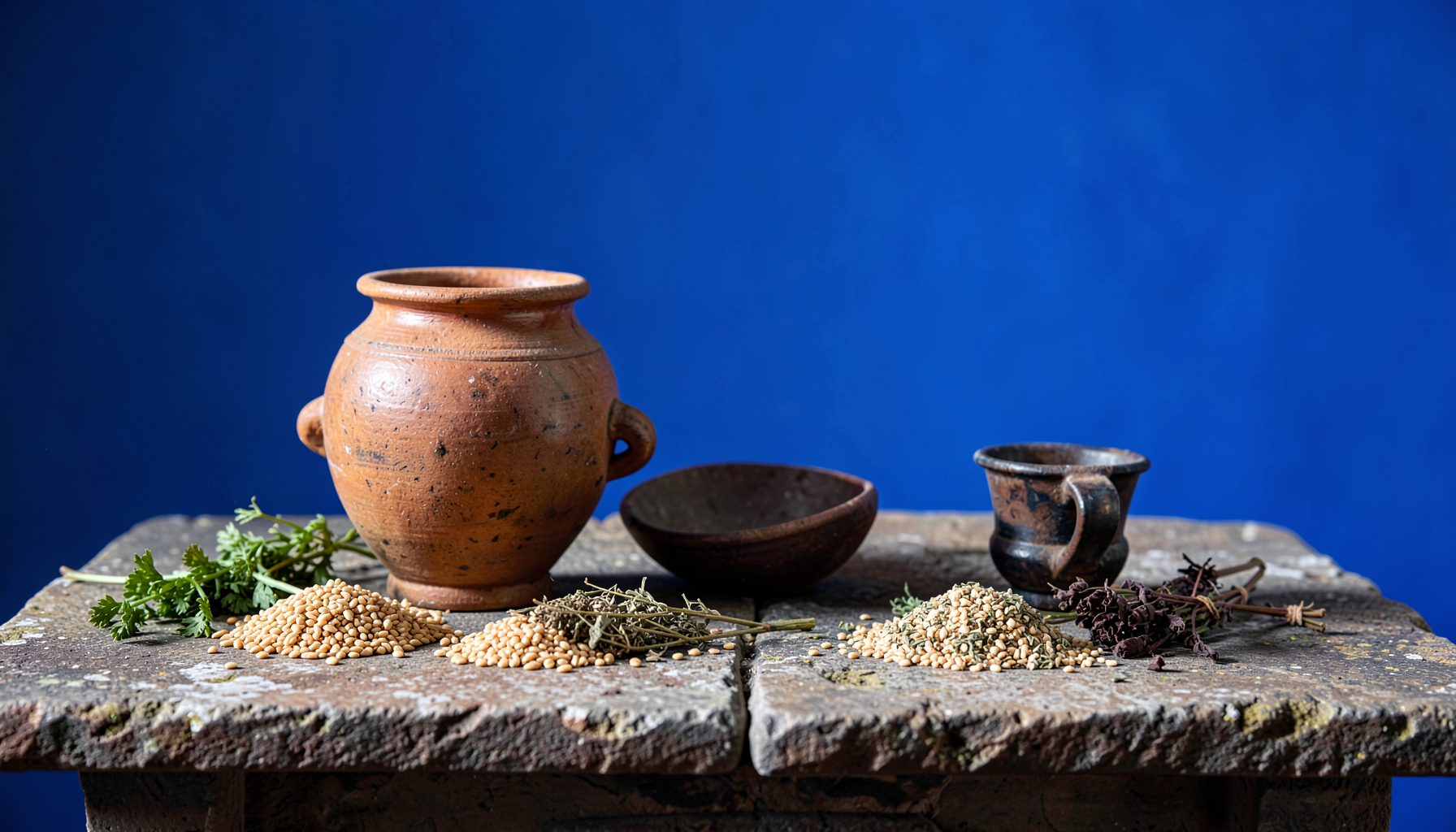
- 1 kilogram of whole barley
- 250 grams of pale malted barley
- 150 grams of barley flour or coarse barley meal
- 3 to 4 liters of clean water
- 100 grams of date syrup or chopped dates, optional
- 2 grams of dried ale yeast
- A pinch of salt, optional and historically uncertain
The malted barley supplies enzymes that convert starch into fermentable sugars. The whole barley and barley meal make the drink more cereal-heavy and closer in texture to a grain beverage than to a modern beer. Date syrup is optional because sweetness and date flavor were not necessarily present in every ancient beer.
Use a large cooking pot, a fine sieve or clean cloth, a shallow baking tray, a food-safe fermentation vessel, and a hydrometer if you want to measure the alcohol level. A siphon and bottles are useful, but the beer can also be served directly from the fermentation vessel. Cleanliness is essential even when aiming for an ancient style: wash and sanitize anything that touches the cooled liquid.
The historical evidence for exact proportions is limited. The quantities here are designed to be manageable in a modern kitchen and to produce a drink with moderate strength. The final alcohol content may be around 2 to 4 percent by volume, depending on extraction, fermentation, and the amount of sugar available.
Malting barley and making beer bread
Begin by rinsing the whole barley and soaking it in cool water for several hours. Drain it thoroughly and spread it in a shallow layer on a clean tray. Keep it damp but not submerged, rinsing once or twice a day. After two or three days, small white sprouts should appear. This is the point at which the grain has begun to convert some of its starch into sugar.
Dry the sprouted barley in a low oven, ideally below 60°C, until it is crisp. Ancient brewers may have dried grain in the sun or near a hearth, so the process would have introduced variable levels of heat and smoke. Once dry, crush the grain coarsely. Do not grind it into a fine flour, because the husks and rough pieces will help separate the mash later.
Mix the barley meal with enough water to form a stiff dough. Shape it into thin, rough cakes and bake them at about 180°C for 20 to 30 minutes. The cakes should be dry and firm rather than deeply browned. These resemble a simplified beer bread: a practical way to store processed grain and create a substrate for fermentation.
Break the cakes into pieces and combine them with the crushed malted barley. If you prefer a less labor-intensive reconstruction, skip the bread and use additional pale malt. That shortcut will make the process easier but will move the flavor further toward modern brewing.
Mashing and fermenting the barley drink
Place the crushed grain and broken beer bread in a pot with about three liters of water. Heat the mixture gradually to approximately 65–70°C and hold it there for 60 to 90 minutes. Stir frequently. The mash should become thick, sweet-smelling, and porridge-like. Avoid boiling, which can damage the enzymes responsible for converting starch into sugar and may create a harsh cooked flavor.
Strain the mash through a clean sieve or cloth into a second vessel. Press gently to recover the liquid, but do not expect a clear wort. The remaining solids can be eaten as a rough barley porridge or discarded. Add enough warm water to the liquid to reach roughly four liters, then stir in the date syrup if using it.
Allow the liquid to cool below 30°C before adding yeast. Pitch the dried ale yeast, cover the vessel with a sanitized cloth or fermentation lid, and leave it at 18–24°C. An airlock is safer than an open covering because it allows carbon dioxide to escape while limiting contamination. The liquid should begin to bubble within a day.
Ferment for two to four days, tasting carefully after the second day. Ancient beer was commonly consumed young, and a short fermentation preserves grain sweetness and a lively sourness. A longer fermentation will produce a drier and stronger drink. Never seal actively fermenting beer in a rigid bottle, since pressure can cause dangerous breakage.
Comparing reconstruction choices
Different brewing decisions create noticeably different results. The table below describes practical options for an experimental batch and indicates how closely each choice reflects a plausible ancient process.
| Brewing choice | Simpler modern approach | More historically informed approach | Expected result |
|---|---|---|---|
| Grain preparation | Use only commercial pale malt | Combine malted barley, whole barley, and barley bread | More rustic texture and stronger cereal flavor |
| Sweetener | Add ordinary sugar | Use date syrup or no added sweetener | Date syrup gives fruitiness; no sweetener gives a drier grain profile |
| Fermentation | Use a standard beer yeast | Use a low-attenuation ale yeast and ferment briefly | Mild alcohol, cloudy body, and a fuller ancient-style taste |
| Clarification | Filter thoroughly before serving | Leave the drink unfiltered | Thick, opaque appearance with suspended grain particles |
| Flavoring | Add hops or modern beer herbs | Omit hops and let grain, dates, and fermentation dominate | Less bitterness and a more sour, earthy profile |
| Serving vessel | Pour into a glass | Serve in a ceramic cup or wide bowl | A closer sensory impression, especially when consumed young |
| Carbonation | Bottle-condition for strong fizz | Serve still or lightly naturally carbonated | Better suited to a beverage that was probably not highly carbonated |
This comparison also shows why historical reconstruction is different from copying a modern recipe with ancient ingredients. The brewing vessel, fermentation time, texture, and serving practice all influence the final experience. A batch made with barley but treated like a contemporary lager will still be a modern beer in technique and character.
Serving and tasting the finished beer
When fermentation has slowed, transfer the beer carefully to a clean jug or serve it directly from the vessel. Do not filter it aggressively. A little sediment is expected, although the thickest layer can be left behind. Chill it slightly if desired, but avoid serving it ice-cold because low temperatures conceal the grain and sour aromas.
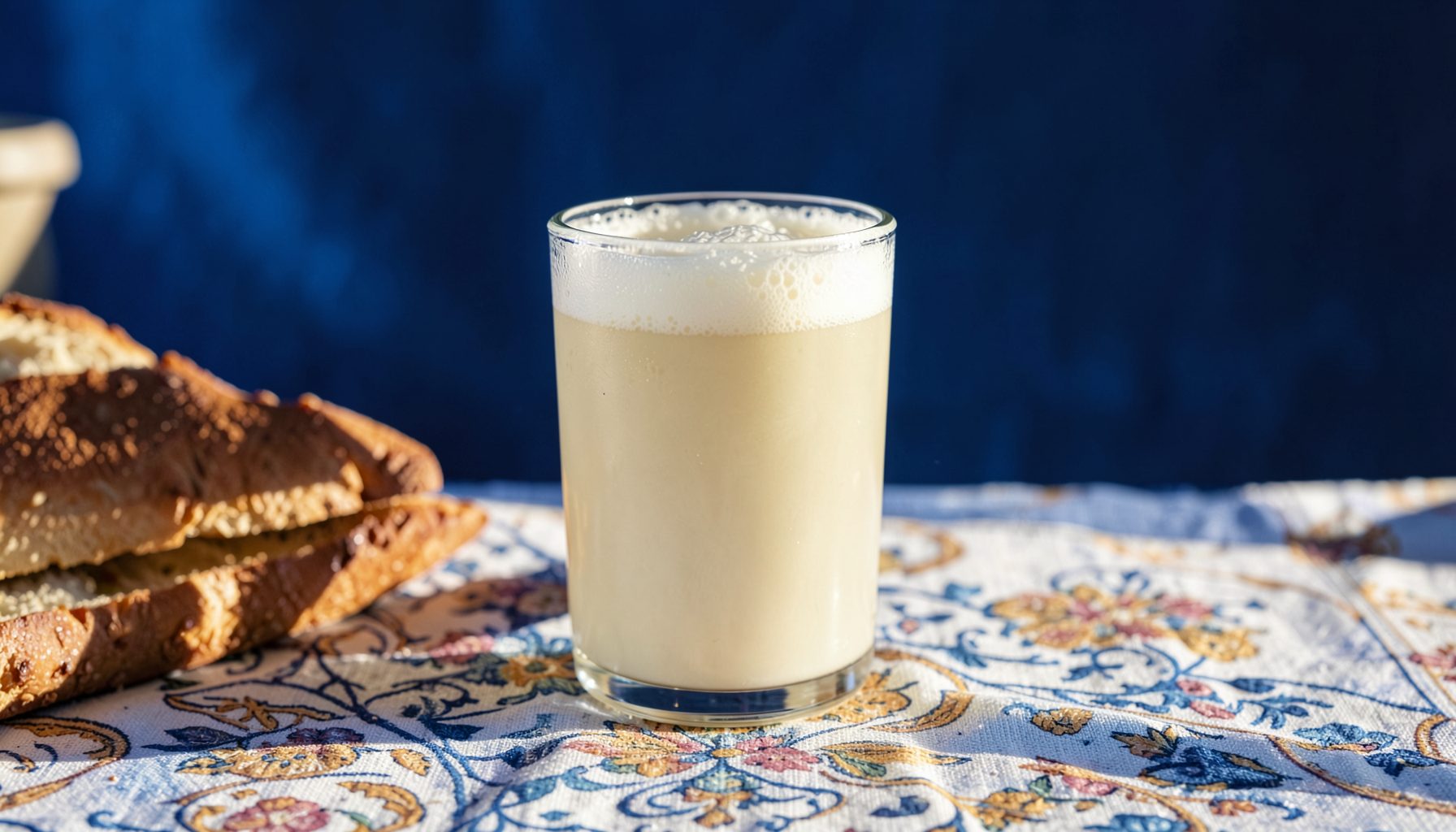
The appearance may range from beige to amber-brown, depending on how much the beer bread was baked. The aroma should suggest wet grain, fresh dough, dates, and mild fermentation. The flavor may be sweet at first, followed by acidity and a faint alcoholic warmth. It can be refreshing, but it may also seem unusual to anyone accustomed to clear, bitter, highly carbonated beer.
Serve small portions with foods that suit a barley-based drink: flatbreads, roasted onions, dates, lentils, fresh cheese, grilled lamb, or salted fish. In Mesopotamian contexts, beer belonged to a wider food system built around cereals, legumes, dates, dairy, and river or marsh products. Tasting it beside similar foods makes the reconstruction more meaningful than drinking it in isolation.
Ceramic vessels are especially appropriate for the presentation, although a modern cup is perfectly safe and practical. Drinking through a reed-like straw can be evocative, but any straw used today must be clean and food-safe. Historically, straws may have helped drinkers reach liquid beneath floating grain and sediment.
Evidence, uncertainty, and responsible experimentation
The strongest evidence for Mesopotamian beer comes from administrative tablets, lexical lists, literary texts, artistic scenes, residue studies, and comparative knowledge of ancient cereal processing. These sources reveal the importance of beer and identify ingredients or categories of drink, but they do not provide a single universally accepted recipe. Interpretations of bappir, fermentation vessels, and flavoring ingredients remain debated.
For a deeper source trail, consult the project’s ancient food bibliography, especially when comparing textual evidence with archaeological experiments. It is useful to distinguish between what is directly documented, what is inferred from related technologies, and what is included simply to make a workable modern reconstruction.
Food safety should guide every stage. Use clean equipment, potable water, fresh ingredients, and a controlled fermentation vessel. Discard the batch if it develops a rotten, solvent-like, or strongly putrid smell, visible mold, or an unusually viscous texture. Keep alcohol away from children and anyone who should avoid it. Historical authenticity never justifies unsafe preparation.
Practical recommendations for a convincing batch
- Use malted barley for enzymatic conversion, but retain some whole grain and barley bread for a rougher texture.
- Leave out hops so that grain, light acidity, and optional dates define the flavor.
- Ferment for only a few days if you want a young, mildly alcoholic drink.
- Serve the beer cloudy and slightly cool, with barley-based foods and dates.
- Record the grain proportions, temperature, fermentation time, and taste so the next reconstruction can be compared with this one.
A successful experiment is measured less by producing a perfect ancient replica than by understanding the choices that shaped the beverage. Malting, baking, mashing, fermentation, storage, and serving each reveal a small part of Mesopotamian technology and daily life.
The process also turns an ancient written reference into a sensory investigation. Follow the barley from seed and sprout to bread, mash, fermenting liquid, and shared drink, then document the result as part of your own historical food experiment. For research notes, event inquiries, or publication matters, use the Archeoricette contact page.