Recreating a Greek lentil soup with oxymel and ancient herbs
Lentils have sustained humans for millennia, and few cultures embraced the humble pulse with as much enthusiasm as the ancient Greeks. The dish known as phake, a hearty lentil soup seasoned with vinegar, honey, and aromatic herbs, appears repeatedly in classical texts, from Aristophanes' comedies to the culinary manuscripts of the Roman era. Recent interest in historical cookery has inspired home cooks across Australia to experiment with these ancestral recipes, finding that the ingredients are surprisingly accessible even in suburban Melbourne or Perth.
This article explores the archaeological evidence behind phake, the role of oxymel as both a flavouring and a digestive tonic, and the herbs that would have seasoned the pot over a charcoal hearth. It also offers a practical reconstruction tailored for modern Australian kitchens, with notes on sourcing local pulses and sweeteners, and reflections on how a simple dish can connect us to the dining tables of antiquity.
Roots of phake in the ancient Mediterranean
The earliest written references to lentil soup appear in the works of Homer and Hesiod, where phake is portrayed as the food of common folk, soldiers, and the frugal citizens of the polis. Aristophanes mocks lentil soup as the staple of miserly old men, yet the comedians themselves evidently ate it with relish. Lentils were inexpensive, nutritious, and stored well through lean seasons, making them a cornerstone of the Greek diet from the Bronze Age onward.
Archaeobotanical evidence from sites like Kastanas in northern Greece confirms that lentils, along with chickpeas and bitter vetch, were cultivated in the Hellenic world for at least three thousand years. Cooking pots recovered from Athenian households often show residue consistent with slow-simmered legume dishes, suggesting that recipes resembling phake were prepared in homes ranging from humble tenements to elegant townhouses.
Oxymel as flavour, medicine, and preservative
Oxymel—literally "acid-honey" from the Greek oxys and meli—was the ancient equivalent of a tonic and a condiment combined. Made by simmering honey with wine vinegar or a sour grape juice, it appears in the Hippocratic corpus as a remedy for coughs, fevers, and digestive complaints. Roman writers like Columella and Pliny praised its preserving qualities, noting that vegetables and meats could be kept longer when bathed in the mixture.
In lentil soup, the sour-sweet punch of oxymel did more than brighten the broth. It balanced the earthy weight of the pulses, aided the absorption of iron from the legumes, and likely helped stretch modest portions into something more satisfying. Modern reconstructions often use apple cider vinegar and raw honey, though some cooks in Melbourne's Mediterranean communities still prepare their own oxymel from Cretan honey and aged wine vinegar imported through specialty importers.
Sourcing authentic ingredients across Australia
Reproducing phake faithfully requires attention to three foundational ingredients: the lentils, the vinegar, and the honey. Australian-grown green and brown lentils from the Wimmera region in Victoria or the Yorke Peninsula in South Australia provide an excellent base, with a texture similar to the small, dark varieties favoured in the Mediterranean. Avoid the split red lentils commonly sold for Indian dhal, which break down too quickly for this dish.
For the oxymel, Australian honey is world-class, particularly the leatherwood varieties from Tasmania or the jarrah honey from Western Australia's southwest. Pairing a robust honey with a sharp apple cider vinegar—such as those produced by small Tasmanian orchards—creates the closest approximation of the ancient flavour profile. Fresh herbs are widely available at farmers' markets in Adelaide, Brisbane, and Sydney, where Greek, Lebanese, and Italian stallholders often grow oregano, mint, and coriander that would have been familiar to any Athenian cook.
Pantry staples for the reconstruction
- Green or brown lentils, preferably Australian-grown
- Raw honey, ideally leatherwood or jarrah
- Apple cider vinegar or a sharp white wine vinegar
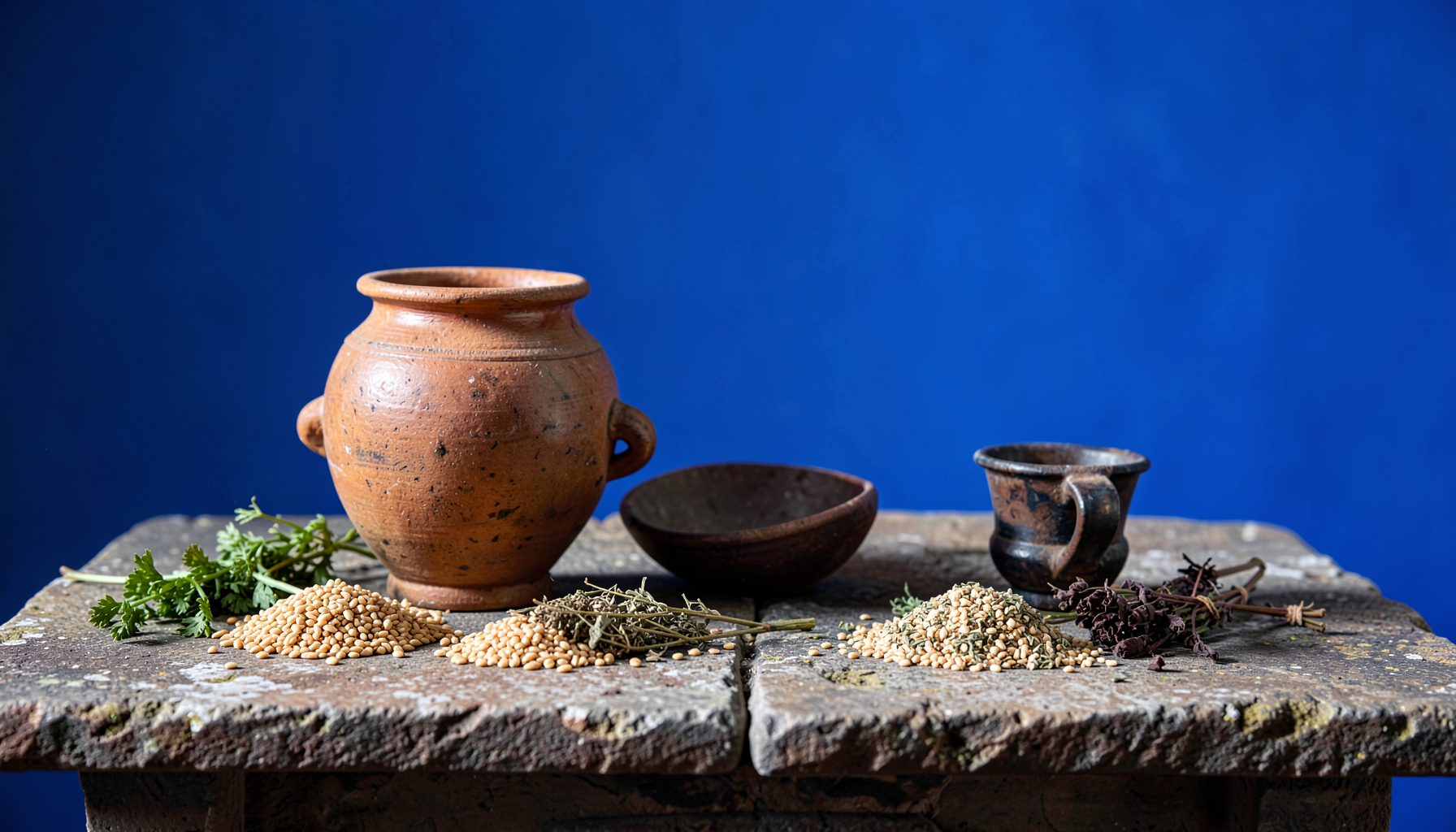
- Dried oregano, fresh mint, and coriander seeds
Optional herbs and aromatics
- Silphium (substitute with asafoetida, as the ancient plant is extinct)
- Bay leaves from a backyard tree or farmers' market
- Sea celery if foraging along the southern coast
- Wild thyme gathered from the Adelaide Hills
Cooking the soup: a practical reconstruction
Begin by rinsing 250 grams of Australian green lentils under cold water, then soaking them for an hour. In a heavy pot, sauté a chopped onion and a few crushed garlic cloves in olive oil until translucent. Add the drained lentils, a litre of water or vegetable stock, a bay leaf, and a teaspoon of coriander seeds. Bring to a gentle simmer and cook for forty-five minutes, skimming any foam that rises.
While the lentils soften, prepare the oxymel by warming three parts raw honey with one part apple cider vinegar, stirring until the honey thins. Do not boil. Stir the oxymel into the soup along with a handful of chopped fresh mint and a generous pinch of dried oregano. Season with sea salt and a grind of black pepper. For a thicker, more rustic texture, use a wooden spoon to crush a portion of the lentils against the side of the pot, a technique mentioned in several Roman agricultural manuals.
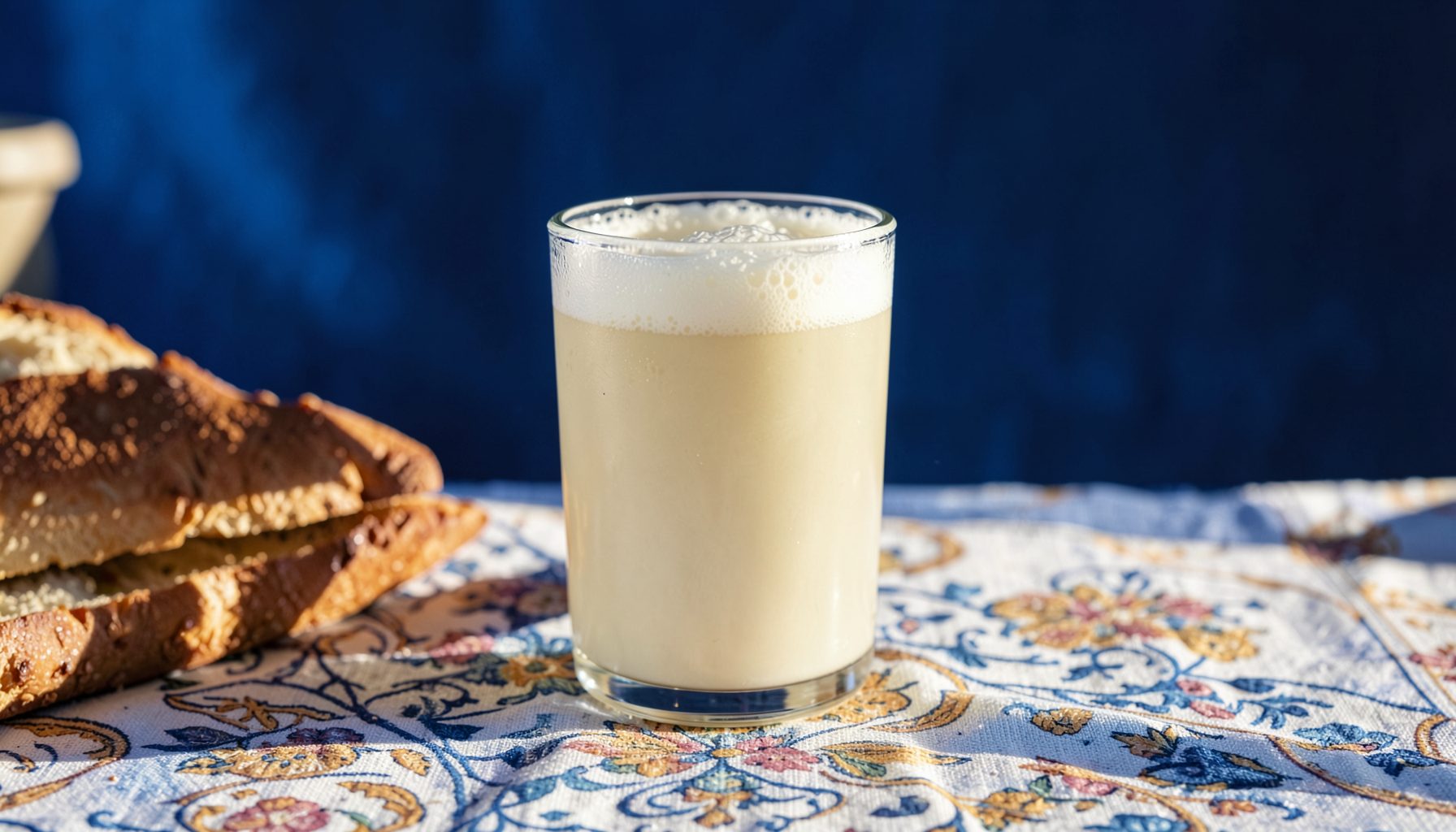
Serve the phake warm, drizzled with a little more oxymel and a final scatter of herbs. In Athens, this would likely have been accompanied by coarse barley bread and a cup of watered wine. In an Australian context, it pairs beautifully with sourdough from a local bakery and a glass of a light Greek Assyrtiko from the Barossa Valley or McLaren Vale.
Social meanings and ritual context
Lentils occupied an unusual place in Greek religious life. They were associated with mourning and funeral rites, perhaps because of their mournful grey colour and their connection to the return of Persephone from the underworld. The poet Callimachus describes priests purifying themselves with lentil broth before entering temples, and Pythagorean communities famously avoided lentils altogether, believing they contained souls of the dead.
Yet phake was also a celebratory food. At the festival of the Pyanepsia in Athens, citizens cooked lentils in a communal pot to mark the safe return of Theseus from Crete. The dish thus straddled the line between grief and joy, between austerity and festivity. Serving phake today, even in a modest kitchen in suburban Canberra or Hobart, taps into this layered symbolism—a reminder that food has always carried meanings far beyond mere sustenance.
Reconstructing ancient recipes is more than a nostalgic exercise. It is a way of engaging with history through the senses, of understanding how climate, trade, and culture shaped what people ate. Phake, with its simple ingredients and complex flavours, demonstrates how a frugal dish can be both nourishing and deeply satisfying. For those inspired to try their own versions or to follow the ongoing research into ancient Mediterranean cookery, the Archeoricette news section offers regular updates on new reconstructions, published papers, and events. Readers are warmly invited to explore the Archeoricette website and to bring a touch of the ancient world into their own kitchens this weekend.