Spices of the Silk Road in ancient Roman kitchens
Roman cooks worked within a vast network of roads, ports, caravan routes, and maritime passages that connected the Mediterranean with Arabia, Persia, India, and Central Asia. The phrase “Silk Road” is modern, but the movement it describes was already shaping Roman cuisine. Alongside silk, gemstones, perfumes, and medicinal plants, merchants carried pepper, cinnamon, ginger, aromatic roots, and fragrant leaves toward Roman markets.
These ingredients were valued for their flavor, yet their importance extended beyond the kitchen. Spices signaled wealth, supported medical theories, enhanced religious offerings, and helped cooks transform preserved foods into elaborate dishes. A Roman recipe might combine imported aromatics with local herbs, fermented fish sauce, wine, honey, vinegar, and fruit.
Reconstructing this cuisine requires caution. Roman writers sometimes used the same name for different plants, while trade routes shifted over time and luxury ingredients were not equally available to every household. Archaeological finds, botanical studies, shipping evidence, and cookbooks such as the Apicius collection together reveal a kitchen that was inventive, layered, and deeply connected to long-distance exchange.
From caravan routes to Roman markets
Roman access to eastern spices depended on several overlapping networks. Caravans crossed parts of Arabia and the Near East, while ships moved from Red Sea ports toward southern Arabia, the Indian coast, and the Persian Gulf. Goods could change hands many times before reaching Alexandria, Antioch, Rome, or other Mediterranean cities.
The Red Sea became especially important under the Roman Empire. Ports such as Myos Hormos and Berenike connected Egypt to maritime routes leading toward India. Excavations at these sites have produced peppercorns, ceramics, textiles, and other evidence of contact with distant regions. Overland routes through Mesopotamia and the Levant also remained significant, linking Roman consumers with Persian and Central Asian exchange systems.
Transport costs made spices expensive, but price did not prevent their circulation. Small quantities could carry considerable value, and a merchant could combine many kinds of cargo in a single journey. Aromatics were light, durable, and profitable, which made them suitable for long-distance trade even when political borders, taxation, or seasonal weather interrupted travel.
Pepper, long pepper, and the taste of prestige
Black pepper was among the most important eastern imports used in Roman cooking. It came primarily from the western coast of India, where the pepper plant thrived in a warm, humid climate. Roman authors treated pepper as both a seasoning and a marker of refined consumption. Ground pepper appears frequently in surviving recipes, often paired with wine, vinegar, honey, dates, or fish sauce.
Long pepper, probably referring to Piper longum, offered a sharper, warmer flavor and was also used in medicine. Its shape and pungency distinguished it from round black peppercorns, although ancient terminology was not always precise. These peppers could be added to sauces, meat preparations, pulses, and vegetable dishes, allowing cooks to create strong flavors from otherwise modest ingredients.
Pepper was not simply sprinkled over food at the table. Roman recipes often instructed the cook to grind spices with a mortar, combine them with liquid ingredients, and strain the finished sauce. This produced a blended seasoning rather than an isolated burst of heat. The technique also helped distribute expensive spices across an entire dish.
Cinnamon, cassia, and fragrant bark
Roman writers knew cinnamon and cassia as aromatic barks associated with regions south and east of the Mediterranean. The names may have covered several related products, and ancient accounts sometimes mixed observation with hearsay. Some authors imagined cinnamon as a rare substance gathered in mysterious lands, reflecting how little direct knowledge many Mediterranean consumers had of its source.
In the kitchen, these fragrant barks could perfume wine, sauces, desserts, and meat dishes. Their warm, sweet aroma worked especially well with honey and dried fruit. Cinnamon-like flavors also appeared in medicinal preparations, where spices were combined with wine, oil, or other substances according to ancient theories of bodily balance.
The distinction between culinary and medicinal use was fluid. A spice valued for digestion, circulation, or warming properties could easily enter the cooking pot. Roman households also used aromatics in perfumes, ritual mixtures, and funerary contexts, so a single imported plant might belong to several areas of daily life.
| Spice or aromatic | Likely route into Roman markets | Common culinary role | Important caution |
|---|---|---|---|
| Black pepper | Indian Ocean, Red Sea, Egyptian ports | Sauces, meat, pulses, vegetables | Often expensive and frequently ground |
| Long pepper | India and eastern trade networks | Strong seasoning and medicinal mixtures | Ancient names may overlap |
| Cassia or cinnamon | Arabia, East Africa, and eastern networks | Wine, sauces, sweet dishes | Ancient identifications are uncertain |
| Ginger | South Asia through maritime trade | Sauces, drinks, medicinal foods | More common in elite or specialized contexts |
| Saffron | Mediterranean and western Asia | Color, aroma, sauces, ritual foods | Could be adulterated because of its value |
| Costus | Himalayan and Central Asian regions | Aromatic sauces, perfumes, medicine | Source plant remains debated |
| Malabathrum | South Asian trade routes | Leaf fragrance in wine and sauces | Probably not identical to modern bay leaf |
Local herbs beside imported aromatics
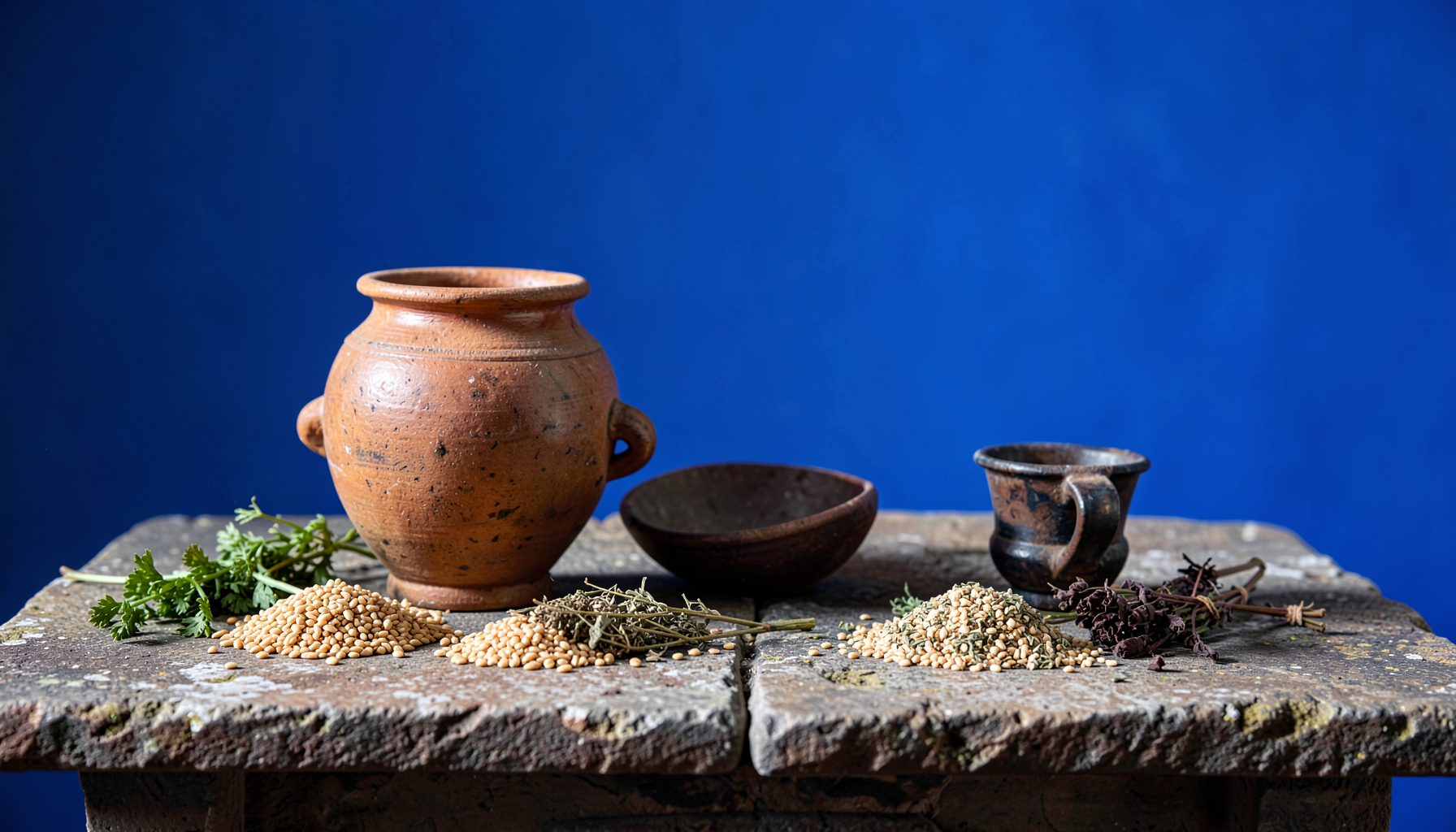
Long-distance trade did not replace Mediterranean plants. Roman cooks used coriander, cumin, fennel, dill, mint, rue, thyme, oregano, and savory alongside imported spices. Many of these grew locally or entered markets from nearby provinces. Their presence made eastern imports part of a broader flavor system rather than isolated luxuries.
Coriander illustrates this mixture particularly well. Its seeds and leaves were familiar around the Mediterranean, while its flavor could be combined with pepper, cumin, and wine-based sauces. Cumin was especially prominent in some regional cuisines and appears in preparations for legumes, meat, and fish. These local or regional ingredients helped stretch costly imports and gave recipes a recognizable Roman character.
A cook working with limited resources could reproduce the structure of an elite dish without possessing every imported ingredient. A pinch of local seed, a sharp splash of vinegar, and a spoonful of fermented fish sauce might provide complexity even when pepper or ginger was unavailable. Ancient cuisine therefore involved adaptation as much as luxury.
How Roman cooks built layered flavor
Roman recipes often began with pounding ingredients in a mortar. Spices, herbs, nuts, garlic, and roots were crushed into a paste, then loosened with wine, vinegar, broth, oil, or fish sauce. Honey or reduced grape must supplied sweetness, while brine and fermented fish products contributed salt and savoriness.
This approach differs from a modern expectation that a dish should have one dominant spice. Roman sauces were frequently balanced across several sensory qualities: hot, sour, sweet, salty, bitter, and aromatic. Pepper might appear with dates and vinegar; cumin could meet coriander and wine; saffron might color a sauce while contributing a subtle hay-like fragrance.
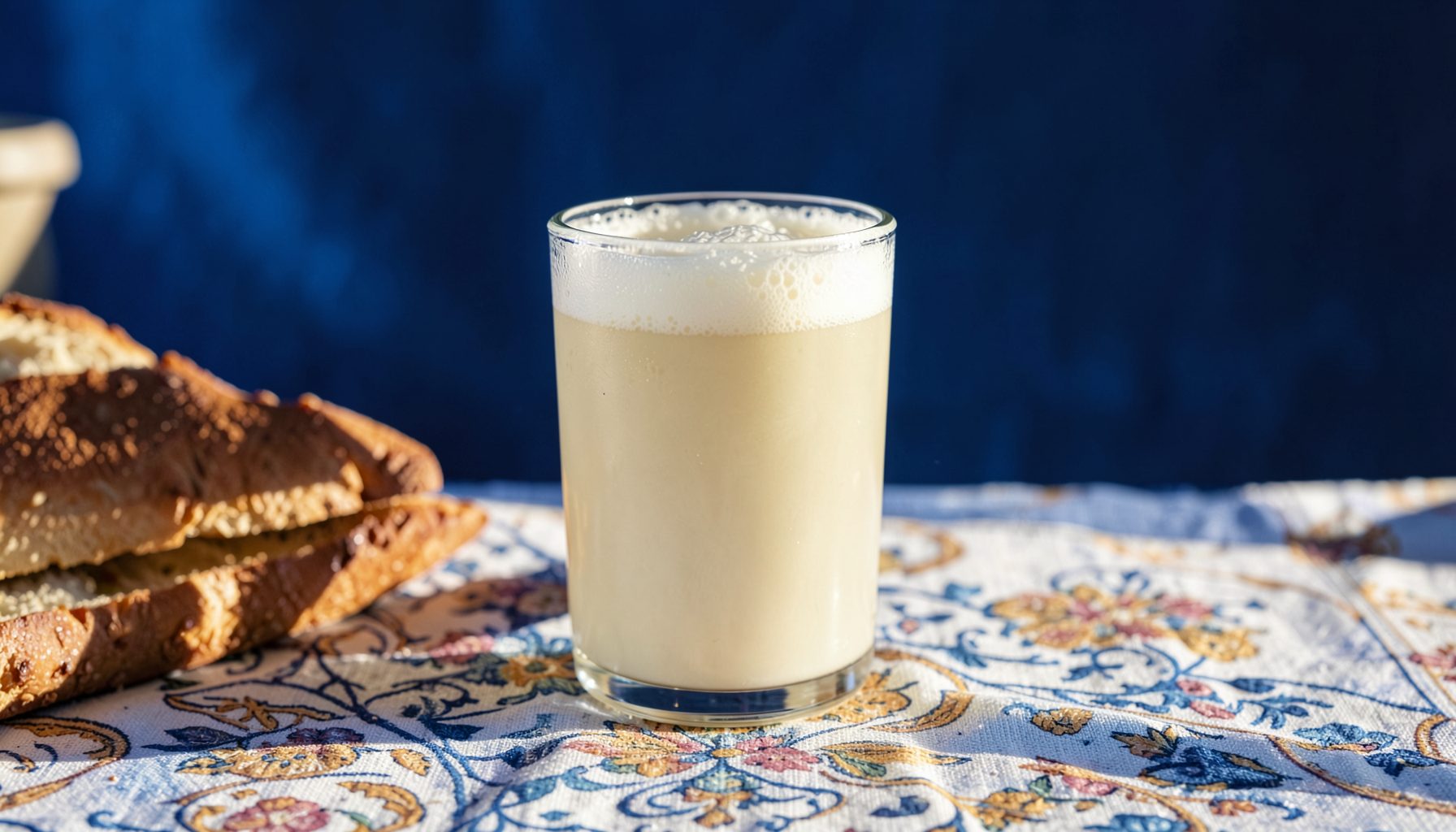
The technique also suited preserved foods. Salted fish, cured meat, dried legumes, and stored grains benefited from sauces that added moisture and intensity. Fermentation was part of this culinary world as well; for a wider view of ancient food technology, a reconstruction of Mesopotamian barley beer shows how grain, water, labor, and cultural practice came together long before the Roman period.
Spices could be added at different moments. Some were pounded early to release oils, while others were used to scent a finished dish or a serving of wine. The absence of precise measurements in many ancient recipes means that reconstruction depends on testing texture, aroma, and balance rather than following a fixed modern formula.
Wealth, medicine, and social display
Imported spices carried social meaning. Their cost reflected transport, taxation, scarcity, and the risks of long-distance commerce. Serving a peppered or saffron-colored dish could demonstrate access to commercial networks and skilled household labor. Banquets amplified this effect because guests saw both the food and the host’s ability to obtain unusual ingredients.
Yet elite consumption should not be mistaken for universal use. Archaeological evidence from military sites, ports, urban houses, and rural settlements suggests different levels of access. Some communities relied primarily on local herbs and seasonings, while wealthy households could purchase imported pepper or aromatic bark. Small traces of a spice cannot automatically prove that it was used daily or by every social group.
Medical ideas also shaped demand. Ancient physicians classified foods and spices according to qualities such as hot, cold, dry, and moist. Ginger, pepper, cinnamon-like bark, and saffron could be prescribed in preparations intended to support digestion or correct bodily imbalance. The kitchen and the dispensary therefore overlapped, especially in wealthy households where cooks and medical specialists worked with similar ingredients.
Practical principles for an ancient-style reconstruction
- Grind spices with a mortar so their aromas merge into the sauce.
- Balance heat with vinegar, wine, honey, or reduced grape must.
- Pair imported pepper with local herbs such as coriander, cumin, mint, or oregano.
- Use fermented fish sauce sparingly to provide depth without making the dish overwhelmingly salty.
- Treat saffron, cinnamon, and ginger as aromatic accents rather than automatic substitutes for modern curry blends.
Recreating the trade routes through flavor
An ancient Roman-inspired dish does not need every historically documented spice to communicate the character of long-distance exchange. A combination of black pepper, coriander, cumin, vinegar, honey, and fish sauce already creates a layered profile grounded in Roman culinary practice. Adding a small amount of cassia or ginger can suggest the reach of eastern commerce without overwhelming the ingredients.
The most convincing reconstructions begin with a historical question. Was the dish intended for a banquet, a household meal, a religious offering, or a medicinal context? Was the main ingredient fresh, dried, salted, or fermented? Which products were available in the region and period being studied? These questions prevent a generic “ancient” flavor from replacing specific historical evidence.
Modern cooks should also distinguish between direct reconstruction and informed interpretation. A recipe may be based on an ancient text but adjusted because an ingredient is unidentified, a measurement is missing, or a modern substitute behaves differently. Recording those choices makes the experiment more valuable and allows readers to understand where evidence ends and creative testing begins.
The spices that reached Roman kitchens were therefore more than exotic seasonings. They were traces of migration, commerce, empire, climate, technology, and cultural imagination. Each peppercorn or fragment of aromatic bark connected a domestic mortar with landscapes far beyond the Mediterranean.
Explore these connections through experimental cooking, ancient texts, and archaeological evidence, then bring one carefully reconstructed Roman sauce into your own kitchen. Start with a modest blend, taste it with restraint, and let the ingredients reveal how the ancient world traveled through food.