A Roman soldier’s rations: from frumentum to posca
The diet of a Roman soldier was built around practical staples rather than luxurious dishes. Grain, water, sour wine, salt, legumes, and preserved foods supplied energy that could survive long marches and uncertain campaigning. Meat appeared when circumstances allowed, but the daily military diet depended on ingredients that armies could transport, mill, cook, and replace.
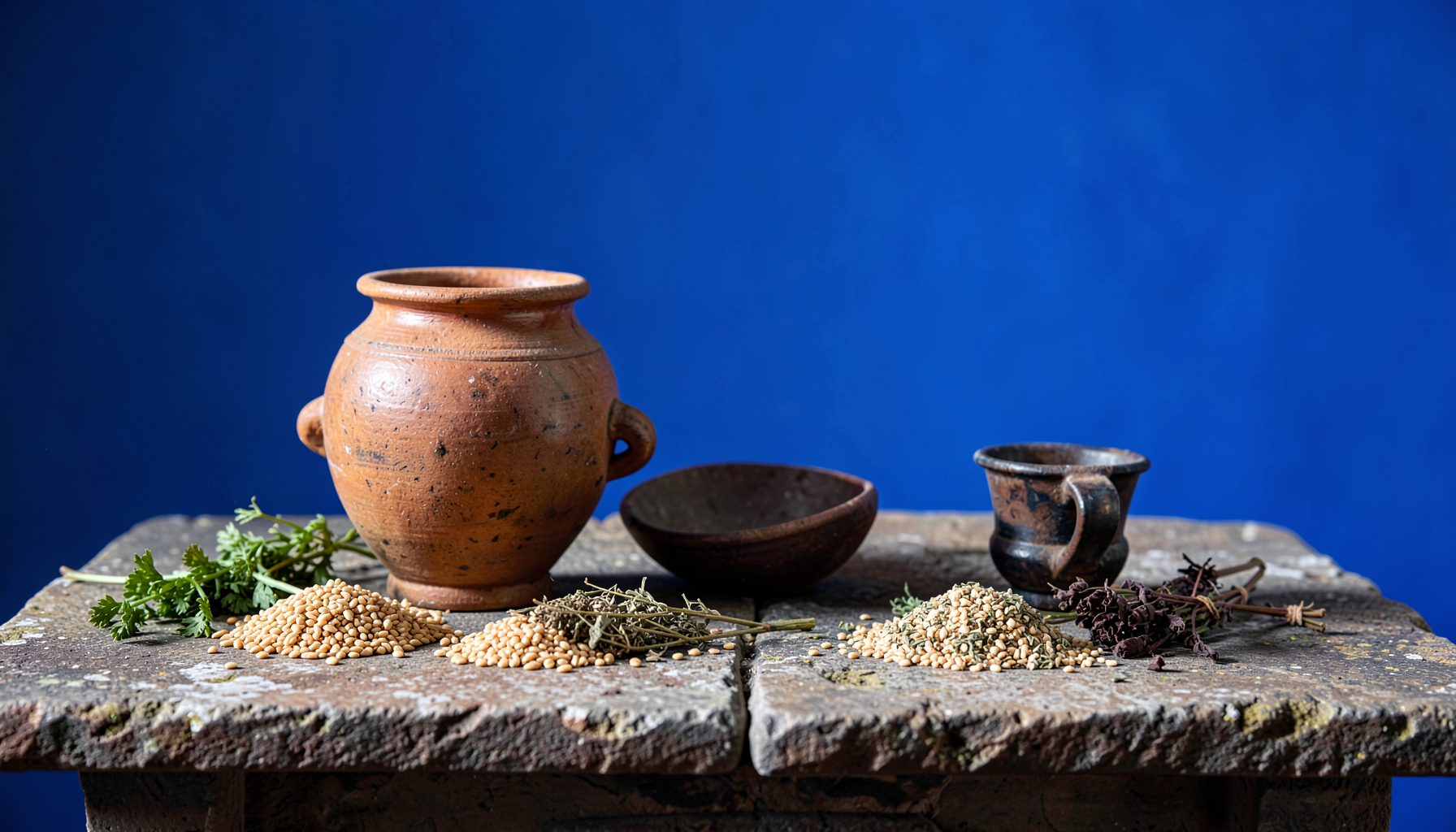
The Latin word frumentum usually referred to grain, especially wheat, though the precise cereal varied by region, period, and supply situation. A legionary’s provisions were shaped by military logistics as much as by taste. Grain moved through state warehouses, provincial taxes, merchants, pack animals, wagons, and river transport before becoming bread, porridge, or boiled wheat in a temporary camp.
Reconstructing this foodway means reading military history alongside archaeology, ancient agriculture, and culinary practice. The surviving evidence rarely gives us one fixed menu, yet it reveals a recognizable pattern: a portable grain ration supported by pulse dishes, condiments, drink, and occasional animal products.
Grain at the center of the military diet
For Roman armies, grain was the foundation of food security. Wheat was preferred for human consumption, while barley could supplement supplies or feed animals. Ancient writers sometimes associate barley with punishment or inferior status, but its practical value was considerable. It grew in difficult conditions, stored well, and could be distributed when wheat was scarce.
The grain was issued whole or partially processed, then transformed by soldiers or camp specialists. A unit might carry hand querns for grinding flour, while larger permanent bases had more substantial milling facilities. Archaeological finds of rotary querns, storage jars, ovens, baking surfaces, and carbonized cereals show that processing food was a regular part of military life.
The cereal itself was not always the polished wheat familiar from modern supermarkets. Emmer, spelt, durum-type wheats, and other local varieties appear across Roman territories. For a close look at one ancient baking tradition, baking with emmer offers useful insight into the grain, grinding, and dough-making techniques that shaped early Roman bread.
From official issue to personal cooking
A Roman soldier’s grain allowance was generally measured in bulk rather than handed over as ready-made loaves. Ancient sources provide different figures and contexts, so there was no single universal ration for every century and campaign. The amount could be deducted from pay, distributed through the unit, or supplemented through requisition and local purchase.
Once received, grain became a responsibility shared by small groups of soldiers. Men carried equipment, collected fuel, ground cereals, and prepared meals in contubernia, the eight-man tent groups that formed the basic social unit of the legion. This arrangement made cooking a collective task and allowed heavy tools such as querns, pots, and hand mills to be shared.
The form of the ration changed with the demands of movement. Dough could be baked when a camp remained in place, while parched grain, coarse flour, or boiled cereals were faster options during a march. A soldier’s food was therefore flexible: the same grain might appear as a rough loaf, a thick porridge, or a simple gruel depending on fuel, time, and water.
What the ration looked like in practice
The following reconstruction separates common staples from foods that were situational. It reflects broad patterns rather than a fixed regulation menu for every Roman army.
| Food or drink | Likely form | Role in the ration | Availability |
|---|---|---|---|
| Wheat or other grain | Flour, boiled kernels, coarse meal | Main source of calories | Fundamental, though quality varied |
| Barley | Meal, porridge, bread, animal feed | Substitute or supplemental cereal | Common in some regions and circumstances |
| Pulses | Lentils, beans, peas | Protein, fiber, and variety | Durable and easy to store |
| Posca | Water mixed with sour wine or vinegar | Everyday drink and hydration | Commonly associated with ordinary soldiers |
| Salt | Crystals or brine | Preservation and seasoning | Essential but carefully managed |
| Olive oil | Cooking fat, dressing, lamp fuel | Flavor and calories | Stronger supply in Mediterranean zones |
| Cheese | Hard or fresh varieties | Portable protein and fat | Useful when available |
| Meat and fish | Fresh, salted, dried, or preserved | Occasional supplement | Depended on animals, markets, and locality |
Bread, porridge, and pulse dishes
Bread was an important military food because it could be portioned, carried, and eaten without elaborate preparation. Roman bread varied considerably: coarse loaves made with bran-rich flour were suitable for ordinary consumption, while finer bread belonged more easily to wealthy households and formal settings. Soldiers might bake loaves in camp ovens, on heated surfaces, or in covered vessels.
Porridge remained equally practical. Ground grain cooked with water required less time and equipment than bread, especially when fuel was limited. A puls-like dish made from cereals could be thick enough to eat with a spoon or stiff enough to cool into a portable mass. Legumes added substance to the meal and helped diversify a diet otherwise dominated by wheat.
The boundary between army food and civilian food was porous. Soldiers bought ingredients in market settlements, received supplies from local communities, and adopted regional products during long deployments. Research into ancient foodways, including the Hittite palace records, shows how administrative documents can reveal the movement and management of cereals, livestock, and stored provisions across much older Near Eastern systems. Roman military supply inherited many Mediterranean and Near Eastern habits of measurement, storage, and redistribution.
Posca and the problem of drinking water
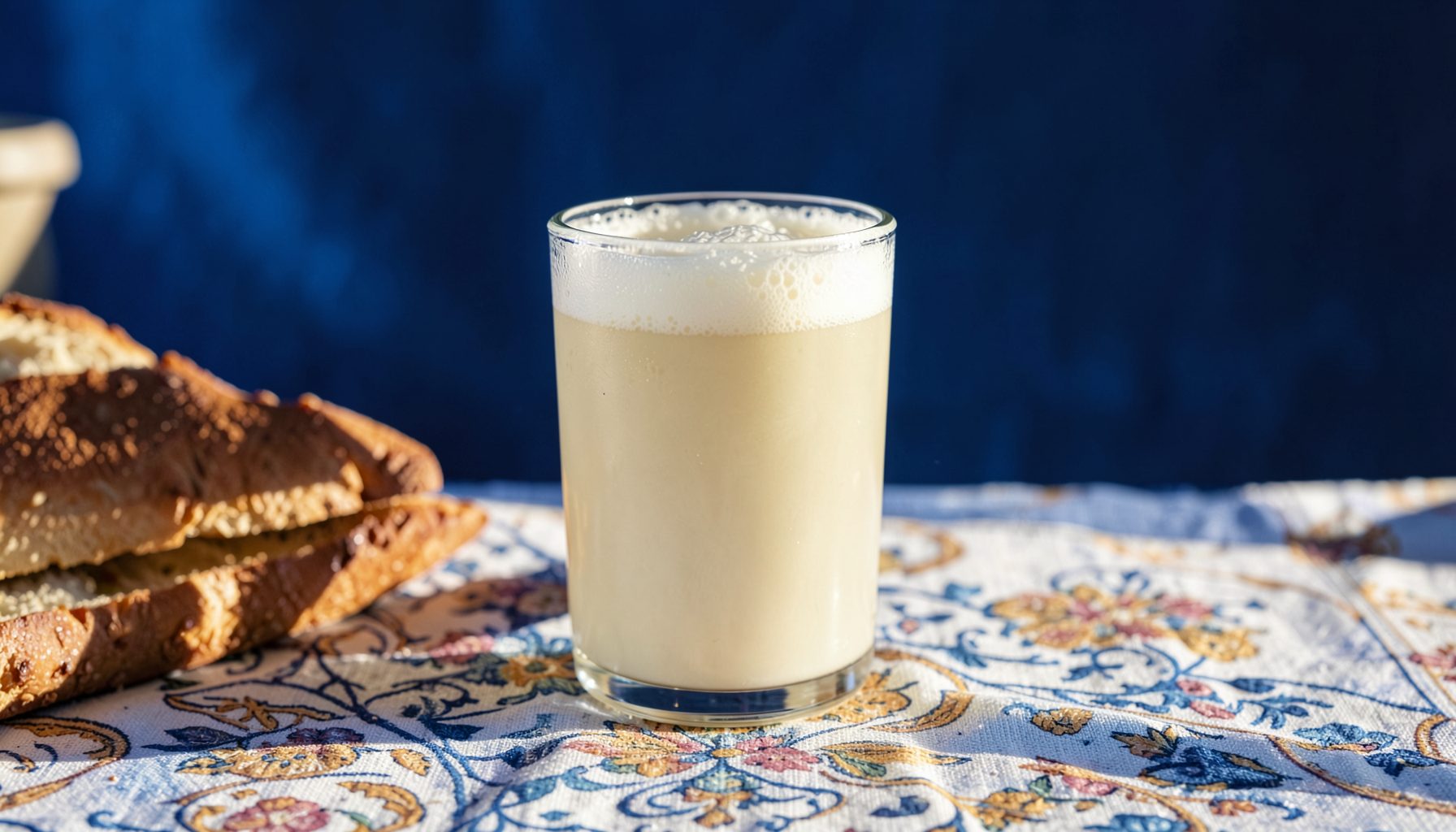
Posca is often described as Roman soldiers’ vinegar wine, though the term covered a practical drink rather than a single standardized recipe. It was probably made by diluting wine that had become sour or by mixing water with vinegar-like wine. The result was acidic, refreshing, and safer or more palatable than stagnant water in some circumstances.
The drink should not be imagined as a medicinal tonic reserved for emergencies. Sour wine was part of the wider ancient taste for acidic beverages, and its ingredients were cheap compared with good wine. It could be flavored with herbs, honey, or other additions, although the ordinary military version was likely simple. Salt may have been added in some preparations, but evidence does not justify treating every cup of posca as a fixed electrolyte formula.
Water remained essential. Soldiers filled containers at springs, wells, rivers, aqueducts, and camp installations, then treated or selected sources according to local knowledge. Posca could improve flavor and provide acidity, yet it did not eliminate the risks of poor water management. Hydration depended on the army’s ability to locate, protect, and distribute reliable water during movement.
Food beyond the standard issue
A grain allowance supplied calories, but it did not define the entire military diet. Salted pork, bacon, dried meat, fish sauce, olives, onions, garlic, herbs, figs, dates, and cheese could enter the supply chain. Their presence depended on geography, rank, personal resources, and the success of local procurement. A coastal garrison had access to products that a frontier column might rarely see.
Meat consumption also requires careful interpretation. Archaeological animal bones from forts demonstrate slaughter and consumption, but they do not always reveal how frequently each soldier ate meat. Animals might be used for transport, breeding, sacrifice, or leather before their remains reached a cooking area. Officers and wealthy soldiers could supplement official provisions through purchases, while poorer men relied more heavily on shared staples.
Cooking vessels and serving habits reveal another layer of the story. Bronze and iron equipment existed, but ordinary soldiers often depended on durable pottery, wooden implements, and shared pots. A meal could be seasoned with salt, oil, herbs, or a fermented fish condiment, turning a plain cereal dish into something more varied without changing its basic ingredients.
Reconstructing a marching menu
A historically grounded modern reconstruction should focus on preparation and proportion rather than presenting a theatrical feast. The point is to experience the constraints of military cooking: limited fuel, durable ingredients, shared labor, and food that can be produced repeatedly for many people.
Useful principles for recreating the daily food of a legionary include:
- Choose a coarse wheat, emmer, or spelt flour instead of highly refined white flour.
- Prepare a simple pulse and grain porridge seasoned with salt, herbs, olive oil, or a small amount of fish sauce.
- Dilute sour wine or red-wine vinegar with water to represent a basic posca-style drink.
- Add hard cheese, olives, dried fruit, or salted meat as optional supplements rather than mandatory parts of every meal.
- Use a mortar, hand mill, heavy pot, or wood-fired oven when possible to understand the labor behind the food.
The result will be modest, filling, and adaptable. It will also clarify why grain mattered so much: wheat could be stored, measured, milled, cooked, and transformed into several kinds of food without relying on a sophisticated kitchen. For further historical recipes and experimental reconstructions, the Archeoricette recipe collection provides a broader context for approaching ancient ingredients through evidence and practice.
The soldier behind the ration
Food shaped military routine as much as military routine shaped food. Grinding grain, gathering fuel, fetching water, baking bread, and cleaning vessels took time that does not appear in lists of battles or commanders. These tasks created cooperation within the tent group and connected soldiers to camp followers, servants, traders, and nearby communities.
The ration also expressed hierarchy. A regular legionary, an auxiliary recruit, an officer, and a camp laborer did not necessarily eat the same food in the same quantities. Pay, access to markets, regional customs, and the army’s immediate condition all influenced the plate. Official provisions established a foundation, while personal networks and local supply filled in the details.
Frumentum and posca therefore represent more than two ingredients. Together they point to a system that linked agriculture, taxation, transport, preservation, cooking, and discipline. To explore that system through an experimental meal, begin with a coarse grain, a pot of pulses, a little salt, and a diluted sour drink, then document each stage as carefully as an archaeological reconstruction. Use the evidence-led recipes and guides on Archeoricette to turn the Roman military pantry into a practical historical experience.