Mesopotamian Sesame Oil For Cooking And Lighting
Sesame has a surprisingly modern presence in Australia. It appears in supermarket tahini, Japanese-style dressings, Middle Eastern dips and bottles of toasted sesame oil, while its seeds turn up on burger buns and sourdough loaves. Yet the plant also has a deep history in the ancient Near East, where sesame oil became one of the most useful liquid fats available to Mesopotamian households, temples and palaces.
Cuneiform records, botanical remains and comparative knowledge of traditional oil processing help reconstruct this story. The evidence does not provide a single complete recipe for pressing sesame, but it reveals a crop valued for food, medicine, ritual, trade and illumination. Through ancient foodways, these fragments can be connected with experimental cooking and a careful appreciation of what is known, inferred and still uncertain.
Sesame Enters Mesopotamian Foodways
Sesame was probably domesticated in South Asia and reached the ancient Near East during the second millennium BCE, although the chronology remains debated. In Mesopotamia, the plant became known by a name commonly transcribed as šamaššammū, often interpreted as “oil of the god Šamaš”. That name itself reflects the importance of the crop: sesame was associated with a valuable, bright and useful oil rather than simply treated as a minor seed.
The southern alluvial plain of Mesopotamia offered fertile soils but depended heavily on irrigation. Sesame could be grown during the hot season after cereal harvests, making it a useful addition to an agricultural calendar dominated by barley, wheat and dates. Its seeds stored well, and their high oil content made them more concentrated than many fresh plant foods.
Written records from Babylonia and Assyria refer to sesame oil in administrative, domestic and institutional contexts. Temples and palaces required reliable supplies of oil for cooking, offerings, lamps and personnel. Such documents usually record quantities and deliveries rather than flavour, so they show the scale and organisation of production more clearly than the sensory experience of eating it.
From Seed To Oil
Producing sesame oil began with harvesting mature plants and separating the small seeds from their dry capsules. Farmers or workers likely gathered the stalks, allowed them to dry and beat or thresh them so the seeds fell free. Winnowing removed lighter chaff. The process was labour-intensive, but sesame offered a strong return in the form of a durable oil that could be stored and transported.
The next stage involved crushing the seeds. A stone mortar, hand quern or larger grinding installation could break the seed coats and release the oily paste. Ancient Near Eastern oil production often used combinations of pounding, grinding, heating and pressing, but the exact Mesopotamian sequence for sesame is not securely documented. It is safer to describe a family of likely techniques than to present one reconstructed machine as certain.
Heat could have helped the oil flow more easily and changed its flavour. Cold-pressed oil would have retained a lighter character, while toasted or heated seeds would have produced a darker, more aromatic result. After pressing, the liquid may have been allowed to settle so suspended particles sank. The clearer oil could then be decanted into jars, while the remaining press cake remained a useful by-product for food or animal feed.
A Kitchen Fat With Many Uses
In Mesopotamian cooking, sesame oil offered a practical alternative to animal fats and other plant oils. It could enrich stews, soften grains and legumes, carry the flavour of herbs and spices, and provide a finishing gloss. A small amount would have spread through a pot of barley porridge or a dish of pulses, making the meal more satisfying without requiring large quantities of meat.
Sesame oil also suited the region’s culinary geography. Mesopotamian cooks worked with dates, onions, garlic, leeks, herbs, coriander, cumin and fermented products. Oil helped fry or soften aromatics, combine ingredients and preserve cooked preparations. It may have appeared in sauces and dressings, though the surviving recipes are difficult to interpret and rarely identify every technique in modern culinary language.
The seed itself had value as well. Ground sesame could thicken mixtures or contribute a nutty flavour, while the oil could be used in medicinal preparations. Ancient medical texts frequently combine plant substances with oils, and sesame oil was well suited as a carrier for aromatic ingredients applied to the skin or taken in compound remedies. Food, medicine and ritual were not sharply separated categories in this world.
Lamps, Ritual And Household Economy
Sesame oil’s importance extended beyond the kitchen because it burned in lamps. A shallow ceramic lamp filled with oil and fitted with a wick could provide a steady flame for domestic tasks, workshops and religious spaces. Lighting was especially valuable after sunset, even if most work remained organised around daylight. The same commodity that seasoned food could illuminate a room or shrine.
Oil offerings formed part of religious practice across the ancient Near East. Temples required supplies for lamps, libations and ceremonial use, while the brightness of a flame carried associations with divine presence and order. The connection between sesame and Šamaš, the Mesopotamian sun god, may have reinforced its symbolic appeal, although the name should not be treated as proof that every use of sesame oil was religious.
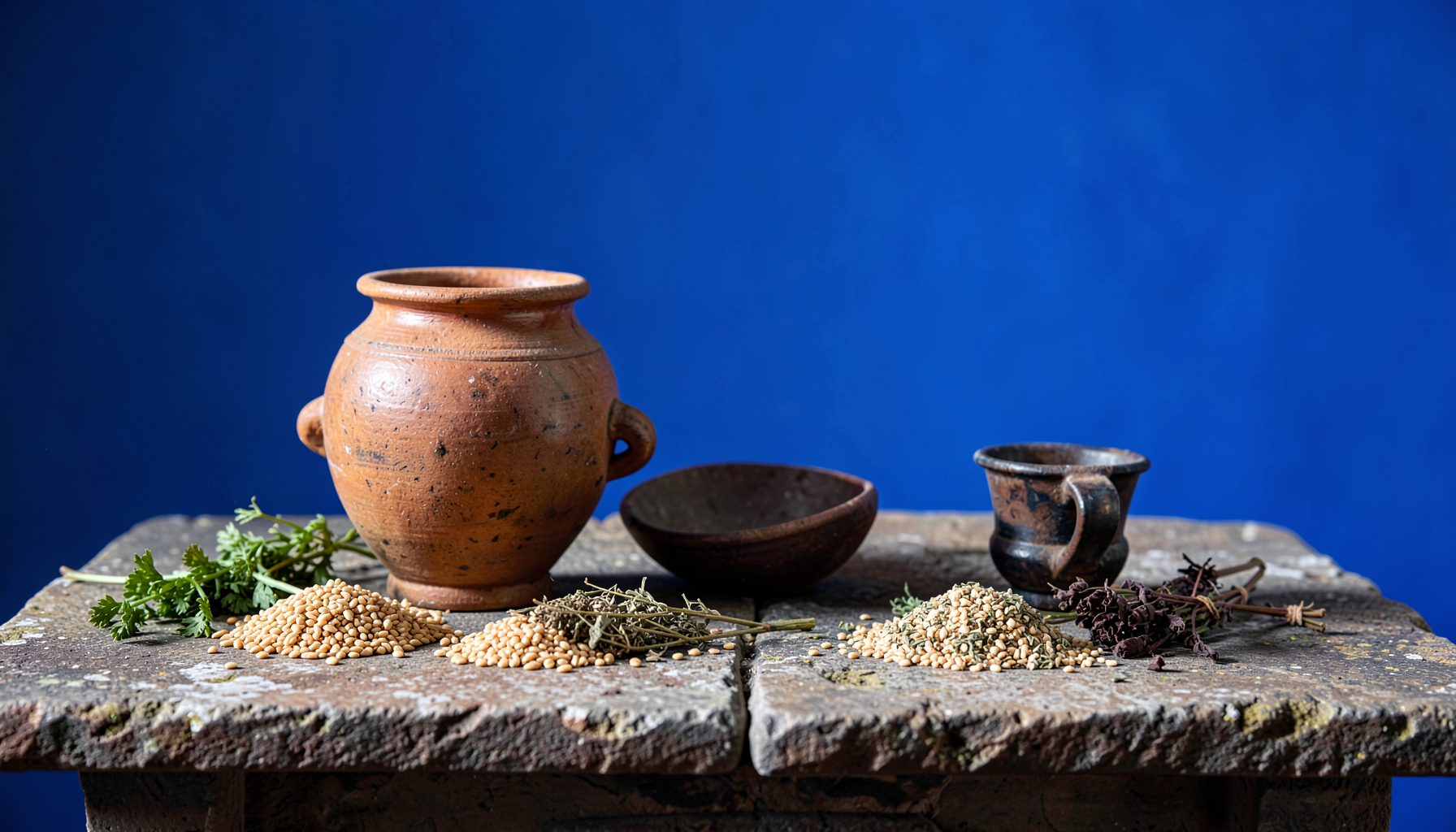
Storage and distribution reveal an organised economy. Large ceramic jars could hold oil, while administrators measured and allocated it to workers, cult personnel and institutional kitchens. A household might produce some oil locally, purchase it in a market or receive it through labour rations. Climate, harvest size and political control would all have affected availability and price.
Practical Clues For Modern Readers
For an Australian cook, sesame oil is easy to encounter in very different forms. Pale untoasted oil, darker toasted oil, tahini and whole sesame seeds do not behave identically, so a modern experiment should identify the product rather than treating “sesame oil” as one universal ingredient.
Useful modern comparisons include:
- Light sesame oil for a restrained, neutral cooking fat
- Toasted sesame oil for aroma rather than prolonged frying
- Tahini as a ground-seed comparison, not a pressed oil
- Whole seeds for texture, garnish and grinding experiments
A historical reconstruction also needs practical controls. Ancient oil was likely less standardised than supermarket products, and its aroma would depend on seed variety, storage, cleaning and heat. Australian kitchens can reproduce broad processes with a mortar, sturdy bowl, cloth filter and small press, but the result should be described as an informed experiment rather than an exact ancient product.
When working with sesame in Australia, food safety and allergen rules matter. Sesame must be declared as an allergen in packaged food under the Australia New Zealand Food Standards Code, and labels should be checked carefully when sharing a reconstructed dish at a public event. This is particularly important in Sydney, Melbourne and other diverse food communities where guests may encounter sesame in several dishes without expecting it.
Reconstructing An Ancient Oil Tradition
An experimental recipe might begin by gently warming clean sesame seeds, grinding them into a coarse paste and mixing the paste with a small amount of warm water before pressing. That method will not necessarily reproduce ancient practice, and adding water can create a fragile emulsion, but it can demonstrate how much labour is needed to release a modest quantity of oil. A second trial using dry, toasted seeds can reveal how strongly heat changes colour and fragrance.
The best reconstruction records every variable: seed weight, heating time, grinding method, pressure, liquid yield, colour, aroma and residue. It should also compare the oil with commercial Australian products. Sesame grown or processed in Australia may be available through specialist suppliers, while imported oils remain common in supermarkets and Asian grocery shops. Differences in freshness and roasting style can be as noticeable as differences between ancient and modern tools.
Archaeology supplies the framework, not every missing instruction. Texts tell us that sesame oil was counted, distributed and used; plant remains establish cultivation and consumption; vessels and installations suggest storage and processing. Experimental work then tests what those clues can plausibly mean, while keeping uncertainty visible. The result is a more honest and engaging account than a confidently invented “ancient recipe” unsupported by evidence.
The subject also connects domestic history with environmental questions familiar in Australia. Irrigation, seasonal labour, water management and crop choice remain central to agriculture in places such as the Murray–Darling Basin and northern growing regions. Ancient Mesopotamia faced different ecological pressures, but its dependence on managed water and careful harvest timing offers a useful comparison for thinking about food production today.
Explore the research and recipes at Archeoricette, then consult the project’s research bibliography to follow the ancient sources, archaeological discussions and modern experiments behind the story of sesame oil.