Recreating a Celtic spiced honey cake from Iron Age cauldrons
Archeoricette began as a notebook of curiosity and has grown into a small workshop where ancient pots meet modern stoves. The aim is simple and stubborn: to cook the dishes that survive only as fragments in the archaeological record, and to taste what our ancestors may have tasted. A Celtic spiced honey cake, coaxed from an Iron Age hearth, sits firmly inside that project. Generoso Urciuoli has spent years coaxing flavour from clay and bronze, and the recipe that follows is the latest step in a long chain of failures, surprises, and quiet victories.
This particular bake is unusual. Unlike a Greek libum or a Roman placenta, a Gaulish honey cake leaves almost no textual footprint. Diodorus Siculus mentions Celtic feasts with honey and roasted meat, and Posidonius describes rivers of mead, but the everyday sweet bread of an Iron Age village must be reconstructed from residue analysis, from surviving cauldrons, and from the spices traded across Europe two thousand years ago. What follows is one possible version of that cake, adapted for Australian kitchens, and forms part of the wider Archeoricette project on ancient foodways.
Iron Age hearths and the cauldron as centrepiece
The first thing to grasp about Iron Age cooking in Gaul and Britain is that the cauldron was the kitchen. Bronze cauldrons, often riveted and ornamented with interlaced patterns, have been pulled from bog deposits and hillfort rubble, from Vix in Burgundy to Llyn Cerrig Bach in Wales. They sat on tripods over open hearths or on stone settings, and they cooked everything from stews of pork and emmer wheat to simmering fruit and honeyed porridges. A cake baked in this setting would not have risen in a closed oven at all.
Hearth cooking shaped the texture of everything edible. Charcoal beds and glowing embers gave a slow, even heat that wrapped the base of the pot, while the lid, sometimes weighted with stones, trapped the steam. Batters poured into a well-greased cauldron thickened and browned on the bottom, much like a clafoutis or a farinata, and the cook judged doneness by the resistance of a wooden skewer and the smell of scorched honey. Modern ovens mimic this only imperfectly, which is why experimental archaeologists keep returning to the slow ritual of an open fire.
For an Australian cook standing in a Sydney courtyard or a Brisbane backyard, the practical answer is usually a heavy cast-iron Dutch oven set over a campfire plate or buried in a ring of coals. The proportions are different, but the logic is identical: a thick metal wall, retained heat, and a lid that traps moisture. The trick is to remember that the cake is meant to be denser than fluffy, more fragrant than sweet, and never, ever rushed.
Reading honey cakes into the archaeological record
Honey was the great sweetener of pre-Roman Europe. Iron Age beekeepers managed log hives and clay skeps, harvesting comb from wild colonies and trading the surplus along the same routes that carried salt, amber, and tin. Residue analysis on Iron Age pottery from sites such as the Heuneburg has repeatedly detected beeswax and sugars, confirming what ancient writers only hint at: honey figured in everyday food, not just in ritual libation. Cakes baked with honey would have kept well, travelled in saddlebags, and provided a quick source of energy for ploughmen and warriors alike.
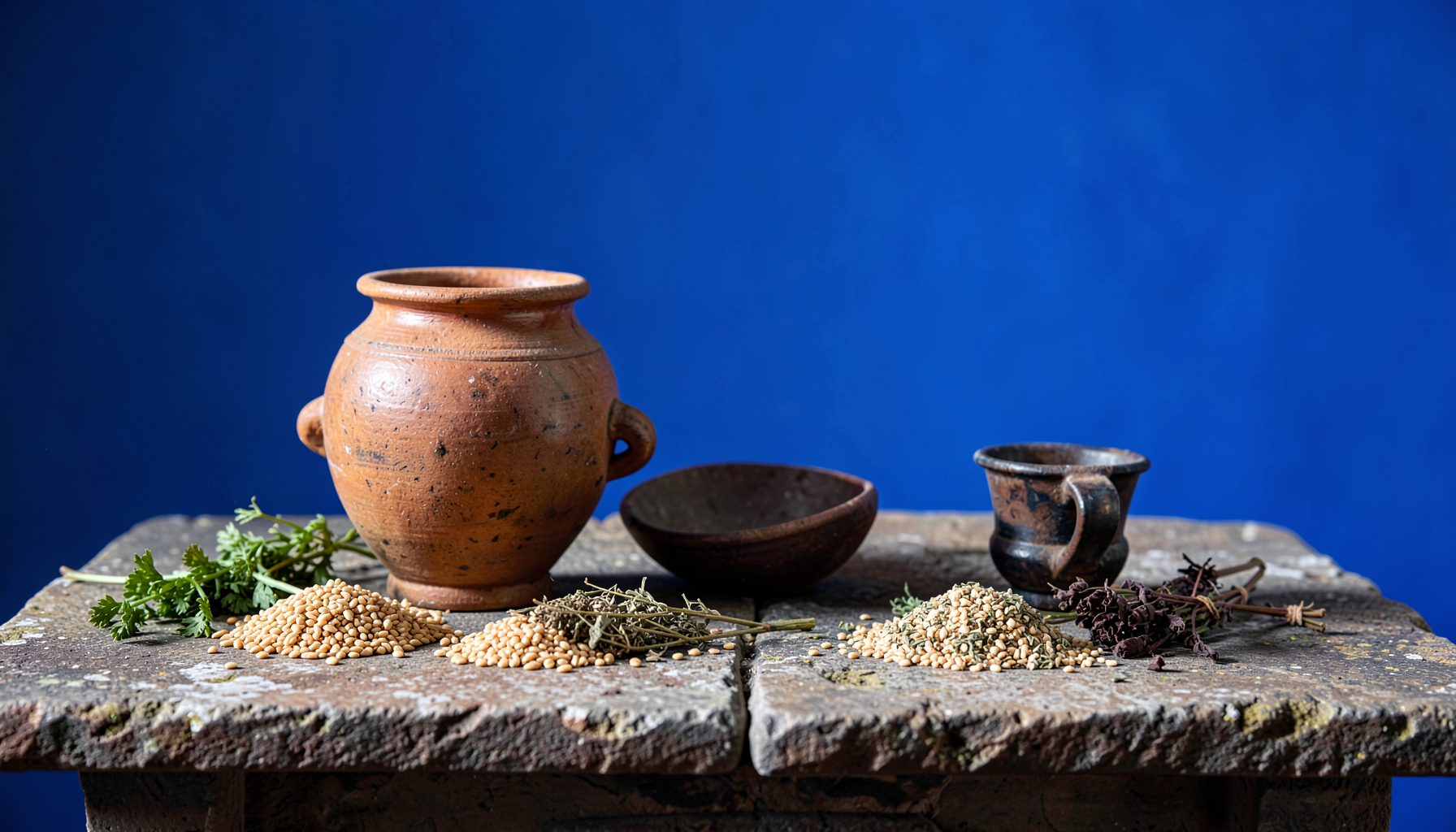
Spices are the harder question. The classical trade in cinnamon, pepper, and ginger was only beginning to reach the fringes of the Celtic world, so most of what seasoned an Iron Age cake was local. Coriander and poppy seeds appear in carbonised deposits from the late La Tène period, cumin reached Gaul through Mediterranean exchange, and small black seeds of corncockle and wild carrot relatives found their way into doughs. The result was an herbal, earthy profile rather than a hot one, less like gingerbread and more like a dense rye loaf scattered with toasted seeds and glossed with warm honey.
A useful parallel comes from the ancient Egyptian tradition of preserving fish and grains, where careful salting and drying allowed foods to survive without refrigeration. The detailed techniques for salting and drying river fish from the Nile Delta documented in the study of Egyptian fish preservation show how seriously ancient cooks took the transformation of perishables. Honey, in a Celtic context, played a similar role: it was both flavour and preservative, allowing cakes to last through lean weeks.
Building the pantry in a modern Australian kitchen
Sourcing the right ingredients is half the experiment. Spelt, emmer, and rye are no longer exotic in Australia. Stone-mill bakeries in Melbourne and Adelaide stock them in kilogram bags, and Food Standards Australia New Zealand requires that any grain labelled as such contains a minimum proportion of true spelt, protecting the cook from being sold plain wheat in fancy packaging. For honey, the country is a paradise: yellow box from the slopes of the Great Dividing Range, leatherwood from Tasmania, manuka from the eastern coast, and pale clover from irrigated flats. Each brings a different mineral note, and a serious tinkerer will bake the same recipe with three different honeys just to feel the difference.
The spices are simpler than the literature suggests. Coriander seed, toasted and crushed, brings a citrusy warmth, and poppy seed, easily bought by the kilogram at a market such as the Queen Victoria in Melbourne, adds a quiet nuttiness. A pinch of toasted cumin and a small grating of dried ginger root complete the picture. Strictly speaking, the ginger is a Roman-era import, but by the late Iron Age it was already common in Gaulish cookery. Australian biosecurity rules control which dried spices may cross the border, and a few traditional items such as raw silphium are simply unavailable, so the cook works with what the regulation allows.
For fat in the pan, the Iron Age cook would have used rendered pork fat or, in colder regions, butter. A modern Australian kitchen can reach for either, though many now default to a good cold-pressed olive oil, which suits the herbal profile of the cake. Salt, of course, is essential, and the coarse sea salt sold at any farmers' market in Hobart or Fremantle will do the job better than the refined table variety. Eggs come from the corner shop; milk, if the cook is going for a softer crumb, comes from the same place, though the original recipe probably used none.
Step-by-step: cooking the cake from the cauldron up
Begin by lighting a fire of hardwood charcoal and letting it burn down to a bed of grey ash and glowing coals. While it settles, mix 250 grams of spelt flour, 100 grams of rye flour, one teaspoon of baking soda, half a teaspoon of fine sea salt, one tablespoon of toasted coriander seed, one tablespoon of poppy seed, and a pinch of ground cumin. The dry mix should smell of warm biscuits and toasted citrus peel before a single wet ingredient has touched it.
In a separate bowl, whisk three eggs with 150 grams of runny Australian honey until the mixture doubles in volume and turns a pale gold. Pour the wet into the dry and fold gently, adding 80 grams of melted butter last. The batter will be looser than a modern sponge, somewhere between a thick pancake batter and a soft polenta. Let it rest for fifteen minutes while the cauldron warms.
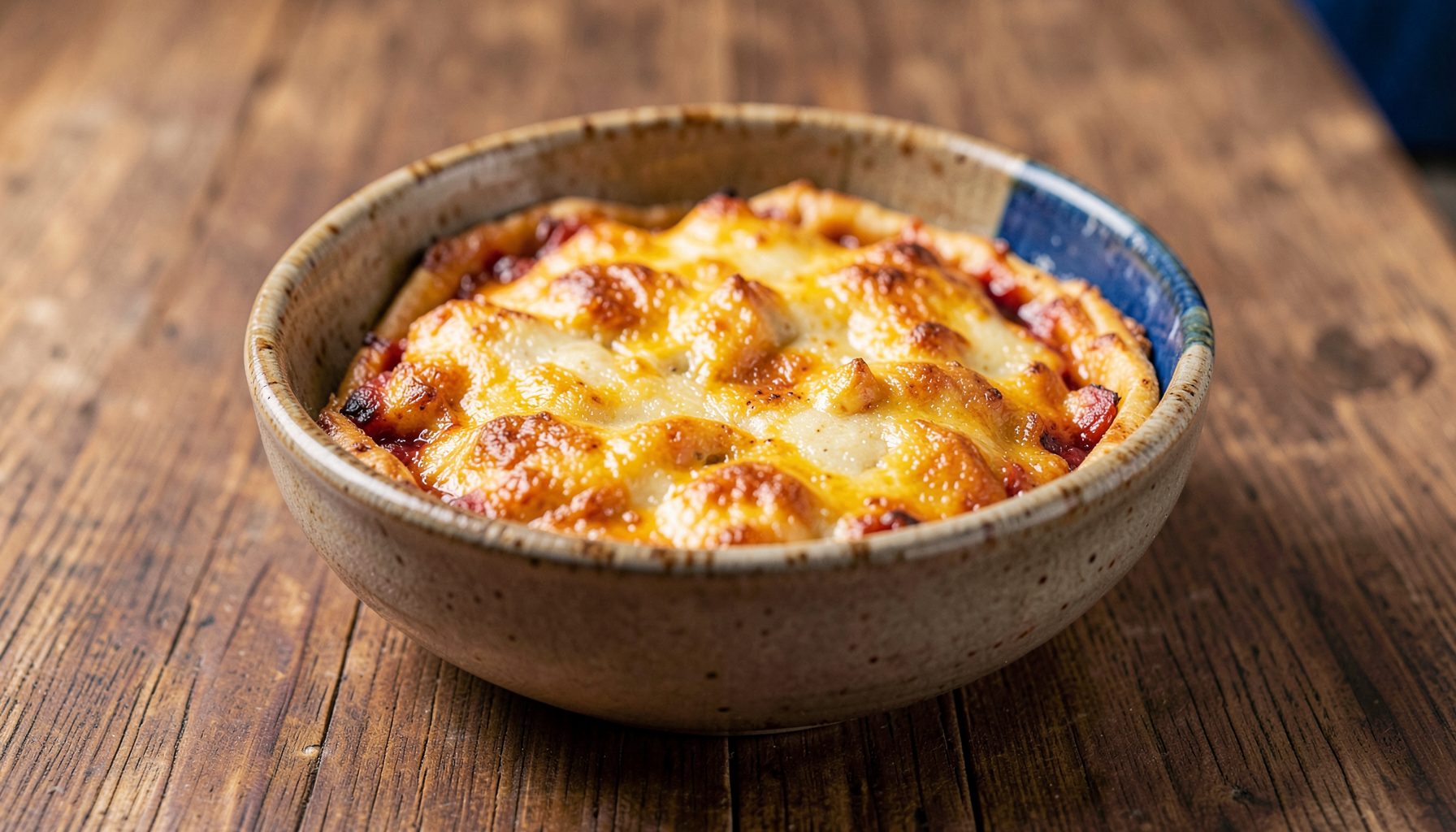
Rub the inside of the pot with a thin film of butter and dust it with spelt flour. Pour in the batter, cover, and set the pot among the embers, with a few pieces of charcoal on the lid to mimic the overhead heat of an Iron Age hearth. Cook for forty-five minutes, rotating the pot every fifteen so that no side burns. Test with a skewer; it should come out with a few moist crumbs. Drizzle a final tablespoon of warm honey over the top as it cools, allowing it to sink into the crust and form a faintly bitter-sweet glaze.
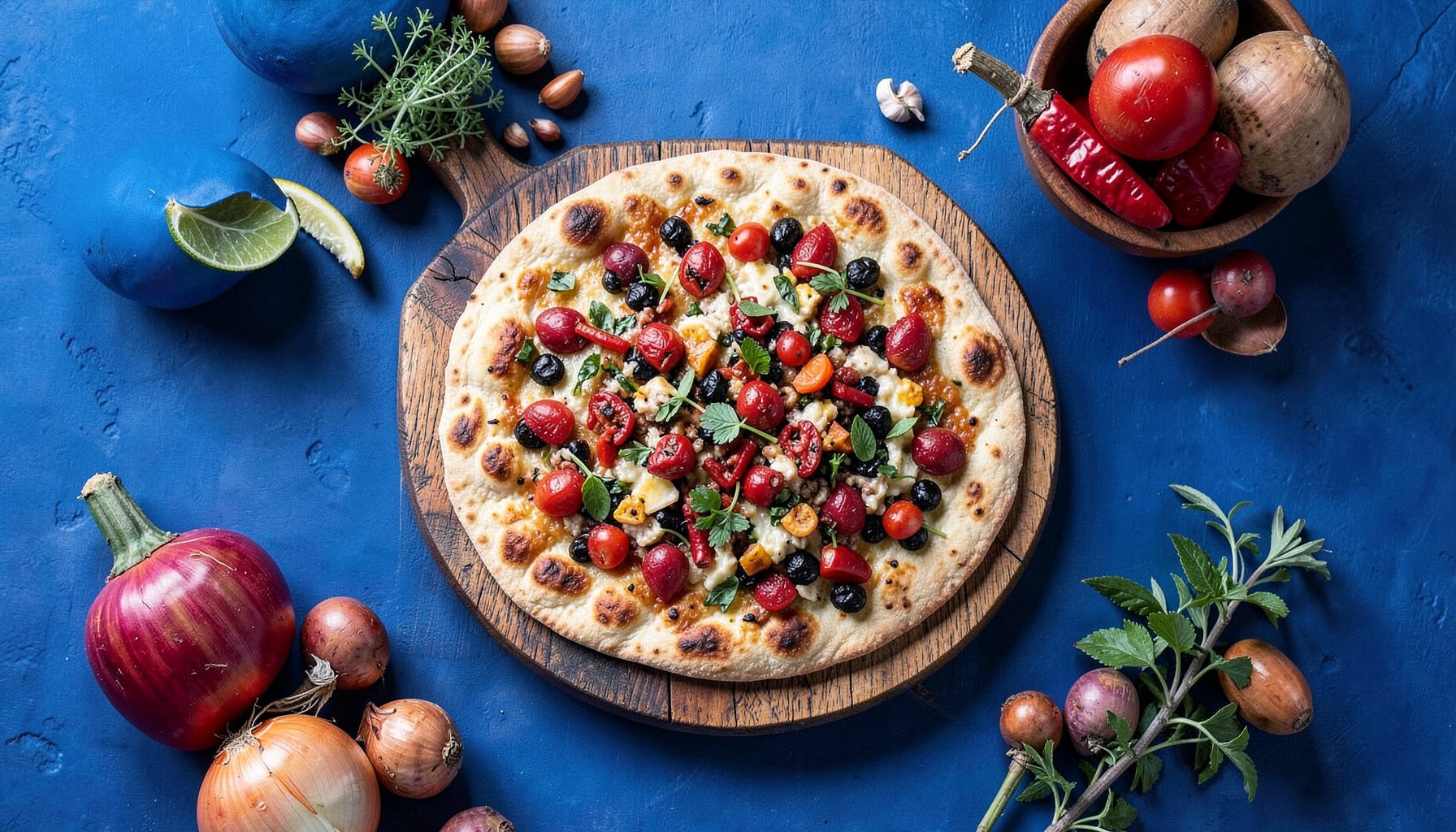
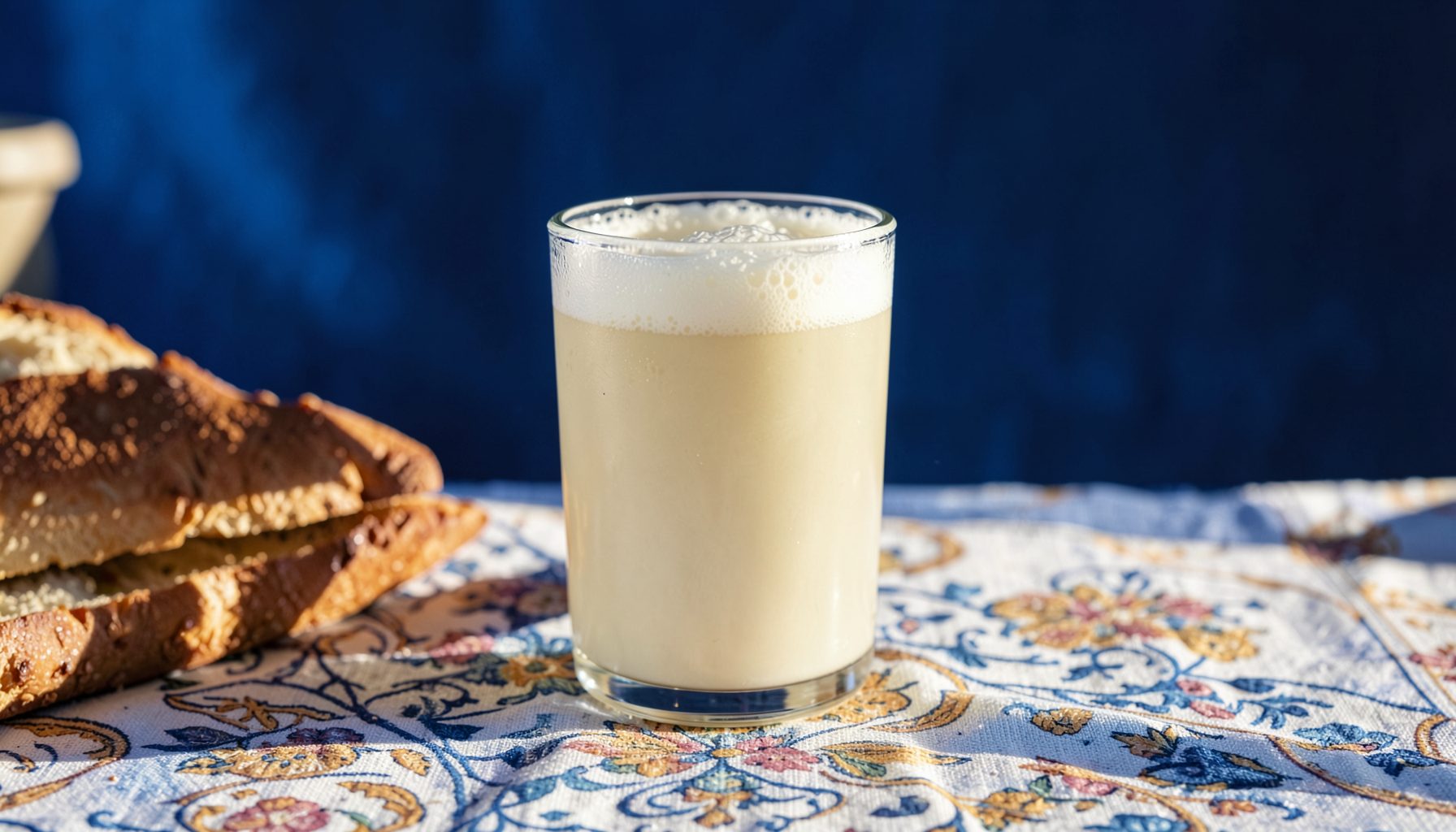
The finished cake is dark, dense, fragrant, and barely sweet. It cuts cleanly, holds together on a wooden board, and improves markedly on the second day as the spices settle. Modern palates trained on buttery sponges may need a moment to recalibrate, but the flavours reward patience. Serve in thick slices with a small cup of mead, or simply with a strong flat white, the way a cook in a sunny backyard might finish a Sunday afternoon.
Serving, ritual, and a modern table
Feasting in Iron Age Gaul was both social and sacred. A honey cake shared among warriors at a hilltop gathering, or laid out as an offering at a seasonal rite, would have carried meaning beyond its ingredients. The Celtic year was once divided by fishing seasons and harvests as much as by feasts, and the best times of year for river gatherings shaped when communities sat down to cakes like this. Bringing the dish to an Australian table, whether at a long lunch in Adelaide or a small gathering in Perth, restores a little of that continuity and invites the cook to think about who once sat around similar pots.
The ritual of passing bread and honey from hand to hand carried a quiet weight in a Gaulish village, marking kinship, alliance, and seasonal change. To serve such a cake today, in a courtyard or on a long table, is to take part in a small, ordinary act of historical imagination. It asks the cook to slow down, to taste the patience of slow embers, and to remember that the same flavours once travelled in saddlebags across wet, forested country.
The recipe is a starting point, not a verdict. Each kitchen will adjust the spices, the flour, the honey, and the cooking vessel, and each adjustment adds another line to a living record. Cooks keen to go further can browse the bibliography for the ancient sources and modern scholarship that shaped this experiment, then return to the cauldron with a clearer picture of what the Iron Age table once looked like.