Using a Roman mortarium to make pesto before it was Italian
Long before pesto became a Ligurian specialty, cooks across the Roman world were combining herbs, garlic, salt, cheese, nuts, and oil in heavy stone or ceramic bowls. The result was not “pesto” in the modern legal or regional sense, but it belonged to the same family of crushed sauces: dense, aromatic mixtures made by transforming separate ingredients into one strongly seasoned paste.
The Roman mortarium was the ideal tool for this work. Its rough interior gripped leaves and seeds, while the pestle broke plant fibres and released fragrant oils. A spout made it easier to pour out a sauce, although many mixtures were probably served directly from the vessel at the table.
Reconstructing this food offers more than a recipe. It reveals how Roman cooks worked with texture, preserved flavours, adapted ingredients from trade networks, and used hand-powered tools to create sauces that modern kitchens usually associate with a food processor.
The mortarium and its place in Roman kitchens
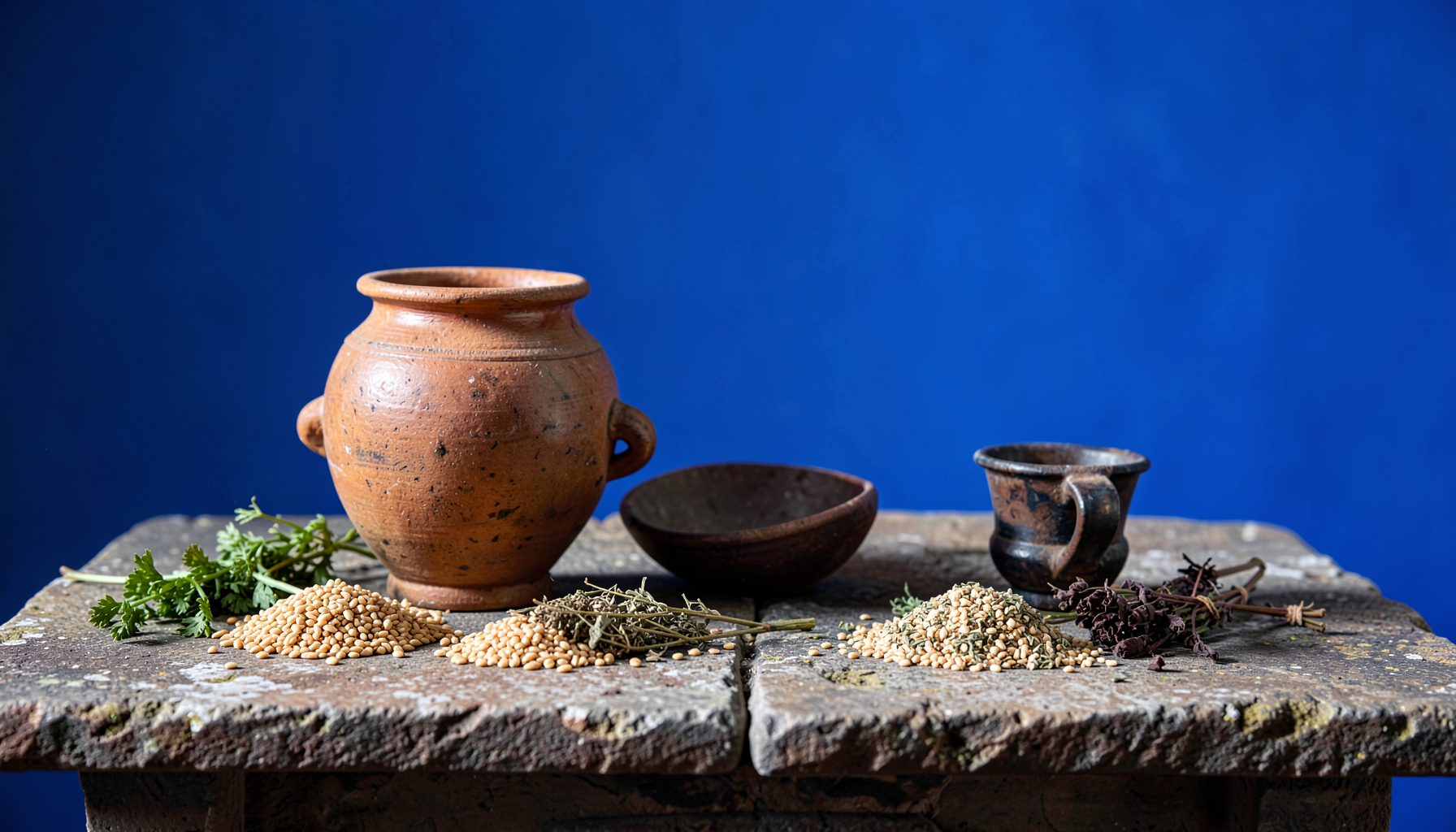
A mortarium was a thick-walled bowl designed for pounding, grinding, and mixing. Examples from Roman sites often have a gritty interior surface, sometimes strengthened with embedded particles that helped crush ingredients. The shape varied, but the wide bowl and sturdy base made it suitable for repeated work with a pestle.
The tool was common in domestic and professional kitchens. It could process grains, herbs, spices, garlic, and medicinal substances, as well as prepare sauces and dressings. Unlike a flat grinding stone, the mortarium kept ingredients contained and allowed the cook to move from crushing to blending without changing vessels.
Its roughness also shaped the finished food. A modern blender produces a smooth purée in seconds, while a mortarium creates a paste with small fragments, fibrous threads, and uneven pockets of oil. That rustic texture is part of the historical experience rather than a flaw to eliminate.
Moretum, herbs, and the Roman family of crushed sauces
The closest literary relative to modern pesto is moretum, a pungent herb and cheese preparation associated with Roman rural life. The poem known as the Moretum, preserved in the Appendix Vergiliana, describes a peasant grinding garlic, herbs, cheese, salt, and olive oil into a compact mixture. The account is literary, but it reflects a recognisable kitchen technique.
Moretum was not a single fixed formula. Its ingredients could change according to region, season, household resources, and intended use. Coriander, rue, celery leaf, mint, savory, and other herbs might contribute flavour. Cheese added body and salinity, while oil softened the paste and helped carry the aromas.
Basil deserves careful treatment. It was known in the ancient Mediterranean, but the modern combination of basil, pine nuts, Parmigiano, and Ligurian olive oil belongs to a much later culinary tradition. A historically informed Roman preparation can use basil as one possible herb, but a mixed green sauce with local leaves may be closer to ancient culinary habits than a strict imitation of modern pesto alla Genovese.
Ingredients shaped by trade and local supply
Roman cooks worked within a large commercial world. Pepper, cinnamon, ginger, and other aromatics travelled long distances, while Mediterranean kitchens relied on familiar staples such as olive oil, garlic, salted cheese, and garden herbs. The presence of an ingredient in the empire did not mean that every household could afford or obtain it regularly.
The movement of seasonings gives useful context for a reconstructed sauce. Information on Silk Road spices helps explain how imported aromatics entered Roman kitchens and how trade could expand the flavour range available to cooks. A small amount of pepper, for example, would make a dramatically different paste from one seasoned only with salt and herbs.
For a practical version, choose ingredients that reflect this balance between ordinary staples and optional luxuries. Garlic, green herbs, hard cheese, olive oil, and salt form a plausible foundation. Pine nuts are possible, but walnuts, almonds, or other locally available nuts can also produce a thick sauce. Pepper should be treated as an addition for wealthier or better-connected kitchens rather than an automatic requirement.
| Ingredient | Historical role | Suggested amount | Modern substitute or note |
|---|---|---|---|
| Fresh herbs | Aroma, colour, and bulk | 1 packed cup | Basil, coriander, mint, savory, parsley, or a mixture |
| Garlic | Heat and pungency | 1–2 cloves | Adjust according to taste |
| Hard cheese | Salt, protein, and thickness | 40–60 g | Pecorino-style cheese works well |
| Olive oil | Binding agent and flavour carrier | 3–5 tbsp | Use a fruity but not overpowering oil |
| Salt | Seasoning and abrasive aid | ½ tsp | Add gradually |
| Nuts or seeds | Texture and richness | 1–2 tbsp | Pine nuts, walnuts, almonds, or omit |
| Black pepper | Imported aromatic luxury | A pinch | Optional, especially for a simpler reconstruction |
How to grind the paste by hand
Begin with the ingredients that need the most force. Place the salt and garlic in the mortarium and press them with the pestle rather than immediately pounding vertically. A twisting motion tears the garlic into a wet, sticky paste and uses the rough surface efficiently.
Add the herbs in small handfuls. Crush them against the base and sides, turning the pestle in slow circles. The colour will darken as the leaves bruise and release their oils. If the bowl is crowded, pause to scrape the mixture back toward the centre before adding more greens.
Cheese and nuts should follow once the herbs have collapsed. Pound them until the paste becomes cohesive, then drizzle in olive oil a little at a time. The goal is a thick relish or spread, not a thin sauce. A Roman cook might have adjusted the consistency according to its use: dense enough to accompany bread, looser for dressing vegetables, or concentrated enough to season pulses and meat.
The process takes patience. Ten to fifteen minutes of hand grinding can produce a convincing texture, depending on the bowl and pestle. The work also changes the aroma of the kitchen: garlic becomes rounder, herbs become deeper and more resinous, and the cheese disappears into the mixture instead of remaining as separate grated strands.
Serving the sauce in a Roman meal
A crushed herb paste could accompany bread, vegetables, pulses, fish, or roast meat. It might be used as a condiment rather than mixed through an entire dish. Small quantities would have been powerful because garlic, salt, cheese, and herbs all carry intense flavours.
The sauce also fits the practical character of Roman foodways. A simple grain dish could gain richness from a spoonful of herb paste, while leftover meat or vegetables could be refreshed with oil and aromatics. Soldiers and travellers had different access to fresh ingredients, yet the broader food system connected military provisioning with staples such as grain, wine, vinegar, and preserved foods. The account of Roman soldier rations provides useful background for understanding how such seasonings might complement basic meals without turning them into luxury cuisine.
Serve the finished preparation at room temperature. Spread it on coarse bread, spoon it over lentils, or place it beside grilled vegetables. A small ceramic dish or the mortarium itself can reinforce the communal character of the meal, where condiments were shared and diners assembled flavours at the table.
A workable reconstruction for a modern kitchen
For four small servings, combine one packed cup of mixed fresh herbs, one or two garlic cloves, 50 grams of hard sheep’s cheese, one tablespoon of nuts, three tablespoons of olive oil, and half a teaspoon of salt. Add a pinch of pepper if desired. The herbs can include basil, parsley, coriander, mint, or savory, with basil kept as one component rather than the sole defining flavour.
Grind the salt and garlic first. Work in the herbs gradually, then add the nuts and cheese. When the mixture is coarse and fragrant, incorporate the oil in a thin stream. Taste carefully before adding more salt; aged cheese can provide much of the required seasoning.
If a true mortarium is unavailable, use a granite mortar and pestle or a heavy ceramic bowl with a rounded pestle. Avoid a smooth glass bowl, which offers little resistance and makes the process frustrating. A food processor can reproduce the ingredient combination, but it will remove the slow transformation that makes this method historically meaningful.
The finished sauce should taste green, salty, garlicky, and pleasantly bitter, with a texture that remains visibly crushed. It need not imitate supermarket pesto. Its purpose is to evoke a Roman herb condiment built through manual labour, flexible ingredients, and the sensory logic of ancient cooking.
Recreate the flavour through the method
- Use a rough-surfaced mortar large enough to move the ingredients without spilling.
- Start with salt and garlic so they form the aromatic base of the paste.
- Add herbs in batches and grind them until their fibres break down.
- Treat nuts, imported spices, and basil as adaptable choices rather than fixed rules.
- Serve the sauce with bread, pulses, vegetables, or roasted foods instead of limiting it to pasta.
Making this preparation by hand turns a familiar modern flavour into an archaeological experiment. The mortarium connects the cook to Roman households, market networks, agricultural labour, and the physical effort behind every seasoned dish. It also shows that culinary history rarely follows a straight line: modern pesto has a specific Italian identity, but its basic gestures belong to a much older Mediterranean repertoire.
Prepare the paste slowly, serve it with a simple meal, and record how the ingredients change under the pestle. In that small act, an ancient kitchen tool becomes a living way to taste the distance between Roman moretum and the pesto found on today’s tables.